
Software-based requirements are detailed lists describing the functions, capabilities, and qualities a software system must possess. These requirements are the foundation for designing, developing, testing, and delivering a software product that meets the goals and expectations of its users. Lab requirements for a LIMS are typically a combination of wish list items and regulation-mandated needs.
[Read More]

Alternatives to LIMS such as paper-based systems, spreadsheets, databases, and ERP systems can work for small, lightly regulated labs. but increasing competition and regulatory oversight stretch these tools to their limits, showing their weakness compared to a well-designed, purpose-built LIMS. Labs of today are more complex, requiring more modern tools like LIMS to better automate processes and methods.
[Read More]

Technology is advancing at an unprecedented pace, with Artificial Intelligence (AI) transforming various industries, including laboratories. With AI revolutionizing laboratory operations, it’s time to explore how it enhances efficiency in the future of scientific innovation.
[Read More]

There are a number of features of artificial intelligence (AI) that make it well suited for use in software validation. Some of these features are its capacity for pattern recognition and the ability to learn and adapt continuously. An emerging use for AI is in laboratory information management system (LIMS) validation. A LIMS is instrumental in laboratory data management. In recognition of the need for enhanced efficiency and accuracy, AI is increasingly integrated with the data in LIMS and has become a game changer.
[Read More]

Communities around the world are requiring greater accountability and demanding more reliable and capable software systems for monitoring and testing drinking water, ground water, wastewater, soil, and air quality. Meeting these growing needs and continuing to deliver the active role that analytical testing laboratories play in safeguarding public health requires advanced tools that enhance every aspect of environmental monitoring.
[Read More]

In Research and Development (R&D) labs, innovation is the most crucial aspect, and the data generated during the process holds the key to unlocking new possibilities. However, many labs face the challenge of efficiently managing vast amounts of data. This article explores how cutting-edge Laboratory Information Management Systems (LIMS) provide solutions to these challenges and pave the way for streamlined R&D operations.
[Read More]

A LIMS offers various benefits to labs, from efficiency improvements and data accuracy to enhanced reliability, compliance, security, data management, organization, and decision-making capabilities all while reducing costs. Also consider that a LIMS solution can integrate with electronic laboratory notebooks, instruments and devices, and third-party software for a seamless laboratory operation.
[Read More]

Historically, all types of labs and their associated testing have been positively affected by adopting part of ISO/IEC 17025 (or the entire standard). Some of these labs include analytical, regulatory, product development, manufacturing, research, reference, calibration, and clinical labs, though not without some resource investment.
[Read More]

When it comes to laboratory testing, data is mission critical for laboratories. It provides lab managers with the information they need to evaluate samples, identify patterns, and make decisions, ensuring successful experiments and results. And yet, it is not uncommon for labs to find themselves buried under the weight of inefficient workflows, numerous testing processes, and a deluge of mismanaged data — and many labs are still operating on pen and paper.
[Read More]
 In a world where technological advancements are driving innovation across industries, the field of molecular biology and diagnostics is no exception. Helen Pye of QIAGEN's Molecular Assay Development Department, Manchester, UK, discusses implementing L7|ESP, a fully digitalized platform that is a game changer for QIAGEN's laboratory operations. In this blog post, we'll dive into the fascinating digital transformation taking place at QIAGEN and explore the potential benefits of digitalization in molecular biology and precision diagnostics. [Read More]
Are you on the hunt for the perfect Laboratory Information Management System (LIMS) for your business? Look no further. Here are three compelling reasons why QLIMS stands out from the crowd.
[Read More]

Standardized and regulatory-driven material testing laboratories ensure high-quality, safe, and reliable materials which are paramount to how society functions. Without materials testing laboratories testing the mechanical, chemical, and other properties of materials on a standardized, regular basis, much of the fabric of modern society would be in question.
[Read More]
 Over the past year, Dana-Farber Cancer Institute's Connell and O'Reilly Families Cell Manipulation Core Facility (DFCI CMCF) has been working to implement a LIMS (Laboratory Information Management System) for their GMP cellular therapy manufacturing facility. In this blog post, we'll take you through their challenges before implementation, their experience with L7|ESP, and the benefits they've realized. [Read More]

Manufacturing-related labs serve as the epicenter of research, development, and quality assurance. They permeate every aspect of our lives, from innovative devices we use at home to ground-breaking medicines to the eco-friendly and energy-efficient solutions that contribute to a better planet. These labs drive technological advancements, further healthcare solutions, and help keep society safe.
[Read More]
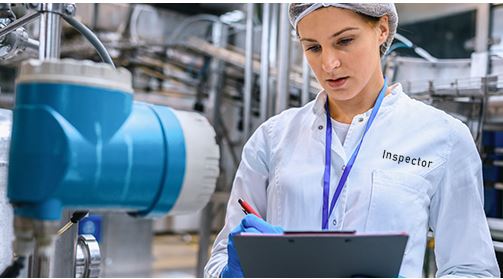
The goal of a manufacturing department is to get the product out the door on time and within specifications. With large batches of products being produced, some sort of quality management system (QMS) is needed to ensure the best and most compliant product is delivered to consumers. A QMS may start out as a paper-based system and slowly transition to a spreadsheet, but without a fully automated and validated system, manufacturers risk security and compliance issues.
[Read More]

Organizations are under attack from data hackers and ransomware on an almost daily basis. We have extended and enhanced user identity checking functionality in Matrix Gemini LIMS to support federated identity providers such as Azure and Okta.
[Read More]
Laboratory Information Management Systems (LIMS) are transforming multiple industries, not just one. In this blog post, we’ll explore the various industries where LIMS is playing a crucial role by revolutionising processes and ensuring compliance with strict standards. Before delving into the examination of industries, let’s not forget that there are many new and upcoming industries, as well as emerging scientific technologies, that can be explored and supported by LIMS.
[Read More]

There is a gap between the goals of science education and the "ready to work" background wanted by science-based industry employers. This overview of major laboratory informatics in industrial research and service laboratories explores the diverse applications of artificial intelligence in scientific and lab contexts, spanning fields like image analysis, predictive analytics, robotics, data mining, spectroscopy, and more.
[Read More]
 Translating research processes into manufacturing therapeutics involves a complex and highly regulated journey from the laboratory to large-scale production. Informatics systems play a crucial role in managing and optimizing this transition. [Read More]

Successfully scaling a next-generation sequencing (NGS) lab takes careful preparation. Myriad complexities are involved, any of which could cause delays and extra expense. Whether your lab has been intending to scale up for some time or you’re responding to a high-pressure situation, like a pandemic, you need to have a plan in place. To help you get started, we’ve put together a list of things to consider.
[Read More]


