
Adding a LIMS can save your lab time and money. Two of the biggest time drains in the laboratory are workflow inefficiency and disorganization. If your lab team is constantly hunting for paper records, scrolling through spreadsheets, or manually transcribing data, it takes away time from performing more tests or taking on additional business with a new customer.
[Read More]

Every industry has embraced the idea that digital technologies need to be fully integrated in the business processes to ensure successful competition. In the era of Industry 4.0, your organization’s data (digital assets) are now recognized as your most valuable assets. Within the life sciences, however, there are many constraints of the scientific operating environment.
[Read More]
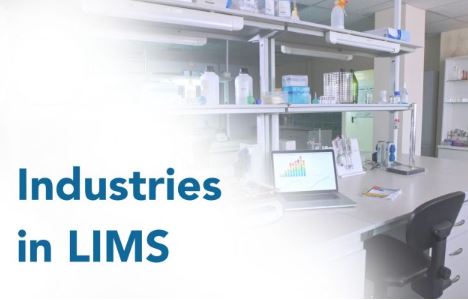
Laboratory Information Management Systems (LIMS) are transforming multiple industries. In this blog post, we’ll explore industries where LIMS is playing a crucial role by revolutionizing processes and ensuring compliance with strict standards. Before delving into the examination of industries, let’s not forget that there are many new and upcoming industries, as well as emerging scientific technologies, that can be explored and supported by LIMS.
[Read More]
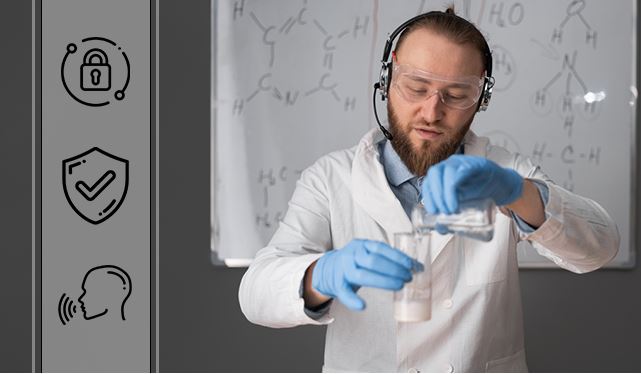
As hands-free lab note-capturing technology becomes more prevalent, it is crucial to address the privacy and security concerns associated with voice recognition and mobile or wearable devices. In this blog post, you'll read about the different data privacy and security concerns you may face and how LabTwin, the leading voice-powered digital lab assistant, has addressed them.
[Read More]

Laboratory informatics is the use of information technology to support a lab’s testing mission, which goes beyond data management to support all aspects of lab operations. Implementing an informatics solution helps laboratories adapt and enables benefits such as lab management, productivity, quality control, process improvement, data integrity, security and privacy, industry and regulatory compliance, and customer service.
[Read More]

When developing therapeutic antibodies, selecting only the strongest candidates for further clinical development increases the chances of successful clinical trials. The important decision of candidate selection can only be done right with high quality, accessible data from which insights can be easily drawn.
[Read More]

While ISO 17025 accreditation can be achieved using manual, paper-based processes and documentation, it is extremely time consuming. It can be difficult to locate specific data, SOPs, instrument calibration histories, staff qualifications, certifications, or other necessary documents or files, and doubly so under the pressure of ISO audits – all while trying to maintain regular daily operations and meet TAT deadlines. That's where LIMS technology can make a real difference.
[Read More]

The use of analytics in life sciences companies faces challenges that analytics in other industries do not. Life sciences organizations have unique data integrity needs because they deal with protected health information. Despite these challenges, the undeniable usefulness of analytical tools is leading to wider adoption in the life sciences.
[Read More]

Paper-based data management processes belong in the recycling bin. If you’re still operating your labs on pen and paper or across disparate LIMS, read the article in Food Manufacturing written by STARLIMS’ Chief Product & Marketing Officer, Brandon Henning, to learn how consolidating LIMS across labs can support F&B businesses in enhancing security, improving productivity, and fostering collaboration.
[Read More]

In today’s data-driven world, laboratory environments face increasing challenges related to managing vast amounts of data while maintaining its integrity and security. Laboratory Information Management Systems (LIMS) are instrumental in handling these complexities.
[Read More]

Cybersecurity threats are a constant risk to organizations of any size and industry. Laboratories are not immune to these threats and face indirect risks, such as disruption of operations due to ransomware attacks. Effective cybersecurity plans are necessary to prevent unauthorized access and release of sensitive data, and laboratories should craft living documents that evolve with their operations and threat landscape.
[Read More]

Adopting Laboratory Information Management Systems (LIMS) in the modern laboratory landscape is no longer a luxury but a necessity. LIMS can transform your laboratory operations and elevate your productivity. If you’re unsure whether LIMS is right for your laboratory, here are 5 reasons why LIMS:
[Read More]

Professional associations are vital channels for knowledge sharing, networking, and staying on top of emerging trends in any industry. In clinical and regulatory affairs, these organizations play a pivotal role in shaping policies, providing educational resources, and fostering collaboration among professionals. Here’s a look at some of the leading associations in this field.
[Read More]
Therapeutic antibody discovery and development labs assay hundreds to thousands of antibody candidates daily to hone in on the best candidates for clinical development. Accurate, complete plate maps are critical for sample traceability and experiment reproducibility. Using LIMSense™, a modern LIMS from AduroSys, can ensure seamless integration between instruments and LIMS without sacrificing flexibility in plate map design.
[Read More]

An effective cybersecurity plan is imperative for any laboratory, given the often sensitive nature of the data it manages. A cybersecurity standards framework can help labs develop a complete, effective, affordable cybersecurity plan while keeping the laboratory’s expertise in testing and analysis, not the vast and constantly evolving landscape of cyber risks.
[Read More]

In this LIMS case study, we delve into how one of the world’s leading confectionery brands faced challenges and how QLIMS has worked to bring the highest levels of testing for their raw and packaging materials.
[Read More]

Rooms filled with boxes of laboratory notebooks to the brim. Scattered Post-it notes and Excel sheets. It may sound like a chaotic scene of a mad scientist’s lab, but these things may be all too familiar to the modern-day R&D researcher. The struggle R&D researchers face today is real: while great leaps in science and technology have been made over the last few decades, lab technology hasn’t kept pace with the needs of modern researchers. Enter Electronic Lab Notebooks (ELN) and Laboratory Information Management Systems (LIMS)...
[Read More]
Over decades, many different types of software have been developed to facilitate the scientific research and testing processes that occur in all different types of laboratory settings. The results is a cluster of acronyms and abbreviations that causes a lot of confusion amongst those trying to determine what will best support their specific needs. In this article we hope to provide helpful guidance by explaining what an ELN, a LIMS, and a LIS do, the environments they’re best suited for, and shed light on the current state of laboratory informatics technology.
[Read More]

In clinical diagnostics, laboratories that expect to stay ahead must embrace cutting-edge technologies while adhering to regulatory obligations. A LIMS streamlines operations and positions labs at the forefront of diagnostic excellence is necessary. A LIMS for clinical diagnostics labs is a multifaceted solution that combines sample management, data management, stringent quality control, seamless integration, user management, and regulatory compliance.
[Read More]
Therapeutic antibodies are a revolutionary drug class that can treat a wide range of diseases. Secondary screens characterize the functional properties of candidate antibodies, narrowing the pool to those most likely to succeed in clinical trials. The wide range of micro-plate based assays that can test hundreds of variables at once requires accurate and complex plate maps that capture a variety of plate re-array options. Using
LIMSense™, a modern LIMS from AduroSys, can ensure you keep track of all of your samples and identify the best antibodies for further development.
[Read More]


