
There comes a point in every lab where data gets scattered across paper files, spreadsheets, and a patchwork of laboratory systems. Manual processes can’t keep up with rising demand. Ultimately, customer satisfaction plummets with profound implications for the lab. All these challenges stem from the way labs manage information. If these 28 signs of laboratory information management challenges look familiar, your lab is ready for a LIMS.
[Read More]
 Following on from the L7 MES app introduction, let us have a deeper dive into the features that set the L7 MES app as the right choice for pharmaceutical manufacturing. In this blog, we explore electronic signatures and how L7|ESP and the L7 MES app approach and provide a unique and flexible solution. In Figure 1, have a quick look at how we represent electronic signatures in EBR. What is the importance of electronic signatures to an MES and EBR system? [Read More]
In today’s corporate landscape, Learning Management Systems (LMS) play a pivotal role in delivering, tracking, and managing training programs. The LMS supports an organization’s overall regulatory compliance by tracking the needed certifications of all employees and ensuring that records are centralized. Ensuring the dependability, security, accessibility, and adherence to regulations of an LMS is crucial for regulated businesses, and shouldn’t be neglected. This blog post explores the significance of validating LMS software, given various hypothetical use cases.
[Read More]

In a world where the genomic revolution is redefining the boundaries of scientific discovery, the effective management of data is crucial. This blog post dives into how the dynamic duo of AWS and QLIMS is reshaping the landscape of genomics research with seamless integration.
[Read More]

Laboratory information management system (LIMS) licenses are expensive, and when you work in a distributed organization with a central lab and many collection points, it isn’t feasible to provide all potential submitters with their own LIMS license. We’re here to tell you that there is an easier way. It is possible, and even easy, to submit samples for testing without a LIMS license using SampleVision.
[Read More]

When you are awarded a federal NIH grant, it’s essential to know how to use the grant award effectively. The post-award phase may seem overwhelming with various implementation and reporting requirements, but adhering to the grant terms and conditions is necessary. This blog post will guide you toward maximizing the use of your grant award by understanding the post-award phase.
[Read More]
To cure the numerous illnesses that one could suffer throughout their lifetime, it is essential to have access to first-rate healthcare services that can efficiently and promptly address our needs. Recently, the way that patients look for medical care has altered. Patients are increasingly choosing convenience over primary care alternatives due to cost considerations, schedule convenience, and other factors.
[Read More]

Therapeutic antibodies are
now the predominant class of new drugs. Advancing safe, effective antibodies to the clinic requires narrowing a pool of thousands of candidates using igh-throughput microplate-based assays. Designing plate maps for these assays using Excel or outdated digital tools is a time-consuming task prone to error, slowing the screening process and leading to critical errors in data analysis. Using LIMSense, a modern LIMS from AduroSys, can improve data quality, reduce costs, and ensure the most effective antibodies reach patients.
[Read More]
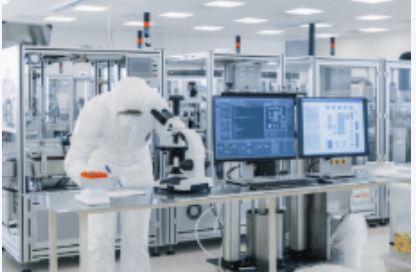
Making the choice to implement a software-as-a-service (SaaS) LIMS in your organization can have many advantages and challenges. Knowing how best to evaluate these in the context of your particular situation will ensure you’re making an informed choice about the hosting model you select.
[Read More]

In the absence of a cohesive, centralized system, the process of monitoring changes and obtaining the latest information within multi-lab environments becomes an intricate and prone-to-error undertaking. Laboratory information management systems (LIMS) can significantly improve efficiency and quality in multi-lab organizations.
[Read More]

In today’s world,
genomics has revolutionized various fields, from healthcare to agriculture. The evolution of genomics stands as a testament to the remarkable progress of scientific discovery. However, with great power comes great complexity. Genomic research generates vast amounts of data, which, when not properly managed, can be overwhelming. This is where
LIMS steps in, offering a lifeline to researchers and scientists.
[Read More]

The National Institutes of Health (NIH) is a government agency that provides financial support for advancing scientific research. If you’re a researcher or organization looking for funding opportunities, it’s important to understand the structure of NIH and how they approach grant funding. In this blog post, we’ll explore what the NIH looks for, who is eligible to apply, the types of grant programs available, and the various grant applications.
[Read More]
In today's technologically advanced world, labs rely heavily on software solutions to streamline their operations and improve efficiency. However, with the adoption of digital systems comes the need for assessing and mitigating the associated risks. In this blog post, we will explore the concept of risk assessment in lab software and understand its significance in ensuring a safe and effective working environment. We discuss the intricacies of risk assessment, its key components, and the role it plays in the validation process.
[Read More]
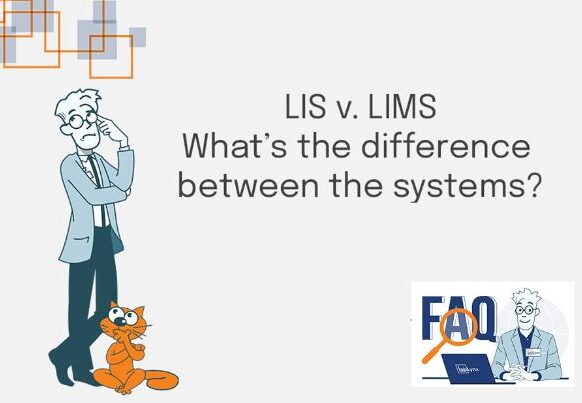
Most of us in the laboratory community have heard the term “LIMS,” though in the healthcare arena, it’s probably “LIS.” Both terms refer to software that is at the very heart of the modern laboratory. Essentially, both are the same: the main data management software for a laboratory. But the differences revolve around the fact that a LIMS is sample-centric and an LIS is patient-centric.
[Read More]
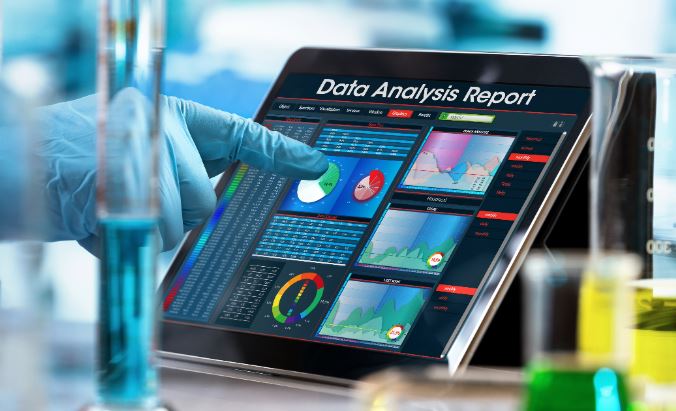
The most important features of a LIMS are the features that are most important for your lab. These features may vary depending on your specific laboratory requirements and long-term goals. The LIMS features must be flexible enough to support your lab as it grows and changes, without the need for expensive development at every turn.
[Read More]

Does your environmental lab use a 30-year-old laboratory information management system (LIMS) that is slow and not user friendly, but still works? Have you ever considered the real cost of maintaining that system or the limitations it has? How do you figure that out and make the case to upgrade? Modernizing your LIMS could be a big investment of time and resources and can add a layer of complexity when managing legacy data, but modernizing may also significantly improve the efficiency and accuracy of your environmental lab.
[Read More]

Pharmaceutical and medical device companies benefit from using a structured approach to data items, connections between data items, and data containers. Working with data that is internally structured reduces the time needed to create submission reports, eliminates the manual verification of large data tables, and ensures the creation of submission deliverables with no technical errors.
[Read More]

Welcome to our comprehensive guide to Laboratory Information Management Systems (
LIMS). Whether you’re just beginning your journey into the world of LIMS or you’re a seasoned professional looking for some clarity on common questions, you’ve come to the right place. In this blog post, we’ll shed light on the common questions in LIMS that often arise for both newcomers and those seeking to delve deeper into this invaluable technology.
[Read More]
By now you have probably heard rumors and rumblings about computer system assurance (CSA), a more strategic approach to validation that is currently in draft guidance from the U.S. Food and Drug Administration. What that will look like in practice is explained in this white paper. Compliance managers, regulatory professionals, and lab personnel need this white paper to understand the new testing rationale behind CSA. There is a greater emphasis on common sense in gauging risk and on unscripted testing to identify potential issues or avenues for improvement.
[Read More]

The demand for safety and compliance in medical device testing is ever-present, prompting laboratories to seek innovative solutions. Laboratory information management system (LIMS) software is a formidable tool that empowers laboratories to navigate the intricate processes involved in medical device testing.
[Read More]


