

August 17, 2022 - Iterating a Validated Assay? You Need Effective Change Management
 Day-to-day lab operations rely on workflows to manage people, tasks, and systems so that work follows a consistent process every time. Defined workflows help ensure that all the steps are done in the correct order, are free from errors, and meet regulatory requirements.
But, representing lab workflows can be difficult.
[Read More]
Day-to-day lab operations rely on workflows to manage people, tasks, and systems so that work follows a consistent process every time. Defined workflows help ensure that all the steps are done in the correct order, are free from errors, and meet regulatory requirements.
But, representing lab workflows can be difficult.
[Read More]
August 17, 2022 - Reducing Human Error Before and After Lab Testing
 From a customer’s order to the final report, laboratory errors can appear at any time in the total testing process. As our in-depth guide “Improve Laboratory Accuracy and Reporting Quality with a LIMS” explains, you can prevent these types of laboratory errors by digitizing laboratory processes. Many sources of error are human, and it’s only a matter of when, and how often, people make mistakes. Let’s look at how a laboratory information management system (LIMS) from LabLynx reduces human error by automating manual activity throughout the total testing process. [Read More]
August 17, 2022 - How Logilab ELN helps organizations to follow GxP Regulations
 GxP is a set of regulations and quality guidelines formulated to ensure the safety of life sciences products while maintaining the quality of processes throughout every stage of manufacturing, control, storage, and distribution. The GxP standards were established by the
Food and Drug Administration for a range of compliance related activities. [Read More]
GxP is a set of regulations and quality guidelines formulated to ensure the safety of life sciences products while maintaining the quality of processes throughout every stage of manufacturing, control, storage, and distribution. The GxP standards were established by the
Food and Drug Administration for a range of compliance related activities. [Read More]
August 17, 2022 - Best Practices for a Data Migration Plan and Integration of a New Pharmacovigilance System
 An effective data migration plan ensures your data is accurate and thorough during the critical transfer phase from the source platform to the destination platform. Once your team is assembled, it is crucial that they focus first on mapping, selecting, preparing, extracting, transforming, and transferring to the new system data that’s of the proper form and quality. [Read More]
August 17, 2022 - Discover the Power of ApolloLIMS Backed by CliniSys Group
 Earlier this year, ApolloLIMS and HORIZON Lab Systems were acquired by CliniSys Group to grow the organization’s community and public health diagnostics capability. CliniSys is one of the largest providers of laboratory information systems (LIS), order entry and result consultation, and public health solutions in disease surveillance and outbreak management across the United Kingdom, Europe, and United States. [Read More]
August 17, 2022 - Navigating LabWare’s Message Engine Template
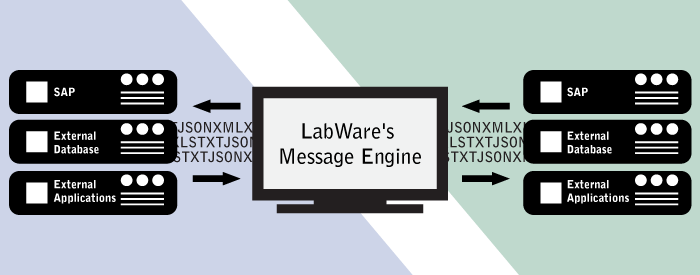 Does your LabWare implementation connect to external applications, such as SAP, another LIMS solution, or an external database? Are there multiple interfaces between LabWare and those external applications? If so, your LabWare implementation will greatly benefit from the Message Engine Template, as it is LabWare’s standardized and validated way to connect with external systems. In this post, we’ll learn about how LabWare’s Message Engine works... [Read More]
August 10, 2022 - Improve Laboratory Accuracy and Reporting Quality with a LIMS
 Errors may appear at any point in the laboratory workflow, from sample preparation and test setup to instrument calibration and report creation. Inaccuracies lengthen turnaround times, reduce efficiency, and potentially lead customers to poor decisions based on incorrect or missing data. Using a laboratory information management system (LIMS) to constrain sources of pre-analytical, analytical, and post-analytical errors offers benefits beyond just improving test accuracy. [Read More]
August 10, 2022 - The Elusive Promise of Managed Change
 I love the work of change management because it is messy, unpredictable, and deeply personal. Humans, when taken individually, are complex and full of surprises. But aggregate the expected behavior of 10, 50, or even 10,000 humans and the possible outcomes are practically limitless. I have yet to experience a boring day on a change management project and I don’t expect to live through one any time soon. [Read More]
August 10, 2022 - How Logilab ELN helps organizations to maintain ALCOA Data Integrity
 Data integrity, an area of increasing priority in today’s laboratory world and “The focus area” when it comes to regulatory compliance such as 21 CFR Part 11 and Eudralex Annex 11. Considering the number of warning letters from US FDA and other such regulatory bodies issued to pharmaceutical and medical devices manufacturers across the globe, Data integrity is the “Buzz word” in today’s audit. [Read More]
August 10, 2022 - HR in the Digital World: The Future of Human Resources
 Human resources have always been a critical function in any company. But with the digital age, the future or human resources is becoming an even more essential component of business success. To stay ahead of the curve, HR must undergo a digital transformation. This means deploying digital platforms for employee engagement, introducing personalized training and skilling programs, and using automation and analytics for insights and efficiency. [Read More]
August 3, 2022 - ELN – An ideal replacement for Paper Notebooks
 ELN is developed to replace paper notebooks so that scientists and researchers can record and search their records much more easily and archive their data onto another electronic device. An ELN allows lab professionals to access, share, and analyze data using a computerized system. ELN software is an advanced application that allows lab professionals to maintain critical experimental information in digital form, making it easily retrievable, more secured, and reusable for future experimental needs instead of adopting outdated and manual approaches. [Read More]
August 3, 2022 - 7 Steps to Finding Your Ideal Clinical Diagnostics LIMS
 Managing your clinical diagnostic laboratory’s information has become as important as managing the laboratory itself. More data-intensive technologies, more comprehensive regulatory compliance, and other trends require an effective laboratory information management system (LIMS) to effectively manage all that data. Turning to an effective vendor selection process is among the most important of those lessons. Naturally, we think LabLynx should top your list! But how do you truly know a vendor is a good match? These seven steps will help you find the right LIMS for your laboratory. [Read More]
August 3, 2022 - How Your Lab Can Represent Workflows Effectively
 Day-to-day lab operations rely on workflows to manage people, tasks, and systems so that work follows a consistent process every time. Defined workflows help ensure that all the steps are done in the correct order, are free from errors, and meet regulatory requirements.
But, representing lab workflows can be difficult.
[Read More]
Day-to-day lab operations rely on workflows to manage people, tasks, and systems so that work follows a consistent process every time. Defined workflows help ensure that all the steps are done in the correct order, are free from errors, and meet regulatory requirements.
But, representing lab workflows can be difficult.
[Read More]
August 3, 2022 - COVID Infections Surge While Laboratory Testing Wanes
 COVID cases have re-surged this summer in many regions of the US. New omicron variants are largely the cause of new waves of infection, fueled by increased summer travel and relaxed mask requirements. “Customers are telling us they’ve been ramping back up since May 2022 to handle more COVID testing,” says Robert Benz, marketing manager for HORIZON, now also part of Clinisys. The CDC COVID data tracker shows a steady rise in reported cases starting in the middle of March 2022. [Read More]
August 3, 2022 - Working with a LIMS Consultancy – The Help You Didn’t Know You Need
 Yes, shelling out money for a third-party consultancy may seem counterintuitive when you’re contemplating making a big investment in a laboratory informatics management system (LIMS). However, the value companies gain by working with a LIMS consultancy provides multiple dividends. As laboratory staff, you are the expert in your research field, and no one expects you to also understand the intricacies of deploying a LIMS; that’s why consultancies exist. LIMS implementations are our specialty and we’re here to help. [Read More]
August 3, 2022 - LIMS Add Competitive Advantage to CDMOS
 Contract and development manufacturing organizations (CDMOs) are a major resource in pharmaceutical & biotech product development, not only for smaller companies lacking research and manufacturing facilities but also for large organizations needing specific expertise. Lab information management systems (LIMS) are a key element in successful CDMOs, helping them transition to Industry 4.0 during the research and development phase, with synergies that even ease the path to manufacturing. [Read More]
August 3, 2022 - The Impact of Organizational Change Management in Selecting a Pharmacovigilance System
 Selecting a new pharmacovigilance system is a big decision that the company will have to live with for many years into the future. At Astrix, we advise our clients and assist in leading the process of selecting a new system which also involves organizational change management. A critical aspect to any change like this is to ensure that there is a strong alignment with the leadership team and everyone involved in the selection process. That cohesion is imperative. [Read More]
August 3, 2022 - EVENT RECAP 20/15 Visioneers Webinar – Event Recap
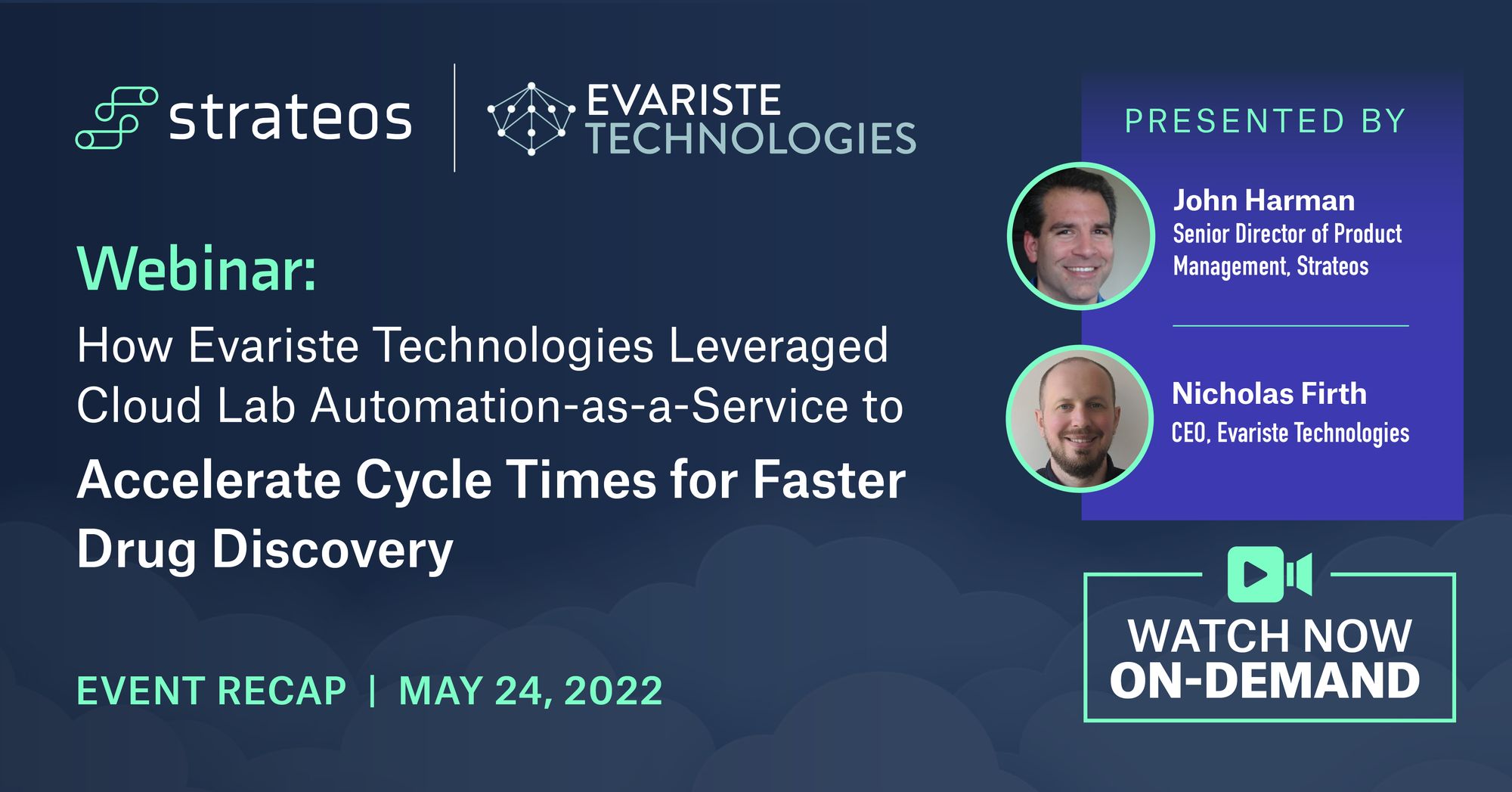 Strateos had the pleasure of participating with Evariste Technologies in a webinar hosted by 20/15 Visioneers, about cloud lab automation-as-a-service being leveraged to accelerate cycle times for faster drug discovery. 20/15 Visioneers is invested in R&D, IT and informatics solutions to improve efficiencies, collaboration and harmonization driven by FAIR data principles, in silico initiatives and automated cloud labs. [Read More]
July 27, 2022 - LIMS Software: Build or Buy

Paper-based workflows and documentation may have functioned fine when your laboratory began operations. Going paperless and manually keying your data into shared spreadsheets seemed like the natural progression and offered some efficiencies. But your lab staff is entering thousands of samples per week and finding it difficult to meet regulatory compliance. Your business needs a laboratory information management system (LIMS). You know of commercial LIMS software vendors in the marketplace, but couldn’t your IT group build an in-house solution? This brief topical article will examine why a laboratory may consider building its own LIMS, factors to address before developing an in-house system, and the advantages of commercial LIMS software. [Read More]
July 27, 2022 - How to Get the LIMS You Need – Part 3
 Part 1 of this blog series reviewed the importance of identifying your LIMS requirements to ensure the success of your project. We also reviewed some key considerations for identifying those needs. In Part 2 we looked at how understanding your requirements helps you choose the correct LIMS solution and supplier. In Part 3 we discuss the importance of documenting your requirements accurately, concisely, and most importantly with clarity. [Read More]

