Posted on February 13, 2023
By LabLynx
Journal articles
In this 2022 journal article published in
Metabolites, Djilali
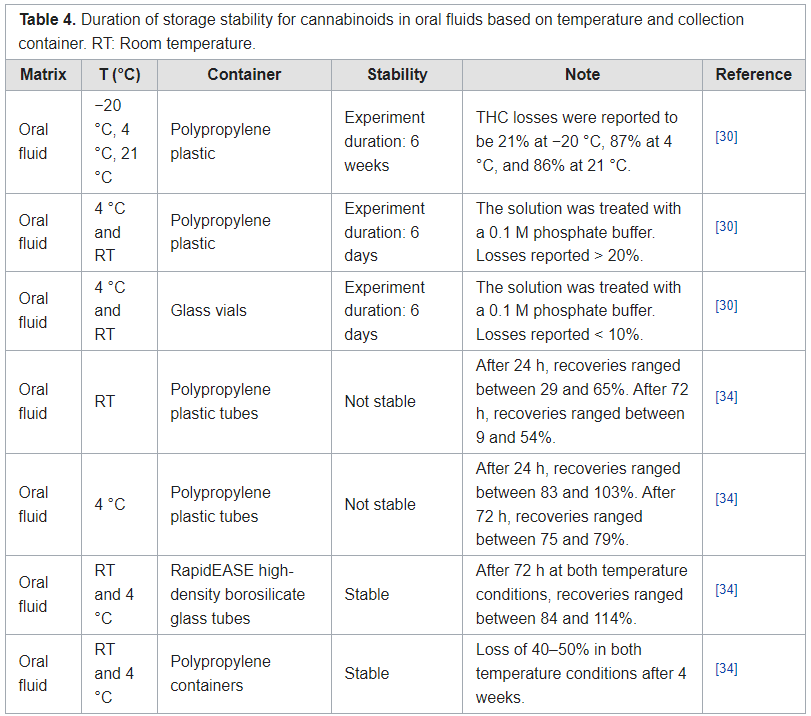
et al. present the results of a literature review "of studies performed on the effects of different storage conditions on the stability of cannabis compounds present in various biological matrices." Noting a growing need for accurate testing for the presence of cannabis compounds in humans, the authors first review the state of analysis among conventional biological matrices (i.e., blood, plasma, urine, and oral fluids) before looking at alternative matrices (i.e., breath, bile fluid, hair, sweat, cerumen, and dried blood spots). From their literature analysis, the authors made several conclusions about the various matrices, their collection methods, and their testing. Depending on the matrix, the authors recommended specific sample containers and storage temperatures among the conventional matrices, while noting that more research is required concerning laboratory testing of alternative matrices.
Posted on February 8, 2023
By LabLynx
Blog

Cybersecurity plays a more prominent role in today’s laboratories. Digitalization, remote work, and cloud applications make labs more connected and vulnerable to security breaches. Strong password policies and multi-factor authentication (MFA) improve security, though at a price. Security practices force laboratory workers to enter log-in credentials several times an hour, interrupting their workflows throughout the day. The resulting security fatigue frustrates people and leads to behaviors that can undermine security.
[Read More]
Posted on February 8, 2023
By LabLynx
Blog

COVID-19 impacted the supply of diagnostic testing needs like specimen tubes, personal protective equipment, and reagents. While demand for these supplies remains high, clinical diagnostic labs and healthcare testing facilities are not the only businesses impeded by supply shortages in the wake of the pandemic. Nearly every piece of electronic equipment used in the world relies on semiconductors (also referred to as integrated circuits or microchips), from cell phones and microwaves to pacemakers and automobiles. A global battle is being waged to boost the manufacturing of microchips and profit from the demand from nearly every market segment.
[Read More]
Posted on February 8, 2023
By L7 Informatics
Blog

Last June, the L7 Team attended Future Labs Live in Basel. Listen to Vasu Rangadass, Ph.D., L7 Informatics’ President and Chief Executive Officer, as he talks about digital transformation and the benefits of a unified platform approach for data intelligence for scientific enterprises.
[Read More]
Posted on February 8, 2023
By Thermo Fisher Scientific
Blog
 This two-part blog series explores how to use LIMS to enhance the overall scientific experience. In our last blog, we focused on how flexible interaction with LIMS can improve the lab-centric environment . This time, we delve into how data-centric elements play a role.
One of the main benefits of embracing digital transformation in the laboratory is better management, analysis, and tracking of data, contributing to the overall scientific experience.
[Read More]
Posted on February 8, 2023
By Astrix Technology Group
Blog

Your safety program will be impacted by the system and provider you choose for years to come. Although system functionality frequently predominates in selection criteria, we have learned to consider key attributes of each candidate system vendor as early in the selection process as possible before selecting the best fit.
[Read More]
Posted on February 8, 2023
By Agaram Technologies
Blog

In pretty much all laboratories, data capture from different types of instruments plays a vital role in their operations in terms of quality and compliance with requirements, standards and regulations. Traditionally, lab personnel recorded instrument data manually. But as the number of instruments used started to increase, and the volume of instrument data generated started to exponentially increase, human errors arising in the process of manual recording became inevitable.
[Read More]
Posted on February 8, 2023
By Corinne Jones
Newsletter
February 8, 2023 Laboratory Informatics Weekly Update Volume 21, Issue 6 In This Issue Featured Books LIMS Selection Guide for Food Safety and Quality Featured Content 02/08/2023 - Managing Security Fatigue in the LaboratoryCybersecurity plays a more prominent role in today’s laboratories. Digitalization, remote work, and cloud applications make labs more connected and vulnerable to security breaches. Strong password policies and multi-factor authentication (MFA) improve security, though at a price. Security practices force laboratory workers to enter log-in credentials several times an hour, interrupting their workflows throughout the day. The resulting security fatigue frustrates people and leads to behaviors…
Posted on February 7, 2023
By LabLynx
Journal articles
In this 2022 article published in the journal
BMC Medical Ethics, Scheibner
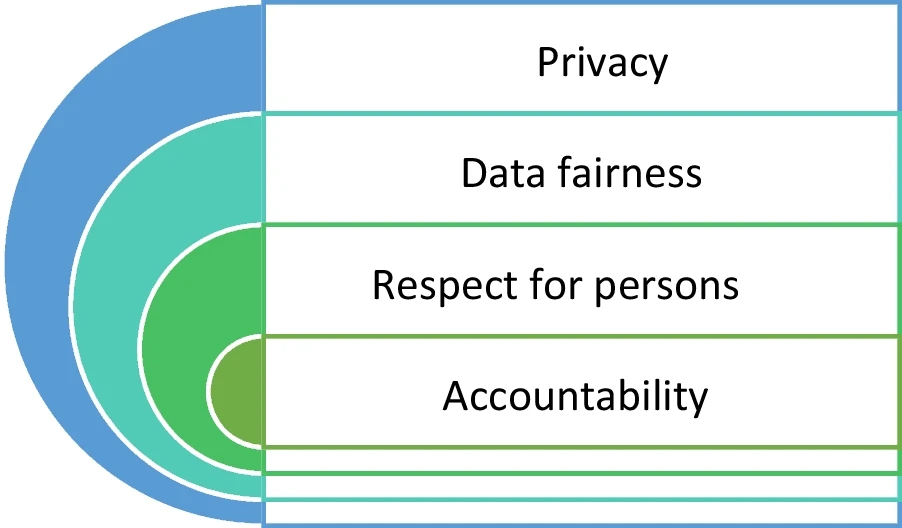
et al. present an assessment of Swiss hospital and medical research experts' views on using advanced technical solutions towards "sharing patient data in a privacy-preserving manner." In particular, the authors examine homomorphic encryption (HE) and distributed ledger technology (DLT) in the scope of European and Swiss regulatory frameworks. After an in-depth introduction on the topic, the authors present their methodology (an interview study) and their results, which touch upon five different information request scenarios. They then discuss the legal, ethical, and compatibility issues associated with using HE and DLT towards the problem of privacy-preserving patient data. They conclude that "a holistic approach needs to be taken to introducing HE and DLT as a mechanism for patient data management," one that tends "to recognize that social license and public trust from patients and physicians is as important as legal compliance."
Posted on February 1, 2023
By Corinne Jones
Newsletter
February 1, 2023 Laboratory Informatics Weekly Update Volume 21, Issue 5 In This Issue Featured Books LIMS Selection Guide for Food Safety and Quality Featured Content 01/31/2023 - Identity and Authentication in LabLynx LIMS SolutionsConsolidating aspects of your lab’s operations within a laboratory information management system (LIMS) improves your lab’s information security, in part, by controlling access to client information and testing data. Giving users a unique identifier is not enough to keep your LIMS secure. LabLynx ELab LIMS software solutions give laboratories several authentication options. [Read More] 01/31/2023 - The New Digital Age of the LaboratoryConsiderations for Better…
Posted on January 31, 2023
By LabLynx
Blog

Consolidating aspects of your lab’s operations within a laboratory information management system (LIMS) improves your lab’s information security, in part, by controlling access to client information and testing data. Giving users a unique identifier is not enough to keep your LIMS secure. LabLynx ELab LIMS software solutions give laboratories several authentication options.
[Read More]
Posted on January 31, 2023
By L7 Informatics
Blog
 Considerations for Better Data Provenance and the Case for a Holistic Approach:
Your lab processes have been built based on a meticulous methodology. You and your team go through your day with an exacting proficiency that allows you to work in an almost intuitive way. You know the steps of every protocol like the back of your hand. But what if someone else had to come in and understand exactly what you were doing and how you were doing it?
[Read More]





