Posted on January 18, 2023
By onQ Software
Blog

Data migration has always been seen as a barrier to a laboratory information management system (LIMS). The process of transferring data from one system to another can be complex, challenging, and time-consuming. That is why organisations should carefully consider the data migration process when implementing a LIMS and ensure that all data is accurately transferred by an expert LIMS vendor.
[Read More]
Posted on January 18, 2023
By Agaram Technologies
Blog

Selecting a Laboratory Information Management System (LIMS) for any lab is usually not a simple decision. There are different types of stakeholders i.e. users of the system, who expect LIMS to fulfill different requirements as each of them uses it for different purposes. Understanding and implementing the suggestions and requirements of all user groups provides increased value to a lab.
[Read More]
Posted on January 18, 2023
By Astrix Technology Group
Blog

As we start 2023, now is the perfect time to start thinking about your STEM career (Science, Technology, Engineering, and Mathematics) and which skills are most in demand.
According to the
Bureau of Labor Statistics (BLS), occupations in STEM fields are projected to grow by over 10% by 2031. This rapid growth means more opportunities than ever for aspiring professionals in the field.
[Read More]
Posted on January 18, 2023
By Corinne Jones
Newsletter
January 18, 2023 Laboratory Informatics Weekly Update Volume 21, Issue 3 In This Issue Featured Content 01/18/2023 - Laboratory Informatics in the Oil, Gas, and Chemical IndustriesModern laboratory informatics systems are essential to the efficient operations of both oil and gas production facilities and related research work. In research, ELNs can manage the progress of research projects with LIMS providing support for extensive routine testing programs. With a well-designed laboratory informatics architecture and attention paid to technology management and planning, a laboratory informatics system can support a petrochemical organization's research, production, regulatory, and customer support needs. [Read More] 01/18/2023…
Posted on January 16, 2023
By LabLynx
Journal articles
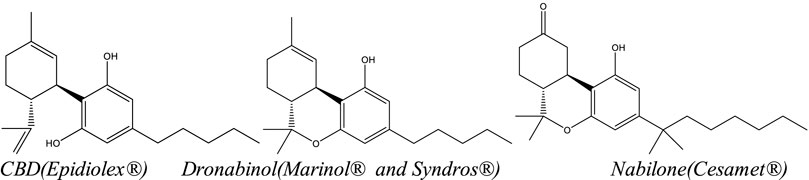
Hemp? Cannabis? Marijuana? Industrial hemp? Salehi
et al. note that terms like these and others are "a significant source of confusion for many," not just in the public but also within industry, marketing, and other groups. This not only causes issues with communicating research clearly but also employing that research to best effect. As such, the authors of this paper, published in the journal
Frontiers in Pharmacology, pose the important question, "What is essential for defining
Cannabis as a food, supplement, or drug?" Salehi
et al. answer this question by reviewing a wide swath of current study on the
Cannabis plant and its derivatives, highlighting critical definitions, composition, production practices, and pharmacological effects as part of defining the essentials of
Cannabis. The authors also go into its use in foods, drugs, and supplements, as well as regulatory status and testing methodologies. They conclude that "despite all of the recent advances, several cannabis topics remain to be addressed," and addressing those topics will require more consistent terminology, greater understanding of the human endocannabinoid system, and a more consistent "platform for developing research about cannabis and related industries" within a number of countries.
Posted on January 12, 2023
By Corinne Jones
Newsletter
January 12, 2023 Laboratory Informatics Weekly Update Volume 21, Issue 2 In This Issue Featured Content 01/11/2023 - Laboratories Must Start Exploiting the Benefits of DigitalizationAs a tight labor market makes it difficult to find staff, and tougher economic conditions start to bite, laboratory managers are being forced to think hard about driving efficiency. Using the power of computer-based laboratory informatics solutions provides an easy win, but many organizations are still not fully exploiting the benefits that solutions such as LIMS offer. Reducing the number of manual ‘touch points’ and interventions for samples and their data is key to…
Posted on January 11, 2023
By Autoscribe Informatics Inc.
Blog

As a tight labor market makes it difficult to find staff, and tougher economic conditions start to bite, laboratory managers are being forced to think hard about driving efficiency. Using the power of computer-based laboratory informatics solutions provides an easy win, but many organizations are still not fully exploiting the benefits that solutions such as LIMS offer. Reducing the number of manual ‘touch points’ and interventions for samples and their data is key to driving up efficiency.
[Read More]
Posted on January 11, 2023
By LabLynx
Blog

Laboratory work depends upon highly skilled people and sophisticated equipment to produce knowledge, information, and data. The cost, value, and ROI for those products are affected by the methods used to record and manage them. Producing knowledge, information, and data is one key aspect of laboratory work. Keeping it useable, accessible, and searchable over the long term is key to maintaining its value and realizing the return on your investment in laboratory space, equipment, and personnel.
[Read More]
Posted on January 11, 2023
By Agaram Technologies
Blog

This annex applies to all forms of computerised systems used as part of a GMP regulated activities. A computerised system is a set of software and hardware components which together fulfill certain functionalities. The application should be validated; IT infrastructure should be qualified. Where a computerised system replaces a manual operation, there should be no resultant decrease in product quality, process control or quality assurance. There should be no increase in the overall risk of the process.
[Read More]
Posted on January 11, 2023
By Astrix Technology Group
Blog

The Intake process and its corresponding tools have been a point of focus for companies updating their safety systems because the Case Intake (Initial Triage) Workflow phase can take up to 50% of the overall case processing time. While some companies are taking a “Big Bang” approach to evaluating (and replacing) safety systems, many look to maximize their investments by limiting their focus to improving or replacing their Intake tool.
[Read More]
Posted on January 9, 2023
By LabLynx
Journal articles
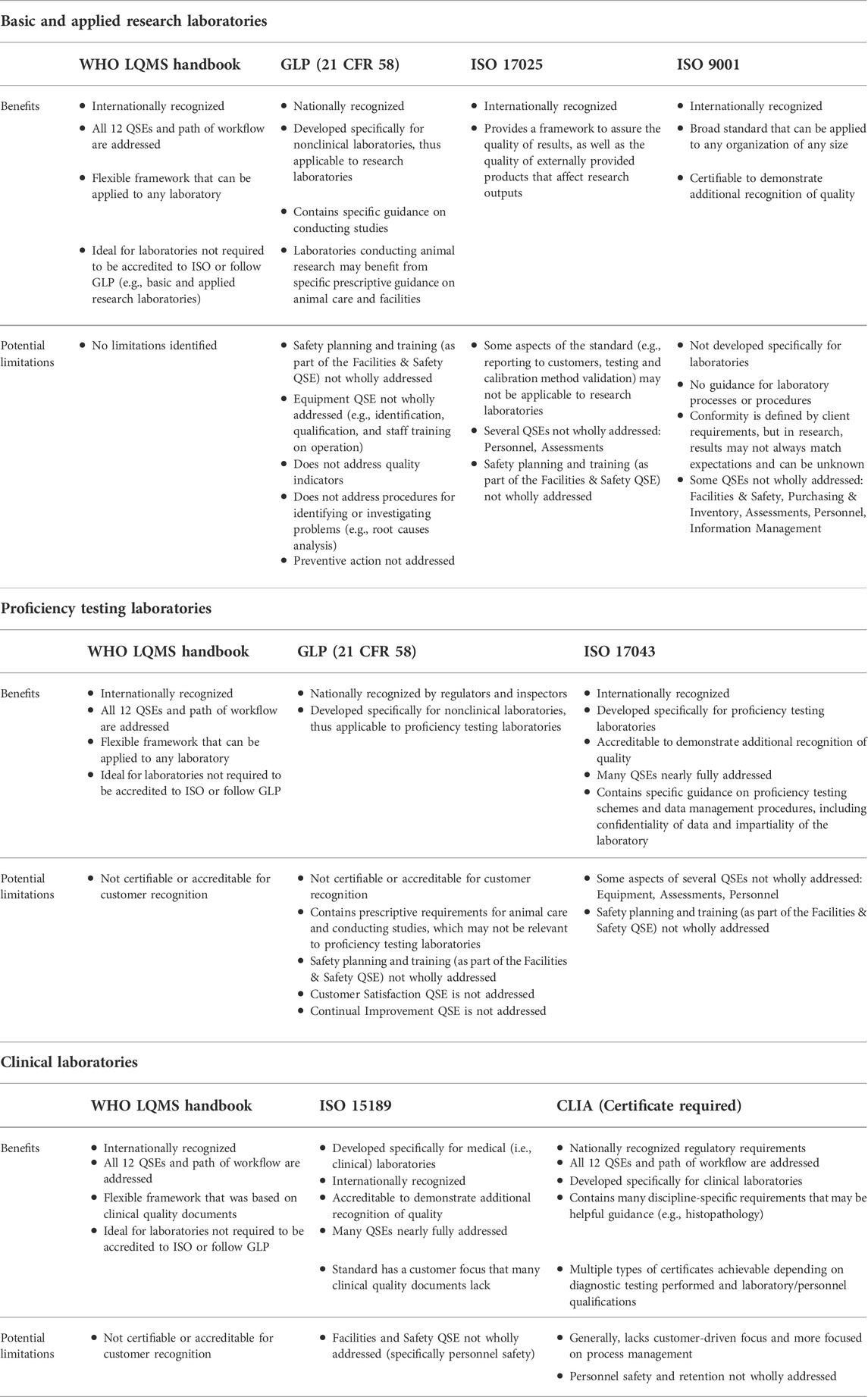
The quality management system (QMS) is increasingly a constant in laboratories of all types, lending support for better products and services coming out those labs. However, as technologies change and new challenges arise in research, medical, analytical, and R&D labs, the need for a more robust QMS becomes more obvious. In this 2022 article published in the journal
Frontiers in Bioengineering and Biotechnology, Pillai
et al. explore the varying frameworks of the QMS, which frameworks are best in which labs, and what implementation considerations should be made. After an informative introduction, the authors define the various laboratory types and match those types to the various QMS frameworks. They then provide a set of three critical recommendations for their implementation and use, concluding that while many frameworks are robust, the modern laboratory may need to incorporate more than one framework in order to fully achieve their quality goals. They add that "a holistic QMS framework complemented with guidance from multiple quality documents can benefit many laboratories that aim to address" the 12 quality system essentials (QSEs) of the Clinical and Laboratory Standards Institute (CLSI).
Posted on January 5, 2023
By Astrix Technology Group
Blog

Modern-day laboratories are experiencing record volumes of samples to process and test. Labs need to process these samples effectively and efficiently, but how is performance easily measured? Key Performance Indicators (KPIs) measure laboratory performance and help paint a picture of what is truly happening in the lab. KPIs can also provide insight into continuous improvement opportunities to increase laboratory productivity.
[Read More]





