

Current approaches in laboratory testing for SARS-CoV-2
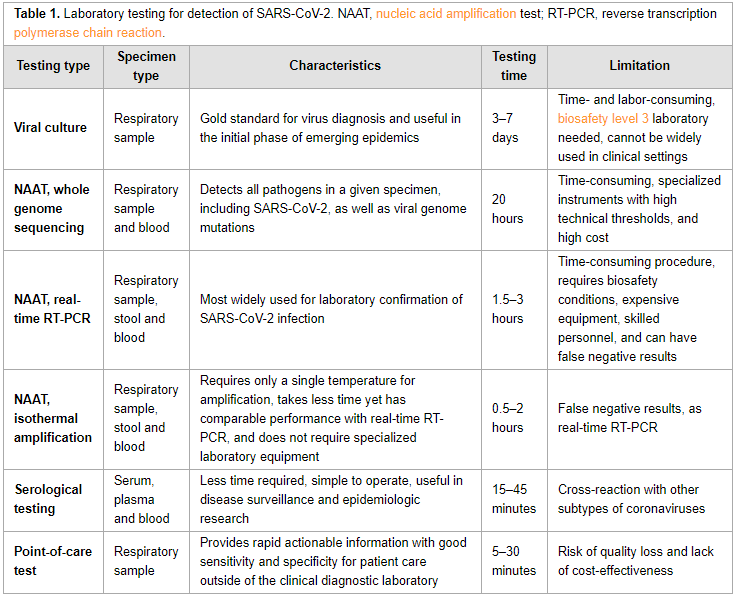 In this "short communication" from the International Journal of Infectious Diseases, Xu et al. provide a succinct review of the currently available laboratory testing technologies used to verify COVID-19 infection in patients. The authors review viral cultures, whole genome sequencing, real-time RT-PCR, isothermal amplification, and serological testing, as well as point-of-care testing utilizing one of those methods. They also discuss the sample types that should be collected, and at what stage they are most effective. They close by noting that choosing "a diagnostic assay for COVID-19 should take the characteristics and advantages of various technologies, as well as different clinical scenarios and requirements, into full consideration."
Drug Companies Cited Over Lack of Stability Testing

The US FDA provides a comprehensive public record of the citations and warning letters [1] issued to Pharmaceutical Companies. This provides an excellent resource for those looking for guidance to improve quality and mitigate risk. In the 2019 Fiscal year 81 warning letters were issued, the most in recent history, continuing the upward trend of the previous years.
Environmental Monitoring with a LIMS

 There are two ways to think about environmental monitoring. In environmental science, it involves field work: wastewater sampling, soil sampling, or outdoor air quality testing. The samples go to a lab, are processed, and results are reported back to the submitter.
[Read More]
8 Questions to Ask Your LIMS Project Manager
 What should be considered in choosing a LIMS Project Manager (PM) to ensure your LIMS project is successful? What questions should I ask him/her?
On Demand Webcast – The Connected Lab – How digital transformation is changing the way we do science
 Watch The On-Demand Webcast as part of our Partner Webcast Series
Digital transformation is driven by the ability to better connect all aspects of the laboratory – devices, consumables, workflows, data and people – to accelerate science and drive laboratory productivity. Smart instruments and consumables are enabling laboratories to improve instrument and consumable usage reducing downtime and optimizing the use of laboratory supplies and capacity.
[Read More]
How to Elevate Your Lab Through Technology

 In this eBook, brought to you by Sunquest, learn how and why technology purpose-built for each aspect of laboratory workflow is taking labs to new heights. Understand why a partner that specializes in the lab — and only the lab — delivers greater value on your investment and stronger advantages toward achieving your organization’s strategic imperatives.
[Read More]
The Digital Lab. “What it is and How we get There”
 There has been considerable amount of sizzle around the concept and benefits of a digital lab. The Webinar discussed the vision and the benefits of the Digital Lab, and how 2 expert organizations are helping customers take tangible steps to start the journey.
[Read More]
Laboratory Informatics Weekly Update – Volume 18, Issue 41
October 13, 2020 Laboratory Informatics Weekly Update Volume 18, Issue 41 In This Issue Featured Books COVID-19 Testing, Reporting, and Information Management in the Laboratory Featured Content 10/13/2020 - Thermo Fisher Scientific Further Expands COVID-19 Test Portfolio with Two New Antibody TestsThermo Fisher Scientific Inc. introduces two new SARS-CoV-2 antibody tests: the Thermo Scientific OmniPATH COVID-19 Total Antibody ELISA test, and the Thermo Scientific EliA SARS-CoV-2-Sp1 IgG test. These new tests for detecting COVID-19 antibodies expand the company's leading response to the pandemic, which ranges from molecular diagnostic tests and sample collection products, to personal protective equipment, to support…Towards a contextual approach to data quality
The quality of data used in not only research centers but also clinical and environmental testing laboratories of all kinds is of great import. For experimental researchers, it means a higher likelihood of reproducible results by others. For testing labs, it means greater assurances of accuracy and outcomes. However, ensuring quality data is more than simply implementing a few good data practices. Stefano Canali, a researcher at Leibniz University Hannover, argues that more must be done, including changing how we conceptualize what "high-quality data" actually entails. In Canali's 2020 essay, published in the journal Data, a context-based approach to understanding data quality is argued as necessary, "whereby quality should be seen as a result of the context where a dataset is used, and not only of the intrinsic features of the data." After reviewing three philosophical areas of research into data quality, Canali lays out his plan for a more contextual approach of data quality and discusses three practical cases that demonstrate the value of such an approach. He concludes that despite the value of older approaches in some cases, "discussions of quality should also take into account specific contexts and be flexible in connection to these contexts, as opposed to setting up categorizations and hierarchies that are intended be applied to all and any contexts of research practices."Analysis of cannabidiol, delta-9-tetrahydrocannabinol, and their acids in CBD/hemp oil products
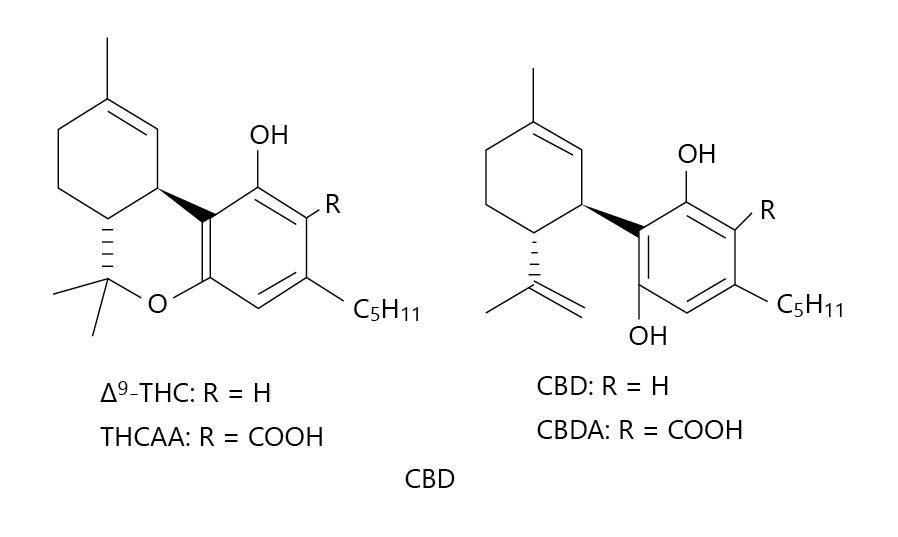 In this 2020 paper published in Medical Cannabis and Cannabinoids, ElSohly et al. present the results from an effort to demonstrate the use of a relatively basic gas chromatography–mass spectrometry (GC-MS) method for accurately measuring the cannabidiol, tetrahydrocannabinol, cannabidiolic acid, and tetrahydrocannabinol acid content of CBD oil and hemp oil products. Noting the problems with inaccurate labels and the proliferation of CBD products suddenly for sale, the authors emphasize the importance of a precise and reproducible method for ensuring those products' cannabinoid and acid precursor concentration claims are accurate. From their results, they conclude their validated method achieves that goal.
The True Value of Best-of-Breed
 Best-of-breed laboratory technology drives higher efficiency, productivity, and profitability compared to enterprise-wide system modules from vendors who do not maintain a targeted focus on only the lab. In this new video, learn how and why Sunquest’s wide-ranging technical and cross-discipline laboratory expertise make us the One delivering labs to new heights.
[Learn More]
Running A Life Science R&D Business with Dr. Aaron Sato, CSO of Twist Biopharma
 This is the second article in a three-part series of Q&A conversations with Dr. Aaron Sato, CSO of Twist Biopharma, a division of Twist Bioscience. Part one focused on how Twist is adapting to the ongoing COVID-19 crisis and appeared in the spring edition of Benchtalk Journal. Part three will focus on Dr. Sato’s career as well as the unique approach Twist Biopharma is taking to antibody discovery and will appear in the fall edition of Benchtalk Journal.





