Laboratory Informatics Weekly Update – Volume 18, Issue 25
June 23, 2020 Laboratory Informatics Weekly Update Volume 18, Issue 25 In This Issue Featured Books Laboratory Information Management for Cannabis Quality Assurance Featured Content 06/23/2020 - Astrix On-Demand Webinar – Planning and Executing a LabVantage LIMS ValidationValidating a Laboratory Information Management System (LIMS) with the many configuration and integration options that are available for LabVantage requires significant project planning and team coordination to execute successfully. [Read More] 06/22/2020 - LabLynx Announces C-SIC Kit Release LabLynx, Inc. today announced an important new component in its overall COVIDLiMS informatics solution for laboratories, designed to offer faster, more accurate coronavirus testing as well…The regulatory landscape of precision oncology laboratory medicine in the United States: Perspective on the past five years and considerations for future regulation
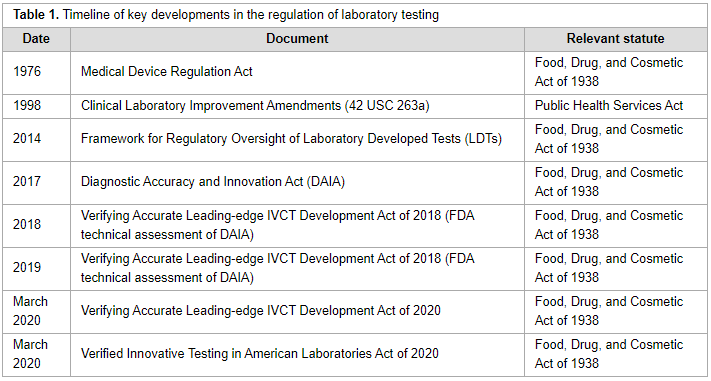 What is the current status of laboratory developed tests (LDTs) and the U.S. Food and Drug Administration's (FDA) approach to them? What are the arguments for and against their regulation? In this 2020 review article published in Practical Laboratory Medicine, University of Washington's Eric Konnick covers the current U.S. regulatory environment for LDTs, as well as recent developments since the October 2014 FDA release of LDT draft guidance. Konnick then provides extensive commentary on the scope of LDT regulation in the U.S., including perceived risks to patients, LDT accuracy and equivalency, and how regulatory certainty fits into LDT innovation. He closes with recommendations for approaching future LDT regulation, concluding that "identifying tools that can be leveraged to improve laboratory test quality may offer many benefits that do not necessarily require a burdensome regulatory framework."
How to Ensure Value from your Lab Informatics Implementation


[Read More]
SCC adds new product to our Research Information System Suite product catalogue

 After 40 years our primary focus remains to provide laboratories with world-wide powerful and flexible software tools enabling them to compete in a highly competitive clinical diagnostics marketplace. Applying technology to create the most advanced—and most cost-effective—healthcare IT solutions continues to be our strategy as we introduce SoftBiobank™ to our Research Information Systems Suite.
[Read More]
How Labs and Businesses Can Work Together to Reopen Safely

As the nations of the world begin transitioning from flattening the curve to cautiously beginning to resume doing business, the focus is turning to how best to prevent a “second wave” - and in fact to operate over the long term in the face of potential similar pandemics. Experts tell us this may only be the beginning, and that the likelihood is that new zoonotic viruses will arise with increasing frequency as we continue to disrupt natural habitats to accommodate the ever-increasing human population.
[Read More]
Laboratory Informatics Weekly Update – Volume 18, Issue 24
June 16, 2020 Laboratory Informatics Weekly Update Volume 18, Issue 24 In This Issue Featured Books COVID-19 Testing, Reporting, and Information Management in the Laboratory Featured Content 06/16/2020 - How to Ensure Value from your Lab Informatics Implementation Picture this—it’s the day that the lab informatics system you’ve needed for years finally goes live. You hear the cheers, you see the smiles on everyone’s faces, there’s excitement from the end users to learn the new system, and your boss can see the value of the system you implemented. It’s a happy day. If... [Read More] 06/16/2020 - Abbott Informatics…PCR and Diagnostics: COVID-19 Pandemic Reveals Serious Issues

There has been recent discussion of the lack of accuracy of COVID-19 tests - both virus (rRT-PCR), which has been widely regarded as “the gold standard”, and antibody assays. The issue with PCR is not with the methods themselves, but the degree of human error that creeps in due to the complexity of the workflow - including pre-analytical sample handling, which can account for up to 68% of errors according to a recent paper, with overall inaccuracies of up to 41%.
[Read More]
Laboratory testing methods for novel severe acute respiratory syndrome coronavirus 2 (SARS-CoV-2)
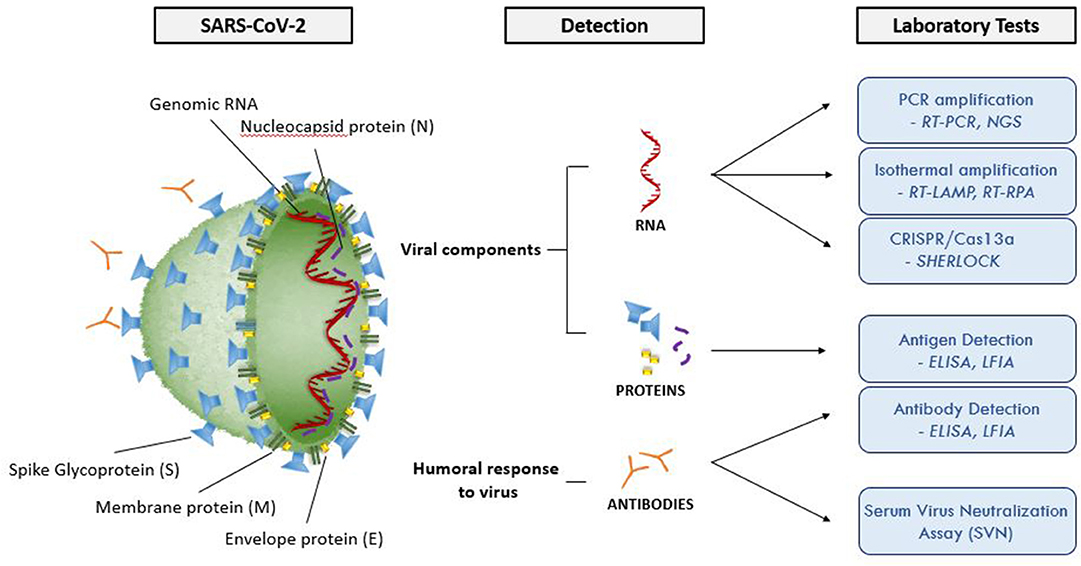 In this 2020 article published in Frontiers in Cell and Developmental Biology, D'Cruz et al. provide an overview of the current laboratory methods available to test for coronaviruses, with a focus on SARS-CoV-2, the virus responsible for COVID-19. After providing an introduction to COVID-19 and its virus, the authors discuss the most common methods—such as qRT-PCR, ELISA, and LFI—as well as emerging diagnostic methods involving isothermal nucleic acid amplification, CRISPR, and NGS. They conclude with several visuals comparing the methods and when they are used, and they emphasize the importance of these test methods (as well as laboratory preparedness) in addressing rapidly evolving viral infection scenarios.
Selecting a Managed Services Partner for Laboratory Informatics
 Scientific organizations face ever increasing pressure from business stakeholders to reduce costs while improving operational efficiency, scalability, and agility. Laboratory research is more complicated and dependent on informatics than ever. IT organizations are seeking a solution through the development and deployment of an integrated laboratory informatics strategy and infrastructure.
[Read More]
National Institutes of Health (NIH) Research Updates – June 2020
The National Institutes of Health (NIH) is our nation’s medical research agency and strives to make scientific discoveries that improve health and save lives. Founded in 1870, the NIH conducts its own scientific research through its Intramural Research Program (IRP), which supports approximately 1,200 principal investigators and more than 4,000 postdoctoral fellows conducting basic, translational and clinical research. In this blog, we will highlight recent ground-breaking NIH research.
[Read More]
Laboratory Informatics Weekly Update – Volume 18, Issue 23
June 9, 2020 Laboratory Informatics Weekly Update Volume 18, Issue 23 In This Issue Featured Books COVID-19 Testing, Reporting, and Information Management in the Laboratory Featured Content 06/09/2020 - Selecting a Managed Services Partner for Laboratory InformaticsScientific organizations face ever increasing pressure from business stakeholders to reduce costs while improving operational efficiency, scalability, and agility. Laboratory research is more complicated and dependent on informatics than ever. IT organizations are seeking a solution through the development and deployment of an integrated laboratory informatics strategy and infrastructure. [Read More] 06/09/2020 - National Institutes of Health (NIH) Research Updates – June 2020The…Bridging the collaboration gap: Real-time identification of clinical specimens for biomedical research
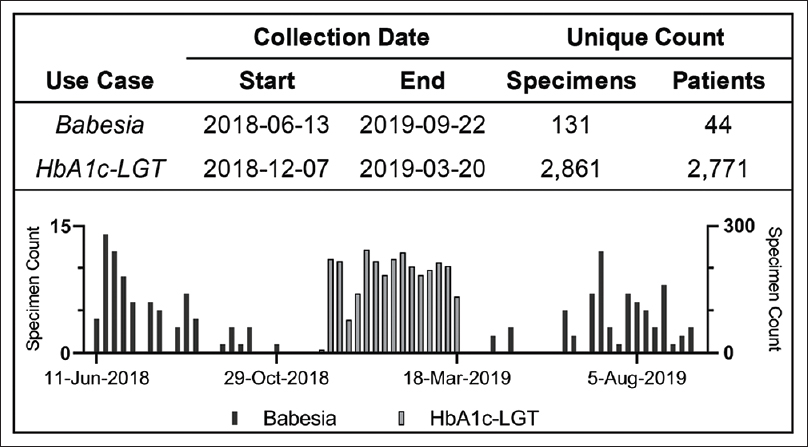 In this 2020 article published in Journal of Pathology Informatics, Durant et al. of the Yale New Haven Health system present the results of their attempt to automate the identification and notification of laboratory biospecimens for biomedical researchers. Noting biospecimens' value to basic, translational, and clinical research, the authors wanted to get around the "technical, logistic, regulatory, and ethical challenges" of accessing biospecimen data. They developed Prism, a tool built on open-source technology for efficiently identifying and notifying investigators of biospecimen availability in real time. The authors present details of two use cases and conclude that their "solution is highly scalable to meet the needs of even large academic centers and reference laboratories," while also guaranteeing that the virtualization of the associated workflow "within a microservices environment does not introduce a performance penalty."