

A Day (or Three) In the Life of a COVID-19 Testing Event – Day Three

Well, this was to be the results blog. However, day three turned into day four, then day five…the test was Sunday morning, it’s now Friday and still nothing. They told me 2–3 days during my screening… Fortunately, I am still breathing ok, haven’t developed any alarming symptoms and continue to live normally in expectation of a negative result.
[Read More]
A Day (or Three) In the Life of a COVID-19 Testing Event – Day Two

OK, so I did it, I got tested. What now? That’s exactly what I wondered, so I put those awesome journalistic skills to work (from home of course) and set out to find out where my sample went and what was being done with it.
[Read More]
A Day (or Three) In the Life of a COVID-19 Testing Event – Day One

I’m 64 (okay, I’ll be 65 in a week or so), I had been feeling more fatigued than normal, and have had a dry, non-productive cough since probably January. Free community COVID-19 testing sites had been set up throughout the Atlanta area, with one close to me at Kennesaw State University. So I decided to see if I could get tested.
[Read More]
COVID-19 Testing…by Wastewater Labs

The way forward for tracking the second wave? No, you aren’t dreaming this and you didn’t misread. Turns out wastewater treatment labs may have an important part to play in keeping tabs on the 2019 novel coronavirus as we look to reopen America — in fact, the entire world. Authorities will want to be aware of any rise in cases, especially by region. But how can wastewater laboratories help?
[Read More]
Integrating Laboratory Instruments with Waters Empower 3
 Integrating Laboratory Instruments with Waters Empower 3 is a crucial initiative in many labs. Modern analytical laboratories have experienced massive growth in data volumes over the last decade. In order to meet the challenge of turning this data into knowledge, laboratories are looking to automate and integrate laboratory operations and processes as much as possible in order to enhance data integrity and provide digital continuity throughout the product lifecycle.
Introducing SCC’s Research Information Systems Suite™
 If you’re looking for a complete precision medicine solution for managing samples, processes, data, and analysis, look no further. We are (it can be something else, but something is needed to form the sentence)Introducing SCC’s Research Information Systems Suite, offering an advanced workflow-processing center for genetics, genomics, proteomics, sequencing, and other lab experiments and tests.
Introducing the World’s Largest Laboratory and Genetics Information Management Systems – SCC Soft Computer
SCC Soft Computer is a privately held company founded in 1979 by Gilbert Hakim, SCC Soft Computer is one of the leading and most widely recognized providers of clinical information management systems for the healthcare industry and is at the forefront of laboratory, genetics, blood services, and outreach information systems software development. SCC Soft Computer offers full suites of integrated laboratory and genetics information management system solutions that enable our clients to optimize their workflows and increase productivity.
Laboratory Informatics Weekly Update – Volume 18, Issue 20
May 19, 2020 Laboratory Informatics Weekly Update Volume 18, Issue 20 In This Issue Featured Books Past, Present, and Future of Cannabis Laboratory Testing and Regulation in the United States Featured Content 05/19/2020 - Integrating Laboratory Instruments with Waters Empower 3Integrating Laboratory Instruments with Waters Empower 3 is a crucial initiative in many labs. Modern analytical laboratories have experienced massive growth in data volumes over the last decade. In order to meet the challenge of turning this data into knowledge, laboratories are looking to automate and integrate laboratory operations and processes as much as possible in order to enhance data…COVIDLiMS: Who’s Your PAHPA (Pandemic and All-Hazards Preparedness Act)?

What role can labs play in helping to meet the suddenly very relevant federal law recently re-authorized as the Pandemic and All-Hazards Preparedness and Advancing Innovation Act (PAHPAIA), Public Law №116–22? As we all continue to navigate through the unfamiliar waters of global lockdown, wearing of masks, gloves and other PPE, authorities are recognizing three main keys to successful pandemic prevention and management.
[Read More]
BlueTrace: A privacy-preserving protocol for community-driven contact tracing across borders
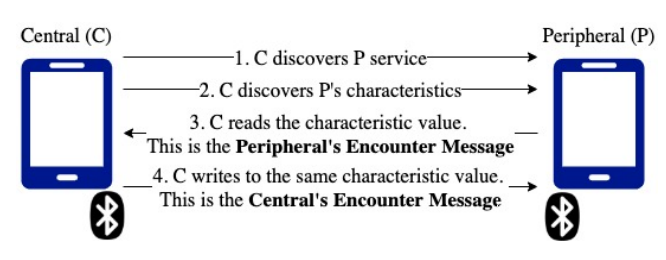 This April 2020 whitepaper authored by Bay et al. of Singapore's Government Technology Agency presents BlueTrace, a privacy-preserving protocol that underpins Singapore's nationally deployed Bluetooth-based contact tracing system TraceTogether. The white paper describes the purpose of BlueTrace as addressing the key limitation of manual contact tracing: "an infected person can only report contacts they are acquainted with and remember having met." They describe the protocol's design considerations and implementation challenges, as well as how it meets interoperability requirements of health authorities considering its use. Finally they address potential security concerns surrounding the tech. They conclude that while not a stand-alone solution to solving contract tracing issues during a pandemic, Bluetooth-based automated tracing instances can still "ultimately coexist and support the pandemic response plans and processes of the public health authorities guiding us through" a pandemic. The authors also make available OpenTrace, an open-source reference implementation of BlueTrace, on GitHub.
The Complete Guide to LIMS and Laboratory Informatics: 2020 Edition Published
 The latest edition of the longtime industry reference guide to systems, vendors, information and resources concerning laboratory data management has been made available to the public.
Strengthening public health surveillance through blockchain technology
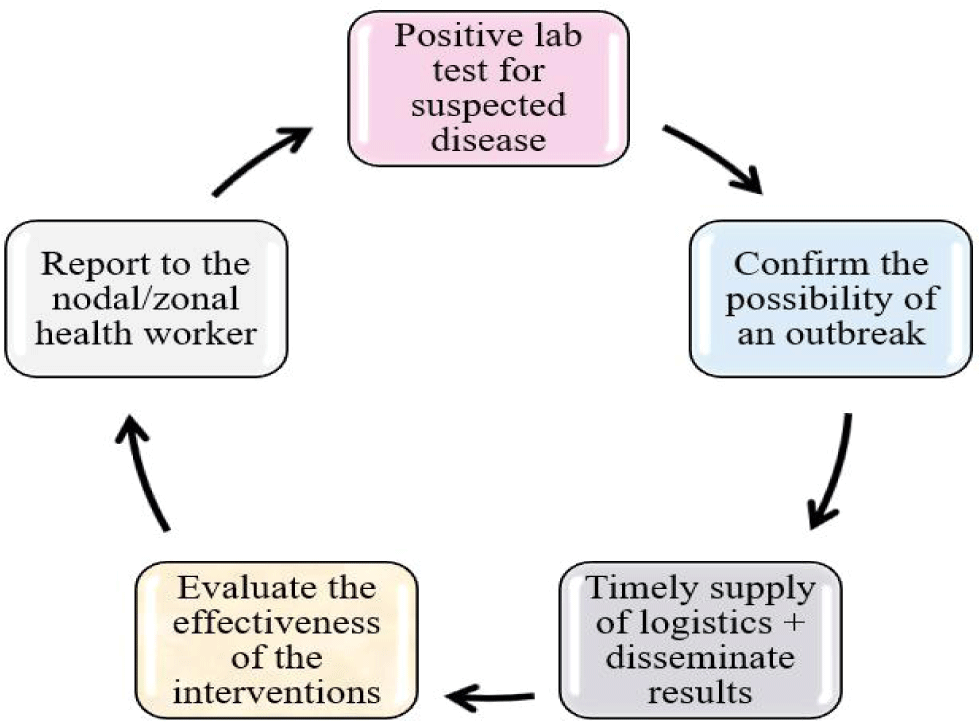 In this 2019 paper published in AIMS Public Health, Bhattacharya et al. argue for the benefits of using blockchain technology in public health surveillance. Noting the transparency and trust aspects of the technology, as well as the benefits of " data security and privacy, cost-effectiveness, and verifiability of data," the authors discuss four primary ways blockchain can be applied to healthcare activities, including community disease surveillance. "Blockchain could help independent organizations to manage data more efficiently during pandemics," they note, particularly in unison with machine learning and AI techniques. They conclude that blockchain-based disease surveillance "can be more effective and rapid than traditional surveillance in terms of coverage, durability, consensus, selective privacy, uniqueness, and timing."





