Posted on May 12, 2020
By Astrix Technology Group
Blog

The National Institutes of Health (NIH) is our nation’s medical research agency and strives to make scientific discoveries that improve health and save lives. Founded in 1870, the NIH conducts its own scientific research through its Intramural Research Program (IRP), which supports approximately 1,200 principal investigators and more than 4,000 postdoctoral fellows conducting basic, translational and clinical research. In this blog, we will highlight recent ground-breaking NIH research.
Posted on May 12, 2020
By Benchling
Blog

We are thrilled to announce Benchling Insights, a new solution for life science R&D companies to make faster, more informed decisions from their data. Insights is seamlessly integrated with all Benchling applications, and enables users to query, visualize, and collaborate around high quality, structured data that resides on the platform.
Benchling enables the creation of higher quality data through a unified data model. Now, with Insights, our customers have the tools to make faster, more informed decisions about their scientific pipeline and operational processes, ultimately accelerating the pace of their research. Best of all, this product is automatically included in subscriptions to the Benchling Professional and Benchling Enterprise editions.
Posted on May 12, 2020
By Corinne Jones
Newsletter
May 12, 2020 Laboratory Informatics Weekly Update Volume 18, Issue 19 In This Issue Featured Books CannaQA Catalog & Price List Featured Content 05/12/2020 - National Institutes of Health (NIH) Research Updates – May 2020The National Institutes of Health (NIH) is our nation’s medical research agency and strives to make scientific discoveries that improve health and save lives. Founded in 1870, the NIH conducts its own scientific research through its Intramural Research Program (IRP), which supports approximately 1,200 principal investigators and more than 4,000 postdoctoral fellows conducting basic, translational and clinical research. In this blog, we will highlight recent…
Posted on May 5, 2020
By Shawn Douglas
Journal articles
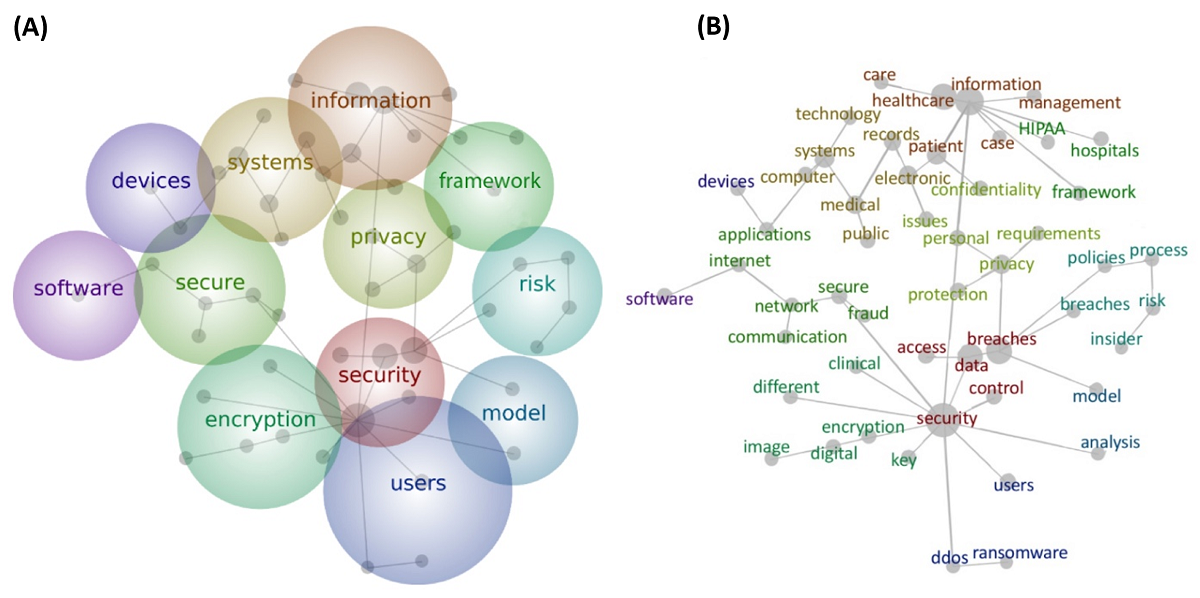
Cybersecurity remains a vital consideration for entities within the healthcare setting, with academic researchers publishing on the topic frequently. But since computer security in healthcare first started getting researched in the mid-1980s, how have topical focuses shifted? What areas, if any, are underserved by current research? Jalali
et al. attempt to answer those and other questions in this 2019 paper published in
Journal of Medical Internet Research. Using bibliometric analysis as their tool, the authors conducted chronological analysis, domain clustering analysis, and text analysis on 472 English-language articles ranging from 1985 to September 2017. The conclude that "[d]espite the increase in research and attention to cybersecurity, there are persistent shortcomings in the research on cybersecurity," including implications that emerging cyber threats, physical security methodologies, and several human elements of cybersecurity have not been sufficiently captured in research. They worry that "a school of thought that knowledge, especially specific strategies and tactics, should not be shared openly," further suppresses research growth and utility.
Posted on May 5, 2020
By Astrix Technology Group
Blog
As part of its mission to ensure public safety, the FDA inspects manufacturers or processors of FDA-regulated products to verify that they comply with relevant regulations. The FDA also inspects facilities that conduct clinical trials with humans and laboratories that conduct studies with animals or microorganisms when these studies are used to apply for FDA approval of a medical product. A typical inspection can last for 2-3 days and involves a number of key steps that you should be aware of.
Posted on May 5, 2020
By CSols Inc.
Blog

No more validation.
CSV is a thing of the past.
These are just some of the attention-grabbing headlines I’ve seen in various blogs and LinkedIn posts over the last 12 months about Computer System Assurance (CSA), and the reality couldn’t be more different.
The U.S. FDA originally targeted their
Case for Quality initiative (2011) at improving medical device quality and usability for patient safety. More recently, FDA’s Center for Devices and Radiological Health has sponsored an industry pilot team under the CSA title to improve Computer System Validation (CSV) approaches, as the existing practices were identified as a barrier to the adoption of new technologies.
But, really, how much difference can there be between Validation and Assurance?
Posted on May 5, 2020
By Corinne Jones
Newsletter
May 5, 2020 Laboratory Informatics Weekly Update Volume 18, Issue 18 In This Issue Featured Books The Complete Guide to LIMS and Laboratory Informatics: 2020 Edition Featured Content 05/05/2020 - Strategies for Surviving an FDA AuditAs part of its mission to ensure public safety, the FDA inspects manufacturers or processors of FDA-regulated products to verify that they comply with relevant regulations. The FDA also inspects facilities that conduct clinical trials with humans and laboratories that conduct studies with animals or microorganisms when these studies are used to apply for FDA approval of a medical product. A typical inspection can…
Posted on April 28, 2020
By onQ Software
Blog

With COVID-19 forcing many companies into undergoing a rapid and often premature digital transformation this can raise challenges for the business units.
In the laboratory it is almost impossible to perform all work remotely and we have seen multiple strategies such as rotating shifts to avoid infection and those who can work from home do so.
One of the main enabling factors is having the right laboratory informatics, LIMS, ELN and supporting infrastructure.
Posted on April 28, 2020
By Benchling
Blog
Colles Price, M.S., PhD is a Research Fellow in Medicine at Dana Farber Cancer Institute, Harvard Medical School, and a Postdoctoral Scholar, Cancer Program, Broad Institute. He is currently identifying and validating targets from the Cancer Dependency Map. In particular, he is interested in understanding the anti-cancer effects of hypoxia-related genes and how polar-related genes control cell proliferation and viability. We had the chance to sit down with him and learn about how COVID-19 is affecting his research.
Posted on April 28, 2020
By Benchling
Blog
As an industry that relies on having employees in the lab, biotech has been disrupted by COVID-19 and the dramatic and unexpected set of changes it has introduced. For many scientists, working remotely is a brand new concept. And yet, the scientific industry is also being called upon to develop tests, therapies, and vaccines that put this crisis to rest.
To share how biotechs around the world are managing their projects, caring for their people, and supporting the community during coronavirus, we built a guide with best practices and unique ideas from our customers.
Posted on April 28, 2020
By Corinne Jones
Newsletter
April 28, 2020 Laboratory Informatics Weekly Update Volume 18, Issue 17 In This Issue Featured Books CannaQA Catalog & Price List Featured Content 04/28/2020 - 5 laboratory informatics enablers to help working remotelyWith COVID-19 forcing many companies into undergoing a rapid and often premature digital transformation this can raise challenges for the business units. In the laboratory it is almost impossible to perform all work remotely and we have seen multiple strategies such as rotating shifts to avoid infection and those who can work from home do so. One of the main enabling factors is having the right laboratory…
Posted on April 27, 2020
By Shawn Douglas
Journal articles
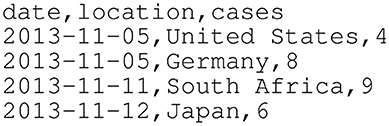
This week we turn back the clock a couple of years to 2018, when Fairchild
et al.published in the journal
Frontiers in Public Health their analysis of the challenges of epidemiological data reporting. With the march of COVID-19 today, their analysis and advice holds even more relevant today. In their paper, Fairchild
et al. first introduced the state of epidemiological data reporting, particularly on the internet. They then discussed the three challenges that affect such reporting: user interface, data format, and data reporting issues. They concluded with nine clear best practices that should be followed when managing epidemiological data for release to the public. They imagined a scenario of a standardized platform adopted worldwide, "where global data could be easily collected without the challenges we currently face. This would in turn streamline epidemiological and public health analysis, modeling, and informatics, resulting in better public health decision-making capabilities."





