

PITTCON 2019 Highlights – New twists refresh Pittcon
 PITTCON celebrated its 70th year this year making it one of the oldest laboratory shows and still one of the largest US exhibitions we attend. The 2019 format, held at the Philadelphia Convention Center, was similar to last year with a five-day technical program and a three-day exhibition. Many US Labs, large and small, find PITTCON a great place to research LIMS. They are able to compare the main vendors in-depth over the course of the three days and get to understand them enough to make some initial choices and guide their future decisions over user requirements. Unlike in previous years there was no “Informatics” section, so those doing the research had to search out the LIMS vendors from the exhibitors.
[Read More]
Laboratory Informatics Weekly Update – Volume 17, Issue 14
April 3, 2019 Laboratory Informatics Weekly Update Volume 17, Issue 14 In This Issue Upcoming Webinars 04/10/2019 - Webinar: Cloud-Based Identity: Maximize Security, Minimize Impact on Resources04/17/2019 - Webinar: Implementation and Deployment of ELN in R&D Environments: Key factors for Success04/24/2019 - Webinar: Data Analytics and IT as Enablers of Lab Improvement Journal Articles DAQUA-MASS: An ISO 8000-61-based data quality management methodology for sensor dataIn this 2018 paper published in Sensors, Perez-Castillo et al. present DAQUA-MASS, their own take on the ISO 8000-61 data quality standard but updated for the world of the internet of things and smart, connected…DAQUA-MASS: An ISO 8000-61-based data quality management methodology for sensor data
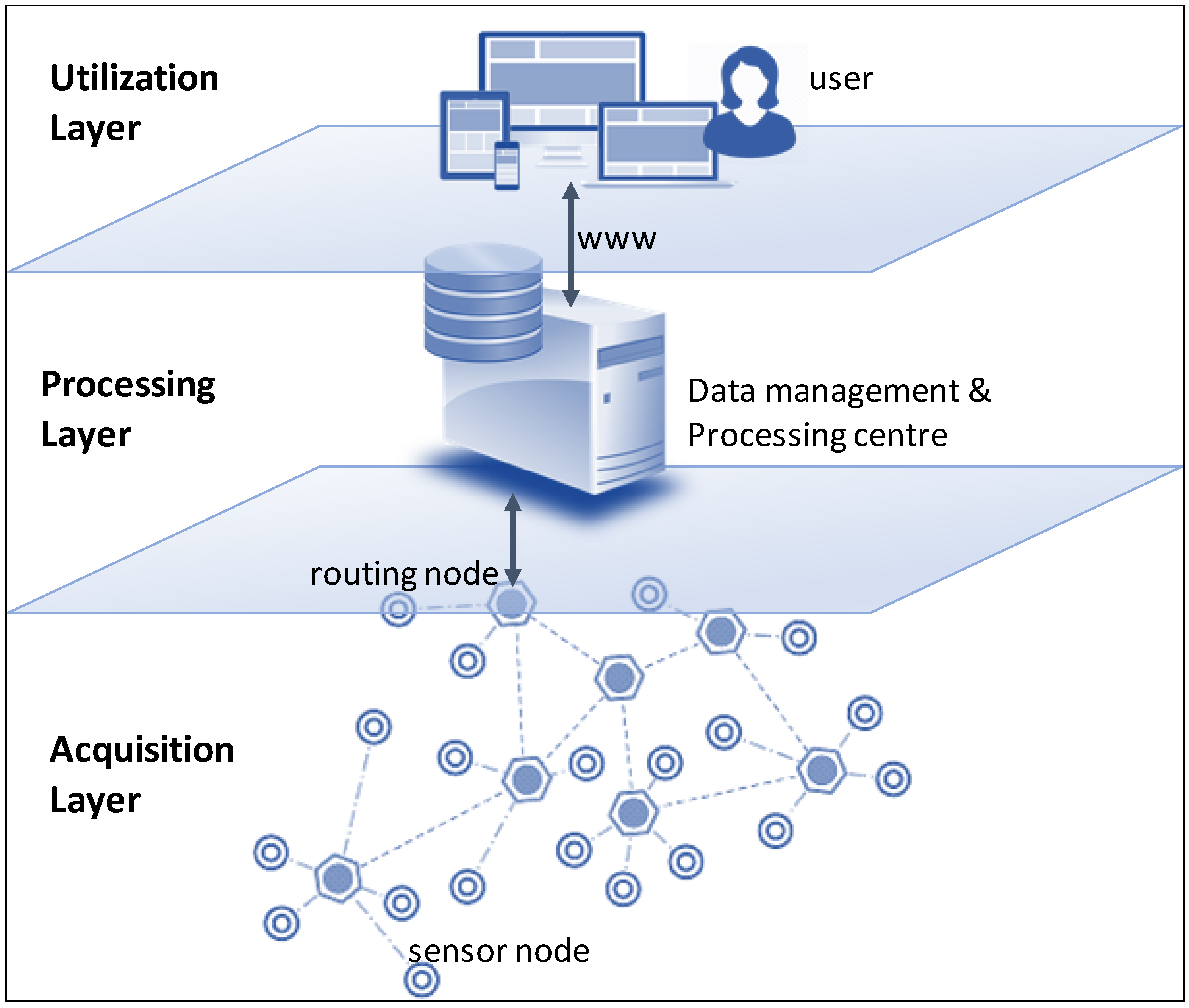 In this 2018 paper published in Sensors, Perez-Castillo et al. present DAQUA-MASS, their own take on the ISO 8000-61 data quality standard but updated for the world of the internet of things and smart, connected products (SCPs), in particular sensor networks. While recognizing that data quality has been studied significantly over the decades, little work has gone into the formal policies for SCP and sensor data quality. After presenting data challenges in SCP environments, related work, their model, and their methodology, the authors conclude that their "data quality model, along with the methodology, offers a unique framework to enable designers of IoT projects—including sensor networks and practitioners in charge of exploiting IoT systems—to assure that the business processes working over these systems can manage data with adequate levels of quality."
Improving Laboratory Efficiency with Application Portfolio Rationalization
 Industry-leading enterprises have tended to invest heavily in laboratory IT initiatives to drive the innovation necessary to stay competitive while improving laboratory efficiency. These organizations deploy applications for all the right reasons – reduce costs, improve organizational efficiency, drive innovation. Unfortunately, application bloat is an all too common occurrence across large organizations.
[Read More]
CloudLIMS @Bio-IT World Conference & Expo ’19, Boston, USA
CloudLIMS is excited to exhibit at the Bio-IT World Conference & Expo '19, to be held at the Seaport World Trade Center, Boston, USA, April 16-18, 2019. We are showcasing our secure, scalable, cloud-based SaaS Laboratory Information Management System (LIMS), CloudLIMS, at booth 609. We are also presenting a poster titled “Addressing Security and Privacy of Data with Cloud-Based Informatics”.
To read the complete blog, please visit: https://cloudlims.com/blog/bio-it-world-conference-expo-2019.html
CloudLIMS Version 1.81 Released!
CloudLIMS, an advanced cloud-based SaaS LIMS, accelerates biobanking, clinical research, and testing laboratory operations by efficiently managing laboratory data, automating laboratory workflows, and following regulatory compliance such as HIPAA, 21 CFR Part 11, ISO/IEC 17025:2017. CloudLIMS is pleased to introduce a new module, the Kits module, in its new version 1.81.
To read the complete blog, please visit:https://cloudlims.com/blog/releases/cloudlims-version-181.html
Laboratory Informatics Weekly Update – Volume 17, Issue 13
March 27, 2019 Laboratory Informatics Weekly Update Volume 17, Issue 13 In This Issue Upcoming Webinars 04/01/2019 - KEY PERFORMANCE INDICATORS (KPI'S) FOR LABORATORIES04/02/2019 - Webinar: Instrument Compliance for a Quality System: A Candid Conversation About IQ/OQ/PQ04/24/2019 - Webinar: Data Analytics and IT as Enablers of Lab Improvement Journal Articles Security architecture and protocol for trust verifications regarding the integrity of files stored in cloud servicesHave you considered the security of your files hosted in the cloud? Of course you have, and reputable providers provide a solid guarantee of safety. But what if you could monitor the status of…Security architecture and protocol for trust verifications regarding the integrity of files stored in cloud services
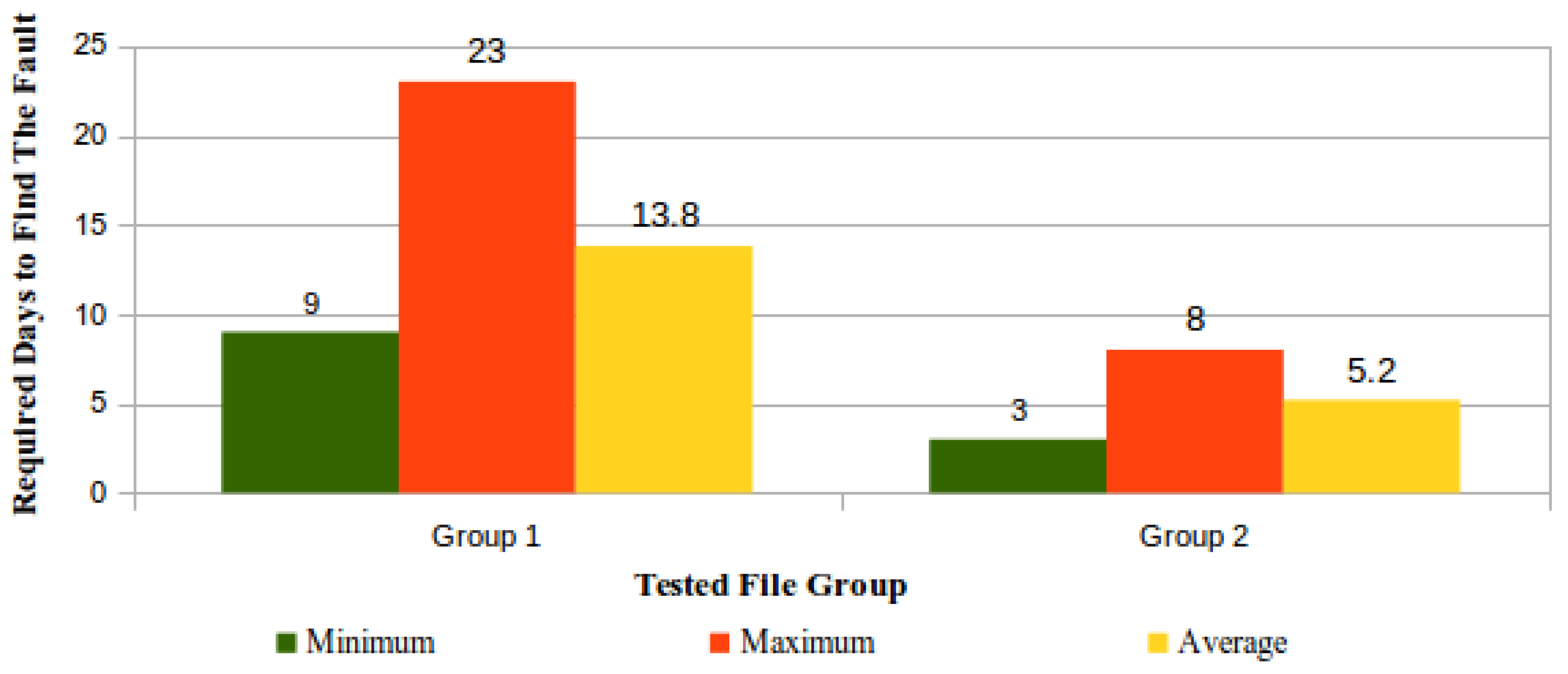 Have you considered the security of your files hosted in the cloud? Of course you have, and reputable providers provide a solid guarantee of safety. But what if you could monitor the status of your files as well as the behavior of your cloud service provider? In this 2018 paper published by Pinheiro et al., such a proposition is proven as practical. The authors demonstrate just that using architecture that includes a "protocol based on trust and encryption concepts to ensure cloud data integrity without compromising confidentiality and without overloading storage services." They conclude that not only is such monitoring able to be done efficiently and rapidly, but also the "architecture proved to be quite robust during the tests, satisfactorily responding to the fault simulations," including unplanned server shutdown.
Laboratory Informatics Weekly Update – Volume 17, Issue 12
March 20, 2019 Laboratory Informatics Weekly Update Volume 17, Issue 12 In This Issue Upcoming Webinars 03/25/2019 - Free LABTrack Webinar – Justifying an ELN03/27/2019 - LabWare Customization and Implementation Best Practices04/02/2019 - Webinar: Instrument Compliance for a Quality System: A Candid Conversation About IQ/OQ/PQ Journal Articles What Is health information quality? Ethical dimension and perception by usersFor information technology professionals and informaticists alike, when handling data, the idea of "garbage in, garbage out" remains a popular refrain. Collecting data isn't enough; its quality for future analysis, sharing, and use is also important. Similarly, with the growth of the…Guiding Principles for Building a Smart Laboratory
Building a Smart laboratory involves a multi-disciplinary approach and a commitment to move away from traditional paper processes. Many day-to-day, routine laboratory operations are still carried out using manual, paper-based systems for everything from recording test results to managing inventories to documenting and scheduling instrument calibrations. This reliance on paper is not just expensive, it also decreases the efficiency of the laboratory workplace and leaves the laboratory vulnerable to having valuable data misplaced, lost or destroyed.
Technological advancements in wireless networks, laboratory equipment, sensor technologies, micro-electronics, informatics software and other areas have helped to spawn a digital revolution in connectivity in the modern laboratory. Forward-thinking organizations are capitalizing on this digital revolution to create highly integrated and automated smart laboratories that help facilitate product quality and efficiency in manufacturing processes, as well as enhanced innovation and product development through data analysis, process monitoring and continuous feedback.
[Read More]
What Is health information quality? Ethical dimension and perception by users
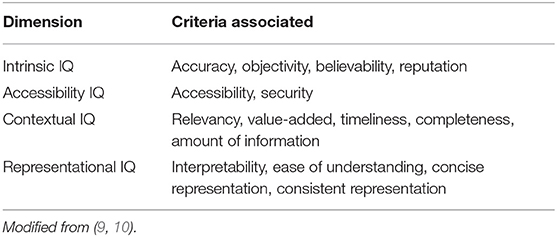 For information technology professionals and informaticists alike, when handling data, the idea of "garbage in, garbage out" remains a popular refrain. Collecting data isn't enough; its quality for future analysis, sharing, and use is also important. Similarly, with the growth of the internet, the amount of health-related information being pumped online increases, but its quality isn't always attended to. In this 2018 paper by Al-Jefri et al., the topic of online health information quality (IQ) gets addressed in the form of a developed framework "that can be applied to websites and defines which IQ criteria are important for a website to be trustworthy and meet users' expectations." The authors conclude with various observations, including differences in how education, gender, and linguistic background affects users' ability to gauge information quality, and how there seems to be an overall lack of caring about the ethical trustworthiness of online health information by the public at large.
Free Vs Commercial LIMS
One of the major challenges faced by laboratories across the world is efficient sample tracking and workflow management. With technological advancements that enable the automation of laboratory operations, implementing an automated management system such as Laboratory Information Management System (LIMS) is quickly turning into an essential requirement
To read the complete blog, please visit: https://freelims.org/blog/free-lims-vs-commercial-lims.html





