Posted on February 20, 2019
By Astrix Technology Group
Blog

Biotechnology research and development organizations are finding themselves under pressure from many directions:
- Business stakeholders want improved operational efficiency, scalability, and agility, while keeping costs under control.
- Regulators are raising the standards and scrutiny of informatics systems demanding strong demonstrable control of data integrity through the entire lifecycle of laboratory data.
- Vendors of laboratory informatics systems traditionally labelled as LIMS, ELN, LES, LIS, SDMS, CDS are blurring the definitions of their systems as they add capabilities to increase their sales: all vendors are claiming to be able to solve all problems.
All while the volume of data generated and processed in scientific laboratories continues to increase dramatically and the pressure for data to make decisions grows. Scientists and their R&D organizations want improved data management practices and increased operational efficiency: an integrated laboratory informatics infrastructure that goes beyond the vendor acronyms and delivers digitized scientific processes.
Posted on February 20, 2019
By CSols Inc.
Blog

What do you call success? When it comes to a laboratory informatics implementation, the answer often depends on your perspective. A vendor may define success as getting the product into the production environment. A project manager might define success as an on-time, in scope, and on-budget delivery. And though both are common criteria for defining project success, on their own they are insufficient.
Posted on February 20, 2019
By John Jones
Newsletter
February 20, 2019 Laboratory Informatics Weekly Update Volume 17, Issue 8 In This Issue Upcoming Webinars 02/22/2019 - KEY PERFORMANCE INDICATORS (KPI'S) FOR LABORATORIES02/25/2019 - Free LABTrack Webinar – Justifying an ELN02/26/2019 - Astrix Webinar – Designing LabWare Solutions for Maintainability and Scalability02/27/2019 - Webinar: Implementing and Validating a CDS – Things to Consider Journal Articles Transferring exome sequencing data from clinical laboratories to healthcare providers: Lessons learned at a pediatric hospitalWe go back in time a year for this brief paper published by Swaminathan et al. of Nationwide Children's Hospital in Ohio. The researchers present their experiences handling…
Posted on February 18, 2019
By Shawn Douglas
Journal articles

We go back in time a year for this brief paper published by Swaminathan
et al. of Nationwide Children's Hospital in Ohio. The researchers present their experiences handling the nuances of transferring large genomic data files of individual patients to a sequencing lab, all while handling the security and privacy protections surrounding the data. Handling only 19 patients' genomic files, at least initially, presented a number of workflow and protocol challenges for both hospital and laboratory. They conclude with barriers (file size and workflow management consistency) and suggestions (EHR-based alerts, blockchain) about what could be improved with such data transfers in the future to better realize the "massive potential to leverage genomic data to advance human health overall."
Posted on February 13, 2019
By Astrix Technology Group
Blog
LabWare’s Enterprise Laboratory Platform (ELP) is a leading laboratory informatics system that is utilized by over 1,000 customers – everything from small companies to global enterprises – worldwide. ELP provides a comprehensive laboratory solution that combines the typically separate domains of a Laboratory Informatics Management System (LIMS) and an Electronic Laboratory Notebook (ELN) into a single application environment with a common, shared database. The LabWare solution offers the benefits of both a LIMS and an ELN in a single platform that is both stable and supportable, without the IT complexity, expense and validation requirements of a customized interface layer.
Posted on February 13, 2019
By Astrix Technology Group
Blog
Companies that use chemicals in a lab or their manufacturing process need to effectively manage those chemicals to control costs and enhance safety. Companies in regulated industries also need to comply with numerous federal, state and local regulations covering chemical purchase, use, transportation, storage, emergency planning and disposal. Given the ever-present risk of inspection by either regulatory agencies or regulated customers, it is essential for regulated companies to create an effective system for maintaining safety information and up-to-date inventories for chemicals.
Posted on February 13, 2019
By Corinne Jones
Blog
CloudLIMS hosted a complimentary webinar titled “Data Privacy and Other Clinical Data Management Challenges”. The webinar was presented by Marianne Henderson, Senior Advisor on biobanking to the National Cancer Institute’s (NCI) Center for Global Health and the Senior Advisor for Division Resources, Division of Cancer Epidemiology and Genetics (DCEG). We received an overwhelming response from the audience and got asked a number of interesting questions.
To read the complete blog, please visit:
https://cloudlims.com/blog/webinar-highlights-data-privacy-and-other-clinical-data-management-challenges.html
Posted on February 13, 2019
By John Jones
Newsletter
February 13, 2019 Laboratory Informatics Weekly Update Volume 17, Issue 7 In This Issue Upcoming Webinars 02/20/2019 - Webinar: Efficiently Managing your Mortuary/Morgue02/20/2019 - Webinar: Implementing and Validating a CDS – Things to Consider02/26/2019 - Astrix Webinar – Designing LabWare Solutions for Maintainability and Scalability Journal Articles Research on information retrieval model based on ontologyWhether it's a document management system or a laboratory information management system, some sort of query function is involved to help the user find specific documents or data. How that data is retrieved—using information retrieval methods—can vary, however. In this 2019 paper published in EURASIP…
Posted on February 12, 2019
By Shawn Douglas
Journal articles
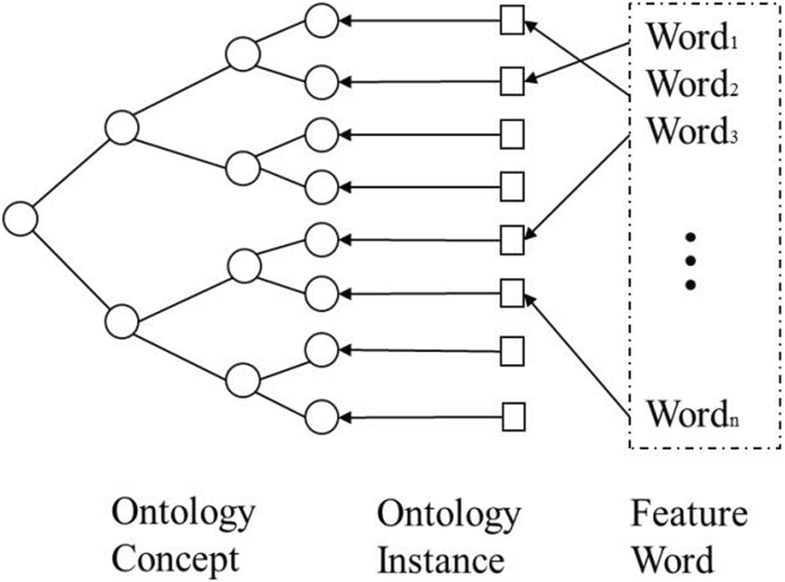
Whether it's a document management system or a laboratory information management system, some sort of query function is involved to help the user find specific documents or data. How that data is retrieved—using information retrieval methods—can vary, however. In this 2019 paper published in
EURASIP Journal on Wireless Communications and Networking, Binbin Yu details a modified information retrieval methodology that uses a domain-ontology-based approach that integrates document processing and retrieval aspects of the query. Domain ontology takes into account semantic information and keywords, which improves recall and precision of results. After explaining the mathematics and experimentation methodology, Yu concludes "the genetic algorithm shortens the distance compared with simulated annealing, and the ontology retrieval model exhibits a better precision and recall rate to understand the users’ requirements."
Posted on February 6, 2019
By John Jones
Newsletter
February 6, 2019 Laboratory Informatics Weekly Update Volume 17, Issue 6 In This Issue Upcoming Webinars 02/20/2019 - Webinar: Efficiently Managing your Mortuary/Morgue02/20/2019 - Webinar: Implementing and Validating a CDS – Things to Consider02/26/2019 - Astrix Webinar – Designing LabWare Solutions for Maintainability and Scalability Journal Articles Data to diagnosis in global health: A 3P approachIn this late 2018 paper published in BMC Medical Informatics and Decision Making, Pathinarupothi et al. with the Amrita Institute of Medical Sciences present their Rapid Active Summarization for Effective Prognosis (RASPRO) framework for healthcare facilities. Noting an increasing volume of data coming from…
Posted on February 5, 2019
By Shawn Douglas
Journal articles
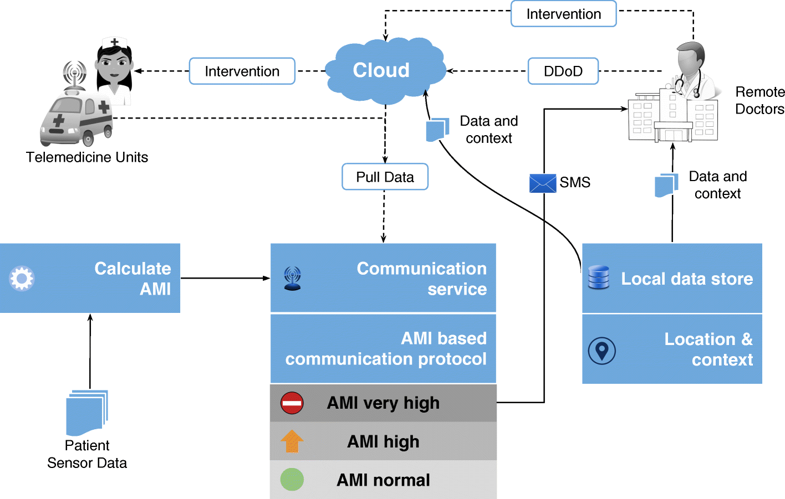
In this late 2018 paper published in
BMC Medical Informatics and Decision Making, Pathinarupothi
et al. with the Amrita Institute of Medical Sciences present their Rapid Active Summarization for Effective Prognosis (RASPRO) framework for healthcare facilities. Noting an increasing volume of data coming from body-attached senors and a lack of making the best sense of it, the researchers developed RASPRO to provide summarized patient/disease-specific trends via body sensor data and aid physicians in being proactive in more rapidly identifying the onset of critical conditions. This is done through the implementation of "physician assist filters" or PAFs, which also enable succinctness and decision making even over bandwidth-limited communication networks. They conclude the system "helps in personalized, precision, and preventive diagnosis of the patients" while also providing the benefits of availability, accessibility, and affordability for healthcare systems.
Posted on January 30, 2019
By John Jones
Newsletter
January 30, 2019 Laboratory Informatics Weekly Update Volume 17, Issue 5 In This Issue Upcoming Webinars 02/05/2019 - Free LABTrack Webinar – Justifying an ELN02/06/2019 - Webinar: Optimizing Microbiology Lab Operations in the Era of PAMA02/20/2019 - Webinar: Efficiently Managing your Mortuary/Morgue02/26/2019 - Astrix Webinar – Designing LabWare Solutions for Maintainability and Scalability Journal Articles Building a newborn screening information management system from theory to practiceWhat do you do when your newborn screening program grows in importance, beyond its original data management origins in a time of cloud computing and integrated informatics systems for healthcare? Entities such as Newborn…





