Posted on January 3, 2019
By John Jones
Newsletter
January 3, 2019 Laboratory Informatics Weekly Update Volume 17, Issue 1 In This Issue Upcoming Webinars 01/15/2019 - Webinar: Hemostasis lab quality best practices; focus on validation of assays and instrumentation in a multisite hospital system01/23/2019 - Setting your LIMS Project up for success! Journal Articles Welcome to Jupyter: Improving collaboration and reproduction in psychological research by using a notebook systemJupyter Notebook, an open-source interactive web application for the data science and scientific computing community (and with some of the features of an electronic laboratory notebook), has been publicly available since 2015, helping scientists make computational records of their…
Posted on January 2, 2019
By Astrix Technology Group
Blog

In traditional medical care, diseases are typically detected via chemical changes associated with a particular condition and all patients receive a similar dose of a medication as treatment. While this one-size-fits-all approach has led to great advancements in medicine, it has by no means been successful for all patients.
Posted on January 2, 2019
By Astrix Technology Group
Blog
With the successful completion of the Human Genome Project on April 14, 2003, the mapping of the human genome took approximately 13 years and 3 billion dollars to accomplish. Today, next-generation sequencing (NGS) technology allows a human genome to be sequenced in just a few days for a few hundred dollars.
While genomic research is paving the way for significant advances in healthcare, its practice has led to new challenges for biotechnology firms in terms of increasing data volume, variety and complexity.Given that the data representing a single human genome takes up to 100 gigabytes of storage space, biotech companies engaged in genomic research must develop the computing infrastructure and skills to manage, store, analyze and interpret massive quantities of highly complex data. In this blog, we will explore challenges and best practices involved in addressing data management challenges in genomics research.
Posted on December 19, 2018
By CSols Inc.
Blog

The topic of the “
cost of LIMS” or the “
true cost of LIMS” or “
saving costs with LIMS”, have all been previously discussed in a number of forums and mediums (blogs, white papers, webinars, videos, etc.). Interestingly, these discussions tend to focus on hard costs and measurable cost savings with only the occasional reference to non-monetary costs or qualitative measures. What has not been fully explored is the converse of this concept of the cost of implementing a Laboratory Information Management System (LIMS). That is, what is the cost of
notimplementing a LIMS in a lab organization?
Posted on December 19, 2018
By John Jones
Newsletter
December 19, 2018 Laboratory Informatics Weekly Update Volume 16, Issue 50 In This Issue Journal Articles Open data in scientific communicationIn this brief paper published in Folia Forestalia Polonica, Series A – Forestry, Dorota Grygoruk of Poland's Forest Research Institute presents the development of the open data concept within the context of Poland and other countries, while also addressing how data sharing and management is challenged by the paradigm. Grygoruk first defines the open data and open access concepts and then describes how policy in Poland and the European Union has been adopted to specify those concepts within institutions.…
Posted on December 18, 2018
By Shawn Douglas
Journal articles
In this brief paper published in
Folia Forestalia Polonica, Series A – Forestry, Dorota Grygoruk of Poland's Forest Research Institute presents the development of the open data concept within the context of Poland and other countries, while also addressing how data sharing and management is challenged by the paradigm. Grygoruk first defines the open data and open access concepts and then describes how policy in Poland and the European Union has been adopted to specify those concepts within institutions. The author then analyzes the challenges of implementing data sharing inherent to research data management, including within the context of forestry informatics. The conclusion? The "organizational and technological solutions that enable analysis" are increasingly vital, and " it becomes necessary for research institutions to implement data management policies," including data sharing policies.
Posted on December 12, 2018
By Corinne Jones
Blog
Post-genomic era led to a generation of large volumes of data, making it necessary for laboratories to modernize their approach for managing and tracking data. As a result, an increasing trend is observed in laboratories to switch their laboratory operations from paper records to a technologically powerful and secure Laboratory Information Management System (LIMS).
Posted on December 12, 2018
By Astrix Technology Group
Blog
Laboratory informatics projects can be extremely complex and costly. LIMS projects, for example, require large investments of money, resources and time – costing anywhere from hundreds of thousands to millions of dollars, while requiring hundreds to thousands of resource hours, to implement. Given the financial, regulatory and operational risk to your organization that a laboratory informatics project represents, it is imperative that you get the project right the first time.
One of the keys to a successful laboratory informatics project is the development of a comprehensive set of functional and technical requirements for the system in question. Properly developed requirements are critical to guide and inform many different aspects of a successful informatics project. Too often, companies fail to do the necessary work in this area and end up deploying a system that fails to realize the potential business benefits that served as motivation for the project in the first place.
Posted on December 12, 2018
By Astrix Technology Group
Blog
Laboratory information management systems (LIMS) capabilities have expanded dramatically in recent years in order to better serve scientific laboratories. As LIMS technology has changed, so has the number of factors that need to be considered when
choosing the best LIMS for your laboratory.
A variety of different
architectures are now available for modern LIMS, and these different architectures determine the way LIMS are installed, managed and utilized. Key factors to consider when selecting a LIMS is the type of architecture that is best aligned with your business goals, as well as the standards your organization’s IT group has established for IT architecture.
Posted on December 12, 2018
By Autoscribe Informatics Inc.
Blog

Defining user requirements is not only one of the most important aspects of purchasing a
LIMS but frequently one of the most challenging. If it is not dealt with in sufficient detail, it can impact the quoted costs and lead to complications and delays at the later stages of the project. Recognizing the importance of this, we have undertaken a number of user requirement workshops in recent months with prospective customers.
Posted on December 12, 2018
By John Jones
Newsletter
December 12, 2018 Laboratory Informatics Weekly Update Volume 16, Issue 49 In This Issue Journal Articles Simulation of greenhouse energy use: An application of energy informaticsIn the inaugural issue of the journal Energy Informatics, Watson et al. of the University of Georgia - Athens provide research and insight into how databases, data streams, and schedulers can be joined with an information system to drive more cost-effective energy production for greenhouses. Combining past research and new technologies, the authors turn their sights to food security and the importance of developing more efficient systems for greater sustainability. They conclude that an…
Posted on December 11, 2018
By Shawn Douglas
Journal articles
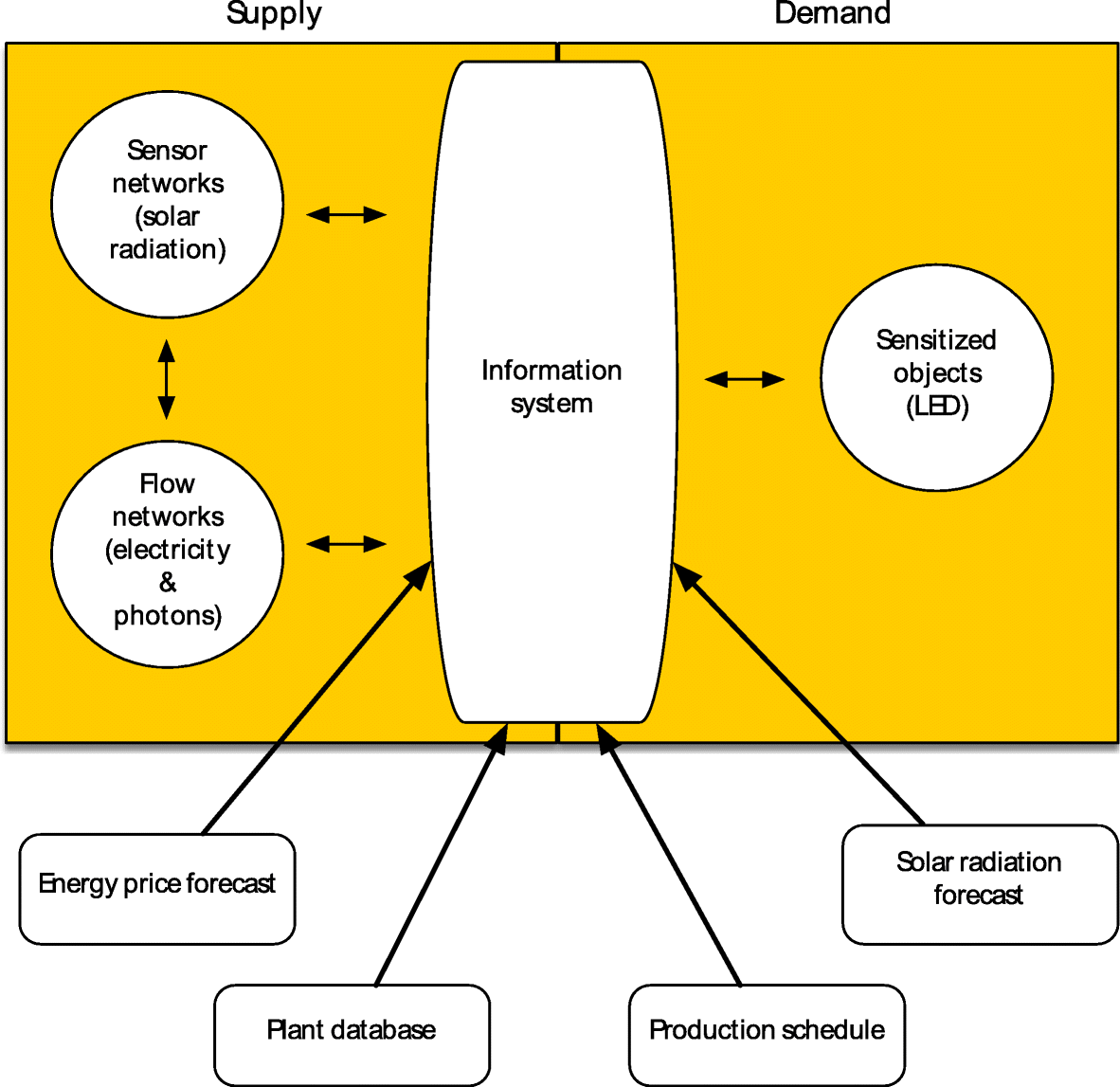
In the inaugural issue of the journal
Energy Informatics, Watson
et al. of the University of Georgia - Athens provide research and insight into how databases, data streams, and schedulers can be joined with an information system to drive more cost-effective energy production for greenhouses. Combining past research and new technologies, the authors turn their sights to food security and the importance of developing more efficient systems for greater sustainability. They conclude that an energy informatics framework applied to controlled-environment agriculture can significantly reduce energy usage for lighting, though "engaging growers will be critical to adoption of information-systems-augmented adaptive lighting."





