Common Mistakes in Computer System Validation

Modern scientific laboratories increasingly rely on computerized informatics systems (e.g., LIMS, ELN, CDS, etc.) to process and manage data. To ensure product safety and effectiveness, it is important for these systems to be validated in a process known as computer system validation (CSV) to confirm the accuracy and integrity of processed data.
[Read More]
Top 4 Reasons to Implement a LIMS
 Laboratory organizations have a myriad of reasons for choosing to implement a Laboratory Information Management System (LIMS). The key reasons can vary dramatically depending upon the industry and type of science being conducted in the laboratory as well as the type of laboratory to be automated and managed with the LIMS. That being said, we have compiled our top four reasons that drive organizations to implement a LIMS include.
[Read More]
Laboratory Informatics Weekly Update – Volume 16, Issue 48
December 5, 2018 Laboratory Informatics Weekly Update Volume 16, Issue 48 In This Issue Journal Articles Learning health systems need to bridge the "two cultures" of clinical informatics and data scienceIn this brief collaborative article by various researchers in the United Kingdom, a statement of fact is quickly set out for the reader: health data science and clinical informatics have a considerable gap between each other that must be addressed. Wasting no time, Scott et al. dig into the U.K. context of "the operational realities of health data quality and the implications for data science." Collected clinical data is…Learning health systems need to bridge the “two cultures” of clinical informatics and data science
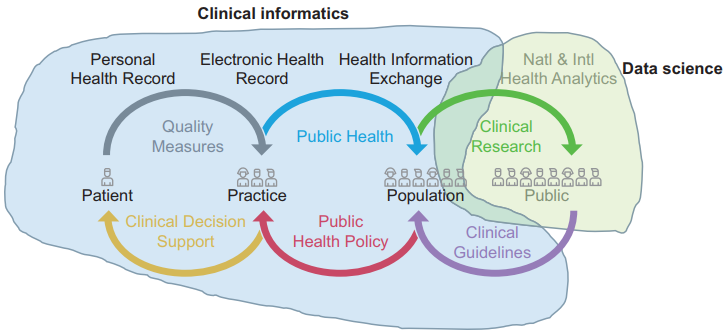 In this brief collaborative article by various researchers in the United Kingdom, a statement of fact is quickly set out for the reader: health data science and clinical informatics have a considerable gap between each other that must be addressed. Wasting no time, Scott et al. dig into the U.K. context of "the operational realities of health data quality and the implications for data science." Collected clinical data is "problematic," they claim, and clinical informaticians don't always link the "two cultures" of using 1. clinical data and knowledge as a primary tool to 2. improve human health outcomes. They close by recognizing existing efforts to bridge the gap between the two cultures and make recommendations of their own such as recognizing "the interdisciplinary nature of biomedical informatics" and a need for "a significant expansion of clinical informatics capacity and capability."
What is a LIMS?
Introduction: So, what is a LIMS? A LIMS or Laboratory Information Management System is a software solution to address the data management, automation, and regulatory challenges of laboratories across the globe. As the name suggests, a LIMS is used to effectively manage laboratory samples and the associated data, thus standardizing operations by maintaining workflows, tests, and reporting procedures. With the growing needs of laboratories, the traditional LIMS too has evolved, with the system being able to do much more than just tracking samples.CloudLIMS Version 1.78.5 Released!
CloudLIMS, an advanced configurable cloud-based SaaS LIMS, accelerates biobanking, clinical research, and testing laboratory operations by efficiently managing laboratory data, following regulatory compliance, and automating laboratory workflows on a cloud platform.Importance of De-Identification and Anonymization of Patient Data in Clinical Research
Clinical trials and research play a pivotal role in highlighting the most suitable therapeutic strategies for the prevention and cure of a vast array of the novel or previously untreatable diseases. Clinical trials and research involve the collection of samples and associated patient data to test the safety and effectiveness of a novel drug or treatment to minimize detrimental effects, ensuring a more successful outcome.Highlights from the 2018 LabVantage Customer Training and Education Conference
Astrix Technology Group was pleased to be the Platinum sponsor for this year’s North American LabVantage Customer Training and Education Conference (CTEC) event on October 21st – 26th. This year’s conference was a great success, featuring a heavy concentration of customer presentations and customer-led panels, along with many different topics and hands-on training options.
[Read More]
LIMS + LES: A Winning Combination
Over the last several years a new trend has begun to take shape in the laboratory informatics market. I’m talking about the emergence and rapid acceptance of Laboratory Executions Systems (LES) for use in quality control labs and other standardized testing environments like contract or environmental testing labs. Interestingly, LES solutions are often integrated to a Laboratory Information Management System (LIMS) as opposed to being implemented as a standalone solution. Why is this the case? What makes the LIMS/LES solution so powerful? But before going too far down the path of exploring the LIMS/LES solution, let’s take a step back and explore LES and LIMS solutions, individually.
[Read More]
Laboratory Informatics Weekly Update – Volume 16, Issue 47
November 28, 2018 Laboratory Informatics Weekly Update Volume 16, Issue 47 In This Issue Upcoming Webinars 12/04/2018 - Webinar: Advancements in Healthcare: Interoperability, Data Exchange, and More12/05/2018 - Webinar: New ARBC Application and Impact on Lab Workflow and Patient Management12/05/2018 - KEY PERFORMANCE INDICATORS (KPI'S) FOR LABORATORIES12/13/2018 - Webinar: Automated Tools for the Modern Lab Journal Articles The problem with dates: Applying ISO 8601 to research data managementKristin Briney, Data Services Librarian at the University of Wisconsin - Milwaukee, gives a brief commentary on the perils of managing research data with inconsistent or non-standardized date formats. Tapping into the…The problem with dates: Applying ISO 8601 to research data management
Kristin Briney, Data Services Librarian at the University of Wisconsin - Milwaukee, gives a brief commentary on the perils of managing research data with inconsistent or non-standardized date formats. Tapping into the stories of statisticians and ecologists, Briney notes that despite being a more western, Gregorian-based system, the international standard ISO 8601 provides benefits of consistency, formatting, extensibility, and sorting. And while ISO 8601 doesn't play nicely with Microsoft Excel, the author provides several ways around the problem. She concludes that "ISO 8601 is a natural partner for research data management" and encourages other researchers to adopt the standard.Health sciences libraries advancing collaborative clinical research data management in universities
 What can medical librarians do to better support patrons? How can clinical medicine and research librarians work together to foster an environment of improved research cycles and patient outcomes? Bardyn et al. address these concerns and others through a demonstration of what the University of Washington's Translational Research and Information Lab (TRAIL) program has accomplished since its inception. The authors introduce basic concepts in clinical and translational research and then provide background and methodology for how they improved researcher-focused spaces, clinical research support services, and research data management services. They conclude that "initiatives like TRAIL are vital to supporting universities’ clinical data research efforts," noting that "[i]n uniting leading on-campus health sciences organizations, such initiatives build off the strengths of each partner" and encourage new skill sets to be developed to support cross-discipline research on campus.