Posted on November 14, 2018
By Autoscribe Informatics Inc.
Blog

Mention the phrase ‘contract testing laboratories’ and many people would think of testing in the food, beverage and pharmaceutical industries. However there is a very large number of veterinary laboratories that carry out contract testing. While the testing regimes may be very different from other industries, the basic laboratory processes are very similar and the use of LIMS can help improve service levels and keep costs down. Veterinary contract laboratories must offer a high quality service with a fast turnaround and competitive prices. There is also an increasing requirement to check if testing has been completed and to be able to access those test results remotely as soon as they are available.
Posted on November 14, 2018
By John Jones
Newsletter
November 14, 2018 Laboratory Informatics Weekly Update Volume 16, Issue 46 In This Issue Upcoming Webinars 11/16/2018 - A Structured Approach to Implementing a LIMS11/28/2018 - Adding significant enhancements while maintaining your current STARLIMS implementation12/04/2018 - Webinar: Advancements in Healthcare: Interoperability, Data Exchange, and More Journal Articles Privacy preservation techniques in big data analytics: A surveySo much data is being collected from healthcare recipients, online banking users, online shoppers, and more, and what's worse is we're often letting companies do it without reading the terms of use, according to Rao et al. in this 2018 paper. So what can…
Posted on November 12, 2018
By Shawn Douglas
Journal articles
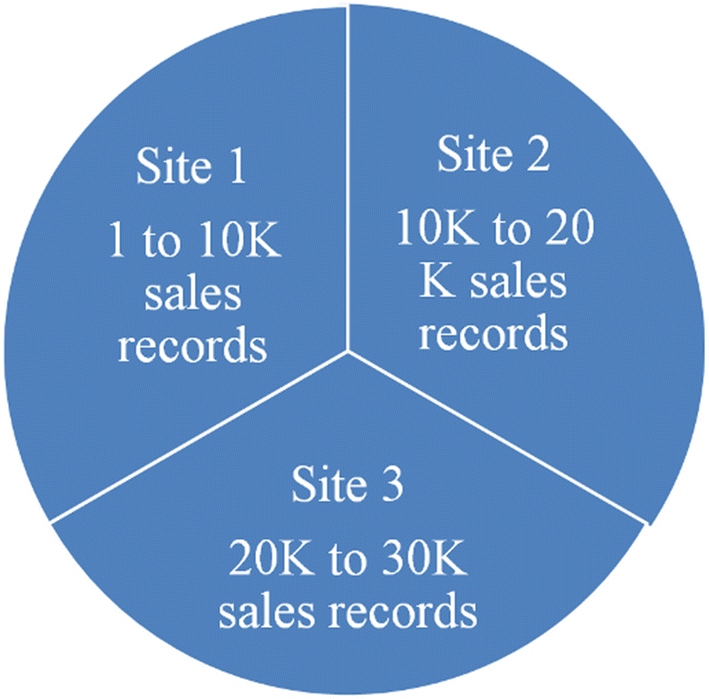
So much data is being collected from healthcare recipients, online banking users, online shoppers, and more, and what's worse is we're often letting companies do it without reading the terms of use, according to Rao
et al. in this 2018 paper. So what can be done to better preserve our data privacy? The authors first look at four major threats to our data privacy (surveillance, disclosure, discrimination, and personal embracement and abuse), then delve into seven different techniques for preserving the privacy of our data. Giving their pros and cons, the authors finally propose a hybrid solution revolving around the concept of the "data lake" and privacy preserving algorithms.
Posted on November 7, 2018
By Astrix Technology Group
Blog

Astrix Technology Group was pleased to be the Platinum sponsor for this year’s North American LabVantage Customer Training and Education Conference (CTEC) event on October 21
st – 26
th. This year’s conference was a great success, featuring a heavy concentration of customer presentations and customer-led panels, along with many different topics and hands-on training options.
LabVantage is a leading LIMS solution and Astrix provides complete LabVantage consulting and training services.
We enjoyed meeting many of you over the course of the conference and appreciated the opportunity to share experiences and discuss strategies and challenges associated with optimizing the laboratory operating environment. Here are some of the highlights from this year’s conference.
Posted on November 7, 2018
By John Jones
Newsletter
November 7, 2018 Laboratory Informatics Weekly Update Volume 16, Issue 45 In This Issue Upcoming Webinars 11/14/2018 - KEY PERFORMANCE INDICATORS (KPI'S) FOR LABORATORIES11/15/2018 - Webinar: Applications for Intelligent Clinical Workflows11/15/2018 - JUSTIFYING THE PURCHASE OF AN ELN11/28/2018 - Adding significant enhancements while maintaining your current STARLIMS implementation Journal Articles A review of the role of public health informatics in healthcareThis brief article published in Journal of Taibah University Medical Sciences in 2017 looks at public health informatics (PHI) from the perspective of a researcher in the Kingdom of Saudi Arabia. Aziz discusses the concept of PHI and then…
Posted on November 6, 2018
By Shawn Douglas
Journal articles
This brief article published in
Journal of Taibah University Medical Sciences in 2017 looks at public health informatics (PHI) from the perspective of a researcher in the Kingdom of Saudi Arabia. Aziz discusses the concept of PHI and then looks at the various surveillance systems within PHI. Later he delves into the challenges provided by paper-based systems and how electronic systems can alleviate them. He closes with a discussion of PHI in the Kingdom of Saudi Arabia and concludes that various "applications and initiatives are currently available to meet the growing needs for faster and accurate data collection methods" in the country, as well as around the world.
Posted on November 1, 2018
By Shawn Douglas
Journal articles
In this 2018 article by Mulder
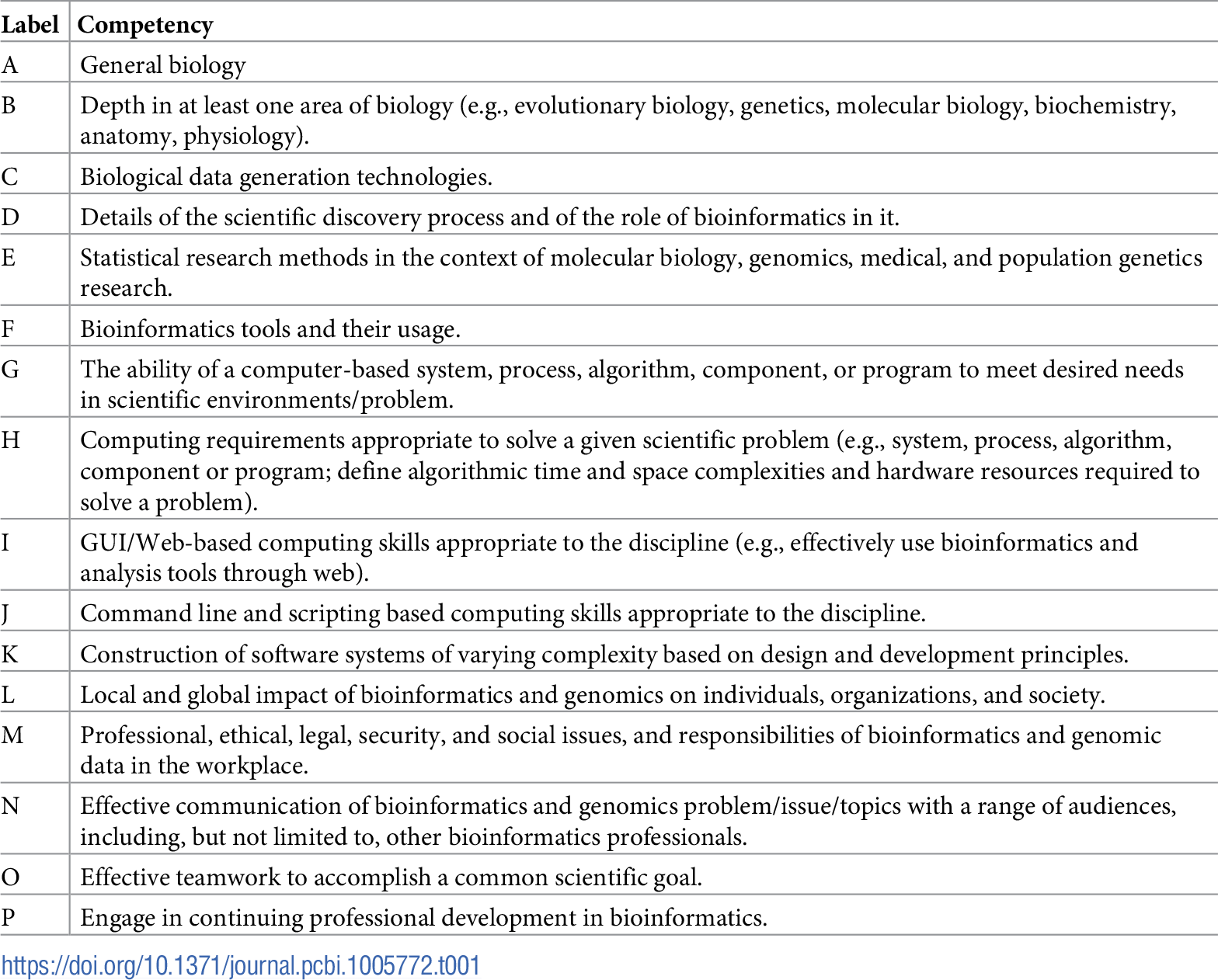
et al., a broad collective of knowledge and experience is brought together to better shape the competencies required for a modern bioinformatics education program and their training contexts. Need is immense, yet methodologies are diverse, necessitating cooperation to refine core competencies for different groups. The authors describe the development of these competencies and then provide practical use cases for them. They conclude the competencies "provide a basis for the community of bioinformatics educators, despite widely divergent goals and student populations, to draw upon their common experiences in designing, refining, and evaluating their own training programs." However, they also caution that they shouldn't be viewed as "a prescription for a specific set of curricula or curricular standards."
Posted on October 31, 2018
By Astrix Technology Group
Blog
In a
recent survey, over 50% of IT professionals revealed they had a project fail over the last year. Laboratory informatics projects can be especially challenging, considering the many different aspects of the enterprise that laboratory operations touch. Given this high failure rate, it is imperative that organizations adopt a
proven methodology that guarantees success for their lab informatics projects.
Strategic planning is critical for any organization, but even more so for businesses involved in science and technology, as the dynamic nature of these industries requires companies to implement flexible, integrated solutions that can help meet both present and future business goals while remaining competitive in the face of rapidly-advancing innovations.
One of the major reasons laboratory informatics projects fail can be attributed to functional and strategic business needs not in alignment. Many organizations attempt to select and implement a system without first performing the due diligence required to align laboratory functional needs with the strategic needs of the business—an error that is magnified if more than one site is involved. There is also the phenomenon of large scientific enterprises embarking on a possibly multimillion-dollar initiative without capturing a baseline of laboratory productivity and efficiency.
Consequently, the first step in any laboratory informatics project should always be a thorough workflow and business analysis. In this blog, we will explore some best practice recommendations for Business Process Analysis (BPA) in the laboratory environment, along with some of the ways in which BPA can benefit your informatics project.
Posted on October 31, 2018
By Genohm
Blog
The Life Science field has reached a new era in terms of data management and data storage. Slowly but surely, laboratories will replace their old paper and pencil methods with IT solutions.
Laboratory Information Management Systems (LIMS) and
Electronic Lab Notebooks (ELN) will play a key role in the context of this technical evolution.
Despite the consensus that the transition from old traditional methods to computerized solutions is inevitable, a large proportion of lab people still see this transition as an expense rather than an investment. We will try to understand the origin of this perception in this short blog post and ascertain whether the fear is founded or not.
[Read More]
Posted on October 31, 2018
By CSols Inc.
Blog

If you have ever contemplated installing and implementing a Laboratory Information Management System (LIMS) you will have realized that these solutions can be pricey, both from a capital and resources point of view. It is also likely that you have been requested to justify the investment in the proposed LIMS by developing a Return on Investment (ROI) analysis. In order to accomplish this task, it will be imperative that you
understand the full cost of your LIMS solution and the Total Cost of Ownership (TCO) over the return period. Additionally, you will need to determine the cost savings to the lab and organization that the implementation of the LIMS will yield. These quantitative measures are generally the most powerful sources of cost savings and will therefore represent the lionshare of your
LIMS cost justification.
Posted on October 31, 2018
By John Jones
Newsletter
October 31, 2018 Laboratory Informatics Weekly Update Volume 16, Issue 44 In This Issue Upcoming Webinars 11/01/2018 - JUSTIFYING THE PURCHASE OF AN ELN11/15/2018 - Webinar: Applications for Intelligent Clinical Workflows11/28/2018 - Adding significant enhancements while maintaining your current STARLIMS implementation Journal Articles Wireless positioning in IoT: A look at current and future trendsIn this 2018 paper published in Sensors, e Silva et al. "highlight the importance of positioning features for [internet of things] applications and [provide] means of comparing and evaluating different connectivity protocols in terms of their positioning capabilities." Noting a lack of research on the topic…
Posted on October 24, 2018
By Astrix Technology Group
Blog
Integrating laboratory instruments with a LIMS (laboratory information management system) such as STARLIMS is one of the best ways to improve data integrity and drive operational efficiency in the laboratory. Instrument integration helps to facilitate significantly increased sample throughput and a reduction of data transcription errors. Instrument integration also tends to increase scientist job satisfaction by reducing tedious tasks like writing down results and manual data entry. This allows scientists to spend more time doing the actual science that helps drive innovation for your organization.
[READ MORE]





