Posted on September 21, 2016
By CSols Inc.
Blog
With more and more companies in the pharmaceutical and life science industries moving to electronic data collection, analysis, storage, and reporting, the responsibility for knowing where your data are at all times and whether they are accurate and reliable is paramount for being compliant.
Posted on September 21, 2016
By Corinne Jones
Newsletter
September 21, 2016 Laboratory Informatics Weekly Update Volume 14, Issue 37 In This Issue Event Focus SEPTEMBER 26-30, 2016: 14th Cold Chain GDP & Temperature Management Logistics Global Forum The world’s largest event for temperature-controlled life science supply chains will return this year with extended topic focuses, session formats, speaking faculty and vendor options. Update and adapt your supply chain processes to tackle future challenges and ensure maximum compliance and quality at minimum cost. With constant evolving regulatory requirements across the globe, the 14th Cold Chain – GDP & Temperature Management Logistics Global Forum will help your company balance quality,…
Posted on September 20, 2016
By John Jones
Journal articles

In this late 2015 review and background article, Goldberg
et al. provide the details of discussions held during meetings leading up to a February 2016 colloquium hosted by the American Academy of Microbiology on the
Applications of Clinical Microbial Next-Generation Sequencing. The details of these meetings reveal the state of next-generation sequencing, its clinical applications, and the regulatory, financial, and research barriers that exist in NGS' further expansion in clinical settings. They conclude that "[t]he rapid evolution of NGS challenges both the regulatory framework and the development of laboratory standards and will require additional funding and incentives to drive tangible improvements and progress" to realize "the potential benefit that NGS has for patients and their families."
Posted on September 12, 2016
By John Jones
Journal articles

Aronson
et al. of Partners HealthCare and their Laboratory for Molecular Medicine (LMM) experienced first-hand the process of developing infrastructure for the germline genetic testing process. In this 2016 paper published in
Journal of Personalized Medicine, the group shares its experiences of that process, from designating necessary support infrastructure (including a self-developed tool called GeneInsight Clinic) to its integration with other systems such as electronic health records, case management system, and laboratory information systems. They close by stating "a need for an application that interfaces with the range of systems" in the genetic testing environment and that "[s]uch a system could provide the basis for enhanced clinical decision support infrastructure."
Posted on September 7, 2016
By Khemia
Blog
Universities offer many professional companies a wonderful developmental ground on which to not only sale and teach, but to build and rethink. This can be particularly true while working with a LIMS in the university laboratory setting.
Posted on September 7, 2016
By Corinne Jones
Newsletter
September 07, 2016 Laboratory Informatics Weekly Update Volume 14, Issue 36 In This Issue Webcast Focus September 27 at 12:00 PM EDT - Life Science Tools & Techniques Webinar An understanding of life comes not from a single discipline, but from an amalgamation of several. Life sciences encompass biochemistry, genomics, cell biology, developmental biology, and neurology to name but a few. Join the editors of Lab Manager as we welcome experts from the life science disciplines to discuss some of the latest tools and technologies in a live, interactive discussion. Sept. 08, 2016 - 14.00 MEST : Production Planning in…
Posted on September 6, 2016
By John Jones
Journal articles

"Defining and organizing the set of metadata that is relevant, informative and applicable to diverse experimental techniques is challenging," the team of Hong
et al. state in the introduction of this 2016 paper published in
Database. But the team, motivated by the Encyclopedia of DNA Elements (ENCODE) project and its offshoots, explain and demonstrate their metadata standard and its viability across many types of genomic assays and projects. The group believes that the standard's flexibility and ability to allow for transparent and reproducible experimental data offer much potential. "[A]long with its organizing principles and key features for implementation," they conclude, "[it] could be widely adopted as an open LIMS system."
Posted on August 31, 2016
By LabLynx
Blog
Toxicolology reference laboratories get excited about increases in volume of samples or specimens being screened by their laboratories. And they absolutely should – after all, laboratories are dependent on testing samples as their only source of income. However, it is important to note that “more” does not always equate to“better”. Why? Because from a reimbursement standpoint, not all samples are created equal.
Posted on August 31, 2016
By Corinne Jones
Newsletter
August 31, 2016 Laboratory Informatics Weekly Update Volume 14, Issue 35 In This Issue Webcast Focus September 27 at 12:00 PM EDT - Life Science Tools & Techniques Webinar An understanding of life comes not from a single discipline, but from an amalgamation of several. Life sciences encompass biochemistry, genomics, cell biology, developmental biology, and neurology to name but a few. Join the editors of Lab Manager as we welcome experts from the life science disciplines to discuss some of the latest tools and technologies in a live, interactive discussion. Sept. 08, 2016 - 14.00 MEST : Production Planning in…
Posted on August 30, 2016
By John Jones
Journal articles
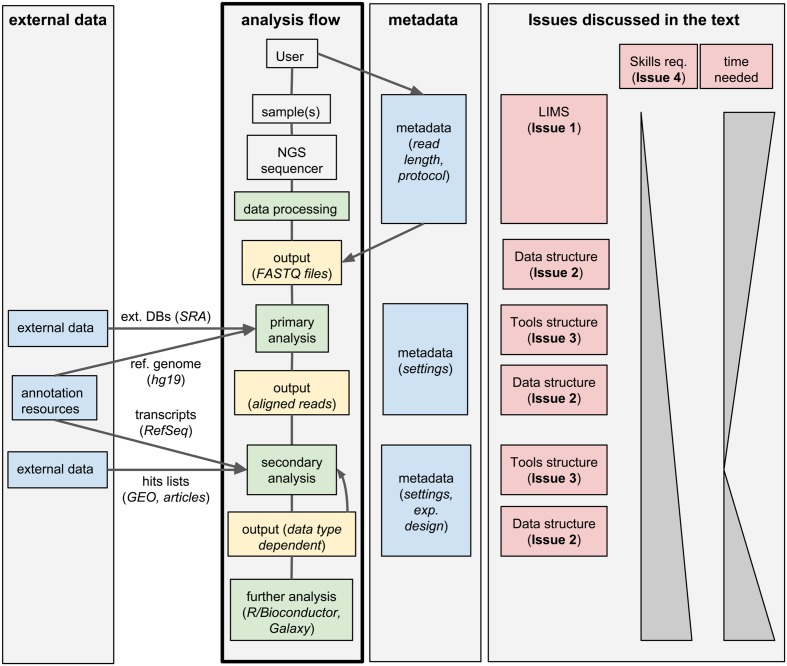
This 2016 paper by Bianchi
et al., published in
Frontiers in Genetics, takes a closer look at the major issues concerning next-generations sequencing (NGS) technology. The group raises five main concerns than an NGS research group should be aware of before approaching NGS technologies and briefly states positives and negatives to the most current popular tools. The group concludes "[a]lthough larger groups with enough computational members may prefer to develop and maintain their own tailored frameworks, smaller laboratories would save resources and improve their results by adopting solutions developed by third parties," including open-source and cloud-based tools.
Posted on August 25, 2016
By CSols Inc.
Blog
When looking for a LIMS, you find yourself trying to determine which LIMS vendors are the top vendors so you can evaluate their solutions. However, you will find that determining this is not so simple.
Posted on August 24, 2016
By John Jones
Journal articles

Most researchers in the life sciences know now of the concept of "big data" and the push to better organize and mine the data that comes out of biological research. However, the techniques used to mine promising and interesting information from accumulating biological datasets are still developing. In this 2016 paper published in
Bioinformatics and Biology Insights, Naulaerts
et al. look at three specific software tools for mining and presenting useful biological data from complex datasets. They conclude that while the Apriori and arules software tools have their benefits and drawbacks, "MIME showed its value when subsequent mining steps were required" and is inherently easy-to-use.