Laboratory Informatics Weekly Update – Volume 14, Issue 30
July 27, 2016 Laboratory Informatics Weekly Update Volume 14, Issue 30 In This Issue Event Focus SEPTEMBER 26-30, 2016: 14th Cold Chain GDP & Temperature Management Logistics Global Forum The world’s largest event for temperature-controlled life science supply chains will return this year with extended topic focuses, session formats, speaking faculty and vendor options. Update and adapt your supply chain processes to tackle future challenges and ensure maximum compliance and quality at minimum cost. With constant evolving regulatory requirements across the globe, the 14th Cold Chain – GDP & Temperature Management Logistics Global Forum will help your company balance quality,…Principles and application of LIMS in mouse clinics
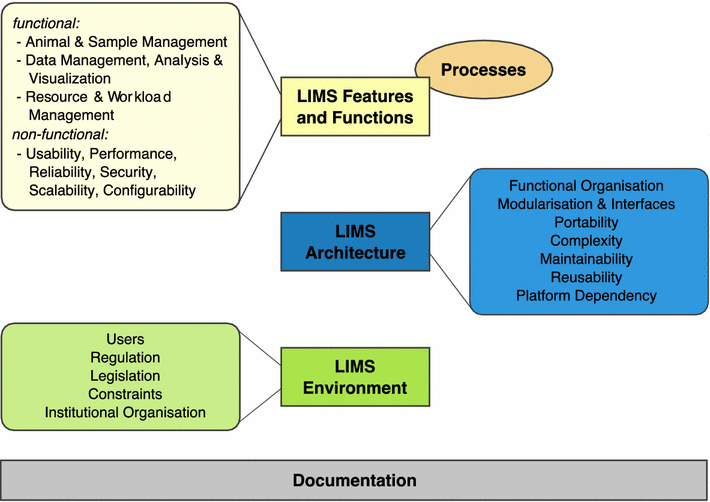 Clinical researchers conducting mouse studies at seven different facilities around the world shared their experiences using a laboratory information management system (LIMS) in order "to facilitate or even enable mouse and data management" better in their facilities. This 2015 paper by Maier et al. examines those discussions and final findings in a "review" format, concluding "the unique LIMS environment in a particular facility strongly influences strategic LIMS decisions and LIMS development" though "there is no universal LIMS for the mouse research domain that fits all requirements."
Principles and application of LIMS in mouse clinics
Clinical researchers conducting mouse studies at seven different facilities around the world shared their experiences using a laboratory information management system (LIMS) in order “to facilitate or even enable mouse and data management” better in their facilities. This 2015 paper by Maier et al. examines those discussions and final findings in a “review” format, concluding “the unique LIMS environment in a particular facility strongly influences strategic LIMS decisions and LIMS development” though “there is no universal LIMS for the mouse research domain that fits all requirements.”Laboratory Informatics Weekly Update – Volume 14, Issue 29
July 20, 2016 Laboratory Informatics Weekly Update Volume 14, Issue 29 In This Issue Webcast Focus WED. JULY 20, 2016, 2:00 PM EDT: How Much Does a LIMS Cost - Licensing and Beyond... What factors, considerations, and costs should you be exploring beyond those of LIMS licensing, hardware, and standard implementation when submitting a comprehensive budget for your LIMS project? Event Focus July 25-27, 2016: 12th Laboratory Informatics Summit A Comprehensive Discussion on Informatics from Genomics, R&D, Clinical, Quality, and Manufacturing Perspectives to Address Top Industry Challenges! This interactive program will allow for a higher level of discussion on how…Multilevel classification of security concerns in cloud computing
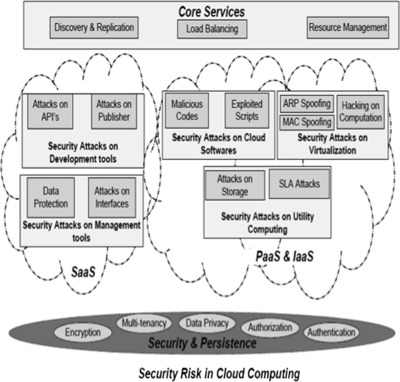 In this 2016 article in Applied Computing and Informatics, Hussain et al. take a closer look at the types of security attacks specific to cloud-based offerings and proposes a new multi-level classification model to clarify them, with an end goal "to determine the risk level and type of security required for each service at different cloud layers for a cloud consumer and cloud provider."
LIMS Benefits for Every Holiday
Around every holiday there's an increase in buying activity. Your LIMS can lead to better inventory planning, quicker release of materials, and the ability to search for data more quickly. Be prepared for the next holiday so that you can reap the most benefits of increased consumer buying activities.Icebergs Ahead – How's your Disaster Recovery Plan?
With record-retention mandates differing worldwide, organizations cannot be too risk averse in their backup retention policies. The risk of not doing so can have both legal and financial consequences including fines, shutdowns, and loss of revenue. This article discusses recommended action items for virtual machines and questions to consider when writing a Disaster Recovery Plan.Laboratory Informatics Weekly Update – Volume 14, Issue 28
July 13, 2016 Laboratory Informatics Weekly Update Volume 14, Issue 28 In This Issue Articles Open source data logger for low-cost environmental monitoring This 2014 paper by Ed Baker of London’s Natural History Museum outlines a methodology for combining open-source software such as Drupal with open hardware like Arduino to create a real-time environmental monitoring station that is low-power and low-cost. Baker outlines step by step his approach (he calls it a “how to guide”) to creating an open-source environmental data logger that incorporates a digital temperature and humidity sensor. Though he offers no formal conclusions, Baker states: “It is…Assessment of and response to data needs of clinical and translational science researchers and beyond
 Published in the Journal of eScience Librarianship, this 2016 article by Norton et al. looks at the topic of "big data" management in clinical and translational research from the university and library standpoint. As academic libraries are a major component of such research, Norton et al. reached out to the various medical colleges at the University of Florida and sought to clarify researcher needs. The group concludes that its research has led to "addressing common campus-wide concerns through data management training, collaboration with campus IT infrastructure and research units, and creating a Data Management Librarian position" to improve the library system's role with data management for clinical researchers.
From the desktop to the grid: Scalable bioinformatics via workflow conversion
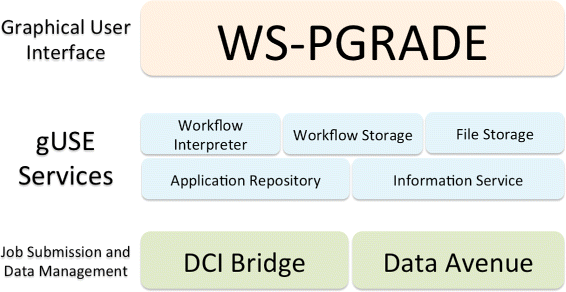 This featured article from the journal BMC Bioinformaticsfalls on the heels of several years of discussion on the topic of reproducibility of a scientific experiment's end results. De la Garza et al. point to workflows and their repeatability as vital cogs in such efforts. "Breaking down the complexity of such experiments into the joint collaboration of small, repeatable, well defined tasks, each with well defined inputs, parameters, and outputs, offers the immediate benefit of identifying bottlenecks, pinpoint sections which could benefit from parallelization," they state. The researchers developed their own set of free platform-independent tools for designing, executing, and sharing workflows. They conclude: "We are confident that our work presented in this document ... not only provides scientists a way to design and test workflows on their desktop computers, but also enables them to use powerful resources to execute their workflows, thus producing scientific results in a timely manner."
Evaluating health information systems using ontologies
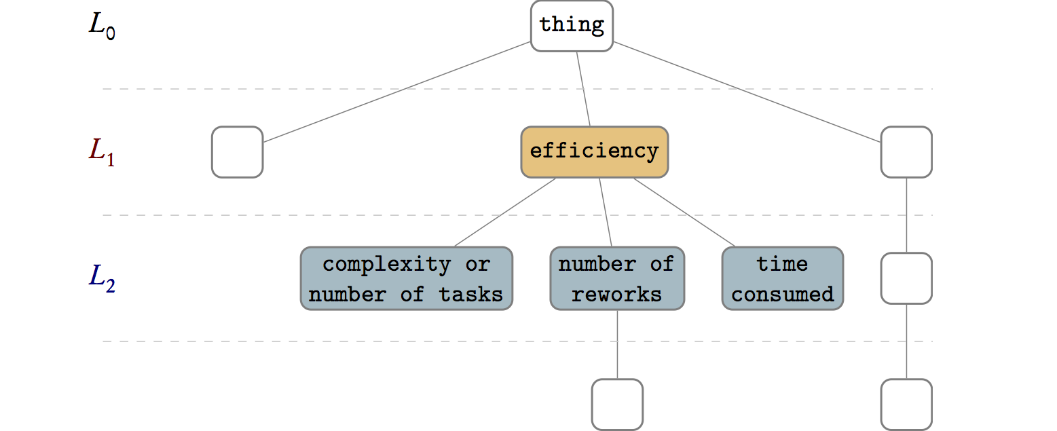 Evaluating health information systems/technology is no easy task. Eivazzadeh et al. recognize that, as well as the fact that developing evaluation frameworks presents its own set of challenges. Having looked at several different models, the researchers wished to develop their own evaluation method, one that taps into “evaluation aspects for a set of one or more health information systems — whether similar or heterogeneous — by organizing, unifying, and aggregating the quality attributes extracted from those systems and from an external evaluation framework.” As such, the group developed the UVON method, which they conclude can be used ” to create ontologies for evaluation” of health information systems as well as “to mix them with elements from other evaluation frameworks.”
SUSHI: An exquisite recipe for fully documented, reproducible and reusable NGS data analysis
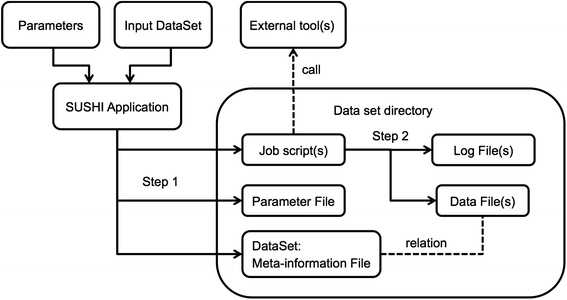 Many next-generation sequencing (NGS) data analysis frameworks exist, from Galaxy to bpipe. However, Hatakeyama et al. at the University of Zürich noted a distinct lack of a framework that 1. offers both web-based and scripting options and 2. "puts an emphasis on having a human-readable and portable file-based representation of the meta-information and associated data." In response, the researchers created SUSHI (Support Users for SHell-script Integration). They conclude that "[i]n one solution, SUSHI provides at the same time fully documented, high level NGS analysis tools to biologists and an easy to administer, reproducible approach for large and complicated NGS data to bioinformaticians."