Posted on March 2, 2016
By Khemia
Blog
Many laboratories face this same issue. A dated, legacy LIMS exist. It lacks needed capabilities. It cannot be remotely accessed. No client portal exists. It does not integrate with all of the newer instruments. It cannot produce new, needed reports. It cannot effectively update QC reports. Its query functions are extremely limited. It is failing under the higher workload. It cannot operate on the “new” computers. Yet, it, that old LIMS, is vital to the day to day operation of the laboratory. “If we could just get by this one more year… We’ll replace it next year!” And that has been said for five years straight.
Posted on March 2, 2016
By Corinne Jones
Newsletter
March 02, 2016 Laboratory Informatics Weekly Update Volume 14, Issue 9 In This Issue Webcast Focus Cahier de Laboratoire Électronique (ELN) Phase II: Élargir l’utilisation 24 mars à 14.00 heures HAE Maintenant que vous avez acquis une certaine expérience avec votre ELN, c’est peut-être le moment de prendre du recul pour fixer de nouveaux objectifs, comme analyser la façon dont votre système actuel peut être amélioré et étendu à d’autres fonctionnalités pour un meilleur rendement. WEBINAR - ELN Phase 2: Broadening the Utilization of Your R&D ELN Wednesday, March 23, 2016 at 2:00pm EDT Now that you have used your…
Posted on February 25, 2016
By CSols Inc.
Blog
If you have a paper-based CSMS you may be facing challenges such as: issues with routing paper, difficulty keeping track of inventory, compliance issues that have been noted by your organization based upon your paper system, and more. It’s time to look to a new electronic Clinical Supplies Management System and to learn the most important Dos and Don’ts when it comes to implementing and validating this system.
Posted on February 24, 2016
By Corinne Jones
Newsletter
February 24, 2016 Laboratory Informatics Weekly Update Volume 14, Issue 8 In This Issue Event Focus APRIL 12 - 13, 2016: Compound Management in Industry and Academia Conference The SLAS Conference on Compound Management in Industry and Academia will assemble key individuals who share the aims of providing their organizations the right compound at the right time and in the best possible quality, to allow the generation of meaningful screening, pharmacological, toxicological or ADME profiling data. APRIL 19 - 20, 2016: 2016 Paperless Lab Academy The Paperless Lab Academy is the ideal learning platform, for those considering consolidating, integrating and…
Posted on February 17, 2016
By Khemia
Blog
Khemia’s Omega 11 LIMS has a complete and easily configurable report developer that is straightforward and easy to navigate. With a few simple steps, what main sections are to be included in a report, what order they are to be presented in and what analytical data, field data and/or QC data are to be presented may be modified as needed, allowing a laboratory to quickly configure their reports to fit their clients’ specific needs.
Posted on February 17, 2016
By Corinne Jones
Newsletter
February 17, 2016 Laboratory Informatics Weekly Update Volume 14, Issue 7 In This Issue Webcast Focus Managing Multi-Sourced Lab Informatics Teams There is no denying that a high performance project team is extremely beneficial. Join us for this 1-hour webinar to learn how to tackle the unique challenges presented by establishing and managing a Multi-Sourced Lab Informatics Team. Event Focus APRIL 12 - 13, 2016: Compound Management in Industry and Academia Conference The SLAS Conference on Compound Management in Industry and Academia will assemble key individuals who share the aims of providing their organizations the right compound at the right…
Posted on February 15, 2016
By John Jones
Journal articles

In this brief article published in
Frontiers in Environmental Science in 2014, environmental researcher Alexander Kokhanovsky takes a look at the state of environmental informatics past and present while also speculating about the future challenges. He ends by emphasizing the need for improved "estimation of aerosol load using space-borne instrumentation" to improve environmental research, including improved algorithms and visualization tools.
Posted on February 12, 2016
By John Jones
Journal articles
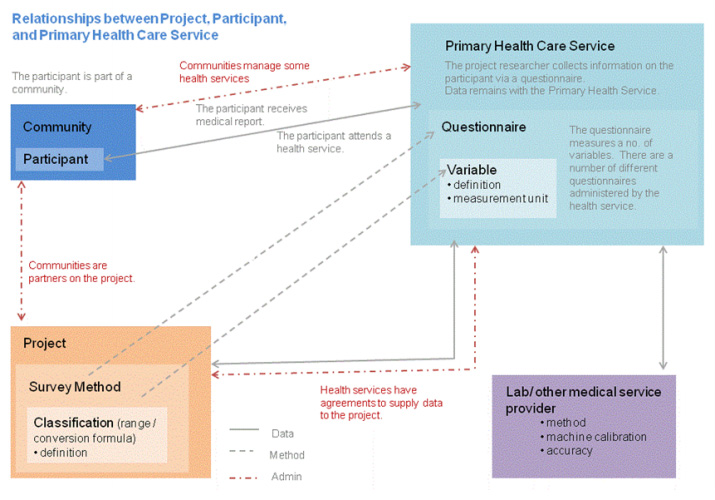
van Gaans
et al. of the University of South Australia and James Cook University needed a system that provides data management functionality for the specific needs of a public health research organization, including data sharing and reuse. They needed a system that would "ensure that: data that are unmanaged be managed, data that are disconnected be connected, data that are invisible be findable, [and] data that are single use be reusable, within a structured collection." In this journal article, the group documents the development of their answer: the Public Health Data Management System (PHRDMS).
Posted on February 11, 2016
By CSols Inc.
Blog
We're all familiar with Open Source "free" LIMS - but we pose the question: Is a Free LIMS really free? We take a closer look at this by examining the landscape, Implementation, Enhancement, and the Support for an Open Source "free" LIMS.
Posted on February 10, 2016
By Corinne Jones
Blog
Modern specialty diagnostic laboratories need an integrated LIMS that can handle molecular diagnostics, cytology, histopathology, NGS, FLOW, biochemistry, genetic cytology (Cyto / FISH)and microbiology related processes in a single system. Advanced detection of mutations, abnormalities in cells, chromosomes, karyotypes, DNA, gene, enzymes studies and biomarkers are very helpful in identification of potential source of disease and better patient care.
Posted on February 10, 2016
By Corinne Jones
Newsletter
February 10, 2016 Laboratory Informatics Weekly Update Volume 14, Issue 6 In This Issue Webcast Focus FEBRUARY 17, 2016, 2pm EST: Managing Multi-Sourced Lab Informatics Teams There is no denying that a high performance project team is extremely beneficial. Join us for this 1-hour webinar to learn how to tackle the unique challenges presented by establishing and managing a Multi-Sourced Lab Informatics Team. The LIMS Book 2016 Edition of the Complete Guide to LIMS & Laboratory Informatics released and ready for download 2016 Edition of the Complete Guide to LIMS & Laboratory Informatics released and ready for download. Our LiMSforum…
Posted on February 3, 2016
By Khemia
Blog
In almost every laboratory, a group of standard queries are developed within the LIMS. This prearranged group of queries covers 80-90% of the queries most laboratories and analysts will ever need. It is that “other” 10-20% of unique queries that can and will be the sticking point. It is often the lack of quick, customizable queries that can trip up productivity or limit quality control checks. Khemia’s Omega 11 offers an ad hoc query writer to overcome this.





