Posted on November 29, 2023
By LabLynx
Blog

Adding a LIMS can save your lab time and money. Two of the biggest time drains in the laboratory are workflow inefficiency and disorganization. If your lab team is constantly hunting for paper records, scrolling through spreadsheets, or manually transcribing data, it takes away time from performing more tests or taking on additional business with a new customer.
[Read More]
Posted on November 29, 2023
By CSols Inc.
Blog

Every industry has embraced the idea that digital technologies need to be fully integrated in the business processes to ensure successful competition. In the era of Industry 4.0, your organization’s data (digital assets) are now recognized as your most valuable assets. Within the life sciences, however, there are many constraints of the scientific operating environment.
[Read More]
Posted on November 29, 2023
By onQ Software
Blog

Laboratory Information Management Systems (LIMS) are transforming multiple industries. In this blog post, we’ll explore industries where LIMS is playing a crucial role by revolutionizing processes and ensuring compliance with strict standards. Before delving into the examination of industries, let’s not forget that there are many new and upcoming industries, as well as emerging scientific technologies, that can be explored and supported by LIMS.
[Read More]
Posted on November 29, 2023
By LIMS Wizards
Blog

As hands-free lab note-capturing technology becomes more prevalent, it is crucial to address the privacy and security concerns associated with voice recognition and mobile or wearable devices. In this blog post, you'll read about the different data privacy and security concerns you may face and how LabTwin, the leading voice-powered digital lab assistant, has addressed them.
[Read More]
Posted on November 29, 2023
By LabLynx
Blog

Laboratory informatics is the use of information technology to support a lab’s testing mission, which goes beyond data management to support all aspects of lab operations. Implementing an informatics solution helps laboratories adapt and enables benefits such as lab management, productivity, quality control, process improvement, data integrity, security and privacy, industry and regulatory compliance, and customer service.
[Read More]
Posted on November 29, 2023
By Adurosys Inc.
Blog

When developing therapeutic antibodies, selecting only the strongest candidates for further clinical development increases the chances of successful clinical trials. The important decision of candidate selection can only be done right with high quality, accessible data from which insights can be easily drawn.
[Read More]
Posted on November 28, 2023
By LabLynx
Journal articles
In this 2023 paper published in the
Journal of Cannabis Research, Johnson
et al. examine the current state of hemp-derived delta-9-tetrahydrocannabinol (Δ
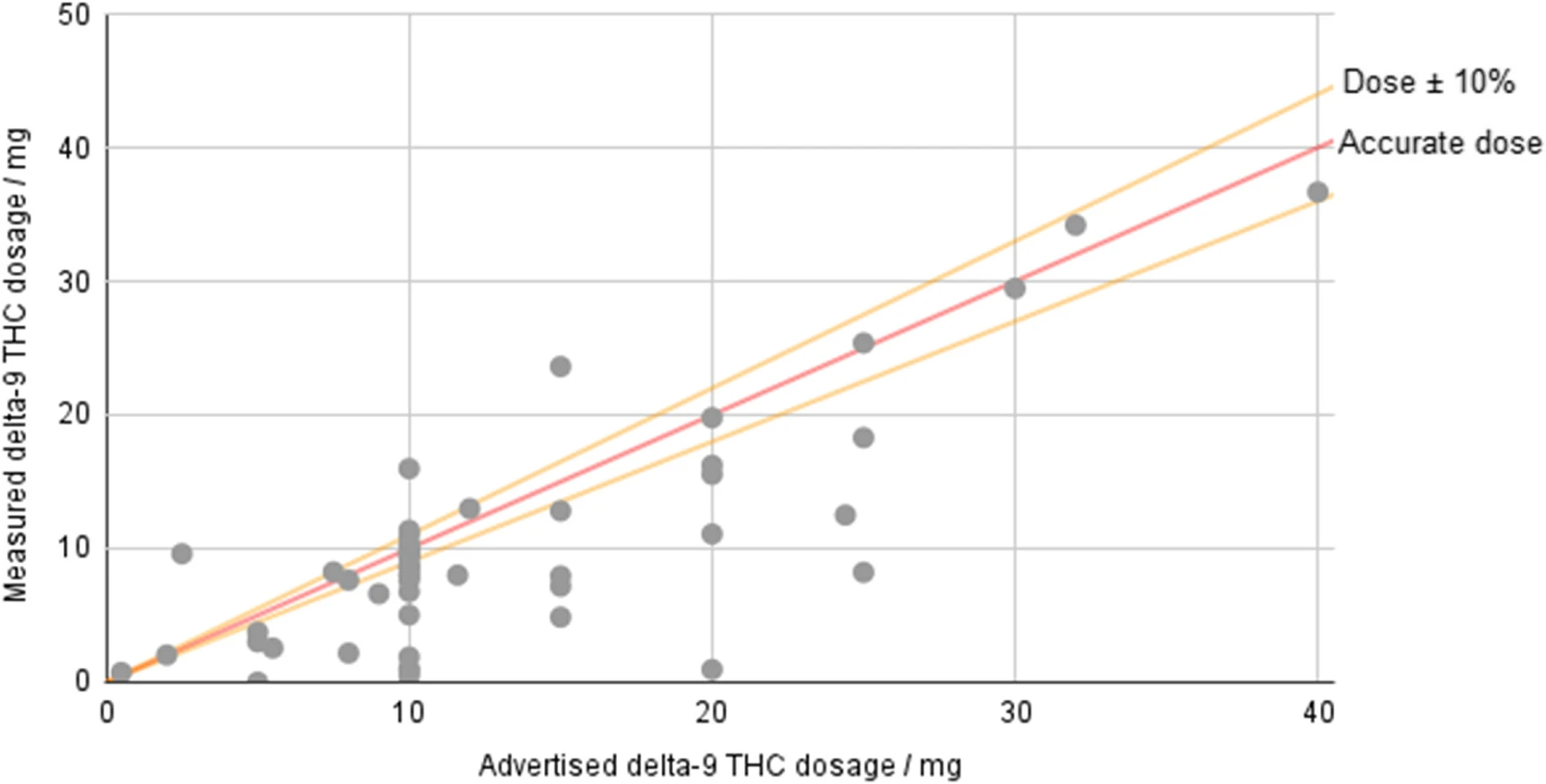
9-THC) products on the U.S. market after the passage of the Agriculture Improvement Act of 2018. Noting discrepancies and loopholes in the legislation, the authors performed laboratory analyses on 53 hemp-derived Δ
9-THC products from 48 brands, while also examining aspects such as age verification, labeling consistency, and comparison of reported company values vs. analyzed values. After describing their methodology and results, the authors conclude that "the legal status of hemp-derived Δ
9-THC products in America essentially permits their open sale while placing very few requirements on the companies selling them." The end result includes finding, for example, products "that have 3.7 times the THC content of edibles in adult-use states," as well as inaccurately labeled products.
Posted on November 20, 2023
By LabLynx
Journal articles
"Artificial intelligence" (AI) may seem like a buzzword akin to the "nanotechnology" craze of the 2000s, but it is inevitably finding its way into scientific applications, including in the materials sciences. In this December 2022 article published in
npj Computational Materials, Sbailò
et al. present their AI-driven Novel Materials Discovery (NOMAD) toolkit as an extension of their NOMAD Repository & Archive, focused on making materials science data FAIR (findable, accessible, interoperable, and reusable), as well as AI-ready. After introducing the details of their workspace and goals towards adding notebook-based tools to the NOMAD Repository & Archive, the authors dive into the details of NOMAD AI Toolkit. They close by noting their toolkit "offers a selection of notebooks demonstrating such [AI-based] workflows, so that users can understand step by step what was done in publications and readily modify and adapt the workflows to their own needs." They add that the system "will allow for enhanced reproducibility of data-driven materials science papers and dampen the learning curve for newcomers to the field."
Posted on November 16, 2023
By Corinne Jones
Newsletter
November 16, 2023 Laboratory Informatics Weekly Update Volume 21, Issue 46 In This Issue Announcements 10/30/2023 - LiMSforum is pleased to offer LiMShelp consulting to our laboratory members at no chargeLiMSforum publishes the LiMSpec to help your laboratory develop your LIMS requirements. Today, LiMSforum now provides free LIMS consulting services to our laboratory members to help utilize the LiMSpec to capture all of the laboratory user requirements specifications (URS) and to develop a set of requirements that reflects the LIMS needs specific to your lab. To learn more about this offering, please click here. Featured Books LIMS Selection Guide…
Posted on November 15, 2023
By LabLynx
Blog

While ISO 17025 accreditation can be achieved using manual, paper-based processes and documentation, it is extremely time consuming. It can be difficult to locate specific data, SOPs, instrument calibration histories, staff qualifications, certifications, or other necessary documents or files, and doubly so under the pressure of ISO audits – all while trying to maintain regular daily operations and meet TAT deadlines. That's where LIMS technology can make a real difference.
[Read More]
Posted on November 15, 2023
By CSols Inc.
Blog

The use of analytics in life sciences companies faces challenges that analytics in other industries do not. Life sciences organizations have unique data integrity needs because they deal with protected health information. Despite these challenges, the undeniable usefulness of analytical tools is leading to wider adoption in the life sciences.
[Read More]
Posted on November 15, 2023
By STARLIMS Corporation
Blog

Paper-based data management processes belong in the recycling bin. If you’re still operating your labs on pen and paper or across disparate LIMS, read the article in Food Manufacturing written by STARLIMS’ Chief Product & Marketing Officer, Brandon Henning, to learn how consolidating LIMS across labs can support F&B businesses in enhancing security, improving productivity, and fostering collaboration.
[Read More]