

PCR and Diagnostics: COVID-19 Pandemic Reveals Serious Issues

There has been recent discussion of the lack of accuracy of COVID-19 tests - both virus (rRT-PCR), which has been widely regarded as “the gold standard”, and antibody assays. The issue with PCR is not with the methods themselves, but the degree of human error that creeps in due to the complexity of the workflow - including pre-analytical sample handling, which can account for up to 68% of errors according to a recent paper, with overall inaccuracies of up to 41%.
[Read More]
Laboratory testing methods for novel severe acute respiratory syndrome coronavirus 2 (SARS-CoV-2)
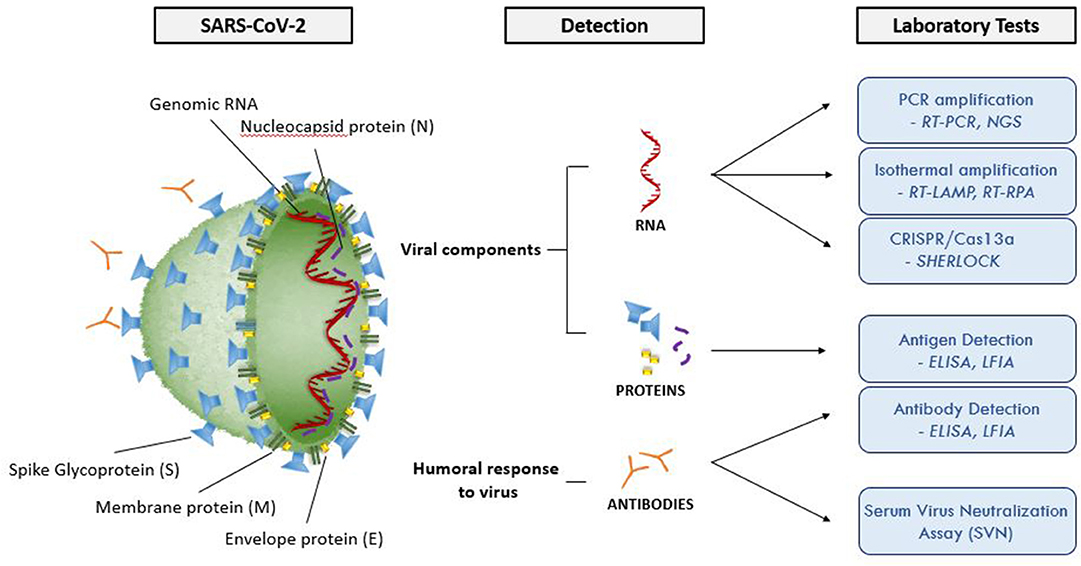 In this 2020 article published in Frontiers in Cell and Developmental Biology, D'Cruz et al. provide an overview of the current laboratory methods available to test for coronaviruses, with a focus on SARS-CoV-2, the virus responsible for COVID-19. After providing an introduction to COVID-19 and its virus, the authors discuss the most common methods—such as qRT-PCR, ELISA, and LFI—as well as emerging diagnostic methods involving isothermal nucleic acid amplification, CRISPR, and NGS. They conclude with several visuals comparing the methods and when they are used, and they emphasize the importance of these test methods (as well as laboratory preparedness) in addressing rapidly evolving viral infection scenarios.
Proscia’s Concentriq Digital Pathology Software Has Been Deployed By UNITY Biotechnology to Accelerate Research and Development
Proscia®, a provider of AI-enabled digital pathology solutions announces that UNITY Biotechnology, Inc., a company developing therapeutics to extend health span by slowing, halting, or reversing diseases of aging, has deployed the Concentriq® digital pathology platform to advance its research and development (R&D) pipeline.OpGen Expands Partnership with New York State Department of Health and IDC to Detect Antimicrobial-Resistant Infections
OpGen, Inc. announced today that its strategic collaboration with the New York State Department of Health (“DOH”) to develop a state-of-the-art solution to detect, track, and manage antimicrobial-resistant infections at healthcare institutions statewide is entering into its second year expansion phase.Selecting a Managed Services Partner for Laboratory Informatics
 Scientific organizations face ever increasing pressure from business stakeholders to reduce costs while improving operational efficiency, scalability, and agility. Laboratory research is more complicated and dependent on informatics than ever. IT organizations are seeking a solution through the development and deployment of an integrated laboratory informatics strategy and infrastructure.
[Read More]
National Institutes of Health (NIH) Research Updates – June 2020
The National Institutes of Health (NIH) is our nation’s medical research agency and strives to make scientific discoveries that improve health and save lives. Founded in 1870, the NIH conducts its own scientific research through its Intramural Research Program (IRP), which supports approximately 1,200 principal investigators and more than 4,000 postdoctoral fellows conducting basic, translational and clinical research. In this blog, we will highlight recent ground-breaking NIH research.
[Read More]
Autoscribe Informatics Expands African Distributor Network
 Further expanding its growing distributor network Autoscribe Informatics has appointed Sciencescope Ltd. as a distributor in Africa. Based in Kenya, Sciencescope will distribute and support the Matrix family of Laboratory Information Management System (LIMS) products.
Laboratory Informatics Weekly Update – Volume 18, Issue 23
June 9, 2020 Laboratory Informatics Weekly Update Volume 18, Issue 23 In This Issue Featured Books COVID-19 Testing, Reporting, and Information Management in the Laboratory Featured Content 06/09/2020 - Selecting a Managed Services Partner for Laboratory InformaticsScientific organizations face ever increasing pressure from business stakeholders to reduce costs while improving operational efficiency, scalability, and agility. Laboratory research is more complicated and dependent on informatics than ever. IT organizations are seeking a solution through the development and deployment of an integrated laboratory informatics strategy and infrastructure. [Read More] 06/09/2020 - National Institutes of Health (NIH) Research Updates – June 2020The…Bridging the collaboration gap: Real-time identification of clinical specimens for biomedical research
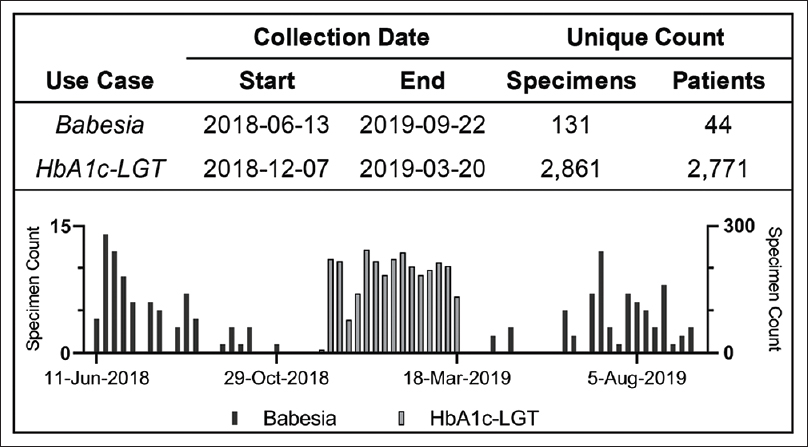 In this 2020 article published in Journal of Pathology Informatics, Durant et al. of the Yale New Haven Health system present the results of their attempt to automate the identification and notification of laboratory biospecimens for biomedical researchers. Noting biospecimens' value to basic, translational, and clinical research, the authors wanted to get around the "technical, logistic, regulatory, and ethical challenges" of accessing biospecimen data. They developed Prism, a tool built on open-source technology for efficiently identifying and notifying investigators of biospecimen availability in real time. The authors present details of two use cases and conclude that their "solution is highly scalable to meet the needs of even large academic centers and reference laboratories," while also guaranteeing that the virtualization of the associated workflow "within a microservices environment does not introduce a performance penalty."
10 Steps to Laboratory Automation using QLIMS
 Modern analytical and research laboratories have experienced a tremendous growth in data volumes in recent years. In order to translate all this data into knowledge, labs are increasingly looking to automate and integrate their processes to not only provide digital continuity throughout the sample life cycle but also improve data integrity.
[Read More]
5 Important Elements of Lab Informatics Implementation Success
 Now that you’ve made the big decision and invested in a new or upgraded laboratory informatics system (whether it be LIMS, LES, CDS, or ELN), how do you ensure that your implementation will be a success? At CSols, ensuring implementation success is one of the things we specialize in, and we’ve acquired the expertise to determine what can make or break a project. If your implementation includes the following five elements, you’ll be well on your way to success.
[Read More]
Benchling Raises $50M to Accelerate Life Science R&D Globally
 Benchling is announcing a $50M Series D investment, led by Alkeon Capital with participation from new investors Spark Capital, Lux Capital, and ICONIQ Partners, as well as existing investors Thrive Capital, Menlo Ventures, and Benchmark. We are thrilled to have these long-term partners on our journey.
The ongoing pandemic has put biotechnology under the global spotlight. As scientists race to develop treatments and vaccines for COVID-19 on an unprecedented timescale, we’re seeing how far life science has come.
[Read More]
Introducing SoftLIMS™ | SCC’s Cloud-based Configurable Laboratory Information Management System

 As part of SCC’s Research Information Systems Suite, SoftLIMS is a cloud-based, multi-tenant laboratory information management system that provides the following features:
[Read More]
Debra – A LIMS for ADME and Beyond
LabLogic Systems’ Debra software is a fully-featured Laboratory Information Management System (LIMS) written specifically to manage the life cycle of a range of drug and environmental metabolism studies. It addresses the issues of time-consuming manual data entry/transcription and checking, manual calculations, assurance of data integrity and working in compliance with GLP.COVID-19 Testing, Reporting, and Information Management in the Laboratory

Comprehensive guide to all aspects of testing and information management related to COVID-19/SARS-CoV-2. Amidst the rapidly-changing and conflicting messages surrounding testing in the current pandemic, LabLynx, Inc., has published a free online book of carefully researched and fully cited news, facts and resources to serve as a reference for the laboratory and laboratory informatics industry.
[Read More]
Indica Labs, Octo and Axle work with NIH to launch a global COVID-19 digital pathology repository
Indica Labs and Octo are pleased to announce the online COVID Digital Pathology Repository (COVID-DPR), a virtual collection of high resolution microscopic COVID-related human tissue images hosted at the National Institutes of Health.Next-Generation Analytical Software Strengthens Data Exploration
 Thermo Scientific software suite expands capabilities in sample analysis with enhanced flexibility, reliability and customization. Scientists in the life sciences can now benefit from upgrades to a suite of analytical software solutions with new features designed to enhance productivity, confidence and accuracy in numerous fields, including proteomics, food safety and biotherapeutic drug development.
Autoscribe Release New and Improved Pharmaceutical/Manufacturing-Specific LIMS Solution
Autoscribe Informatics, a leading global laboratory informatics provider, announced the release of a new and improved Matrix Gemini Pharmaceutical/Manufacturing LIMS to meet the changing needs of the pharmaceutical, manufacturing and regulated industries.

