

Integrated Reporting for Anatomic Pathology & Molecular Testing

 In today’s anatomic pathology (AP) lab, molecular testing plays an increasingly important role in informing treatment decisions. With Sunquest’s integrated reporting capabilities for AP and molecular testing, review combined results in one actionable report for more coordinated, efficient care. [READ MORE]
Strategies for Creating Effective Technical Documentation – Part 1

 On April 20th, 2010, a massive explosion on BP’s Macondo well in the Gulf of Mexico killed 11 people and began the largest marine oil spill in history. Before the spill was over, 206 million gallons of oil were released into the Gulf of Mexico, ultimately affecting wildlife and water-quality along hundreds of miles of Gulf coastline. According to BP’s Deepwater Horizon Accident Investigation Report, reasons leading to the accident were lack of good technical documentation and non-adherence to the documents that did exist. [Read More]
Exemplar LIMS – Baylor College of Medicine Case Study
 See how Baylor College of Medicine’s Human Genome Sequencing Center uses Exemplar NGS LIMS from Sapio Sciences
The BCM-HGSC is a world leader in genomics and one of the most technologically advanced laboratories processing a high volume and wide variety of samples and protocols. They have experienced dramatic growth in both the volume and complexity of the DNA sequencing including for COVID-19 testing. Click here to see how Baylor uses Exemplar’s NGS LIMS to meet their demand and how Exemplar has become an essential part of their future
Autoscribe White Paper Emphasizes the Role of LIMS in Supporting ISO17025 Accreditation in Efficiently Run Laboratories
 Autoscribe Informatics, a leading global laboratory informatics provider, announced the release of a new white paper examining the role of a Laboratory Information Management System (LIMS) in supporting ISO17025 accreditation. The white paper explores the ways in which a Laboratory Information Management System (LIMS) can play a key role in achieving, maintaining, and benefiting from ISO17025 accreditation.
Laboratory Informatics Weekly Update – Volume 18, Issue 45
November 10, 2020 Laboratory Informatics Weekly Update Volume 18, Issue 45 In This Issue Featured Books Past, Present, and Future of Cannabis Laboratory Testing and Regulation in the United States Featured Content 11/10/2020 - Top 3 STARLIMS Features You Probably Aren’t Using, But Should!Congrats on implementing STARLIMS for your laboratory! This may come as a shock, but you probably aren’t using some of the great features of the LIMS, right out of the box. Like most laboratories, just getting an informatics system in place can be a tough process, forcing a lab to focus on critical items first, like…How LIMS Integrations Can Improve Your Clinical Lab’s Performance
 All NGS clinical diagnostic laboratories want to run more efficiently—it’s a necessity if they want to remain competitive. They need to streamline laboratory workflows, save on labor costs, and scale their operations to meet demand, such as with the current calls for additional COVID-19 testing capacity. But it goes further than that. To keep their highly skilled employees engaged and reduce human error, they need to minimize both unnecessary duplicated effort and simple repetitive tasks.
System integrations can help labs address all of these issues. By bridging the gap between two or more self-sufficient, self-contained systems, they enable the reliable and efficient exchange of information. This helps labs improve their performance and productivity, and scale beyond what would be possible using manual processes.
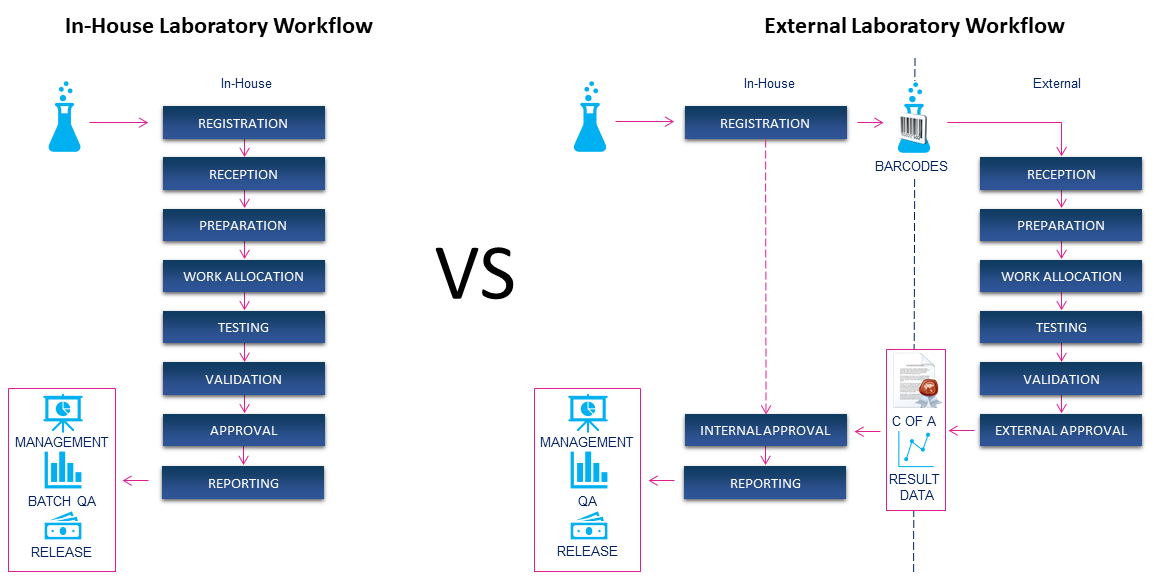
Sample Tracking is Essential for Organizations that Outsource Laboratory Testing Activities
The Secrets of Successful LIMS Configuration
 ABOUT THIS WEBINAR: Are you interested in learning the secrets of LIMS configuration to allow easier modifications, extensions and upgrades? How can you ensure your implementation is successful? Learn what drives successful LIMS projects, unwrap the secrets of configuration, and discover the pitfalls to avoid.
[LEARN MORE]
MEDEORA and LIMS at work to Extend Portfolio with QLIMS LIMS Platform
 The LIMS software from Australian software provider OnQ Software is now also available in Germany: The two partner companies MEDEORA and LIMS at work are responsible for acquiring new customers for QLIMS in Germany, Austria, and Switzerland (DACH). Their services also include implementation, training, and support.
From the Bench to Benchling
Benchling is a next-gen laboratory informatics platform that is helping life science companies manage increasingly complex data workflows. GEN Edge talks to CEO/co-founder Saji Wickramasekara and Michael Schwartz, Head of Product Marketing. [Read More]Sunquest Mitogen LIMS
 Sunquest Mitogen LIMS is a comprehensive and flexible molecular and genetic laboratory information management system. As COVID-19 continues to spread throughout the world, Sunquest Mitogen LIMS for COVID-19 is available to labs looking to quickly stand up testing in response to the pandemic.
[LEARN MORE]
Sengenics Launches SEROMAX, an At-Home, Antibody Sample Collection Kit That Will Revolutionise Patient Recruitment and Monitoring in Clinical Trials
Sengenics, the Functional Proteomics Company, today announced the launch of SEROMAX, a sample collection kit which only requires a pin-prick amount of blood for quantifying antibodies or autoantibodies.Dotmatics collaborates with LabVoice to enable voice-assisted laboratory workflows
Dotmatics Ltd, a scientific informatics software and services company that is driving the automation of laboratory data workflows for scientific discovery and innovation research, today announced a new partnership with LabVoice to provide R&D scientists with the ability to record, access, and track data within an electronic laboratory notebook (ELN) using hands-free voice assisted technology.COVID-19 Insights: Streamlining lab work in these challenging times

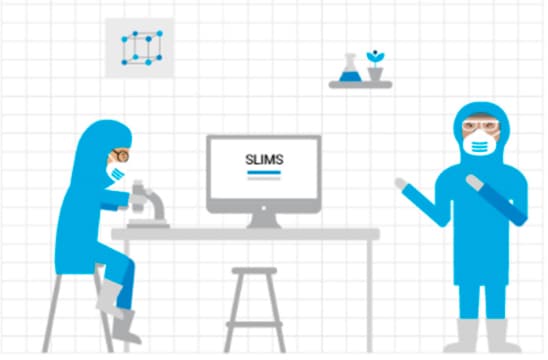 During this pandemic, around half of labs worldwide are shut down and only 14% of labs are fully functional at a time when 100% of labs need to be thriving. Support for labs impacted by the restrictions imposed by the crisis is critical. Tools such as laboratory information management systems (LIMS) and electronic laboratory notebooks (ELNs), among other solutions, can help mitigate the impact on life in the lab.
Laboratory Informatics Weekly Update – Volume 18, Issue 44
November 3, 2020 Laboratory Informatics Weekly Update Volume 18, Issue 44 In This Issue Featured Books COVID-19 Testing, Reporting, and Information Management in the Laboratory Featured Content 11/03/2020 - MEDEORA and LIMS at work to Extend Portfolio with QLIMS LIMS PlatformThe LIMS software from Australian software provider OnQ Software is now also available in Germany: The two partner companies MEDEORA and LIMS at work are responsible for acquiring new customers for QLIMS in Germany, Austria, and Switzerland (DACH). Their services also include implementation, training, and support. 11/03/2020 - From the Bench to BenchlingBenchling is a next-gen laboratory informatics platform…Definitions, components and processes of data harmonization in healthcare: A scoping review
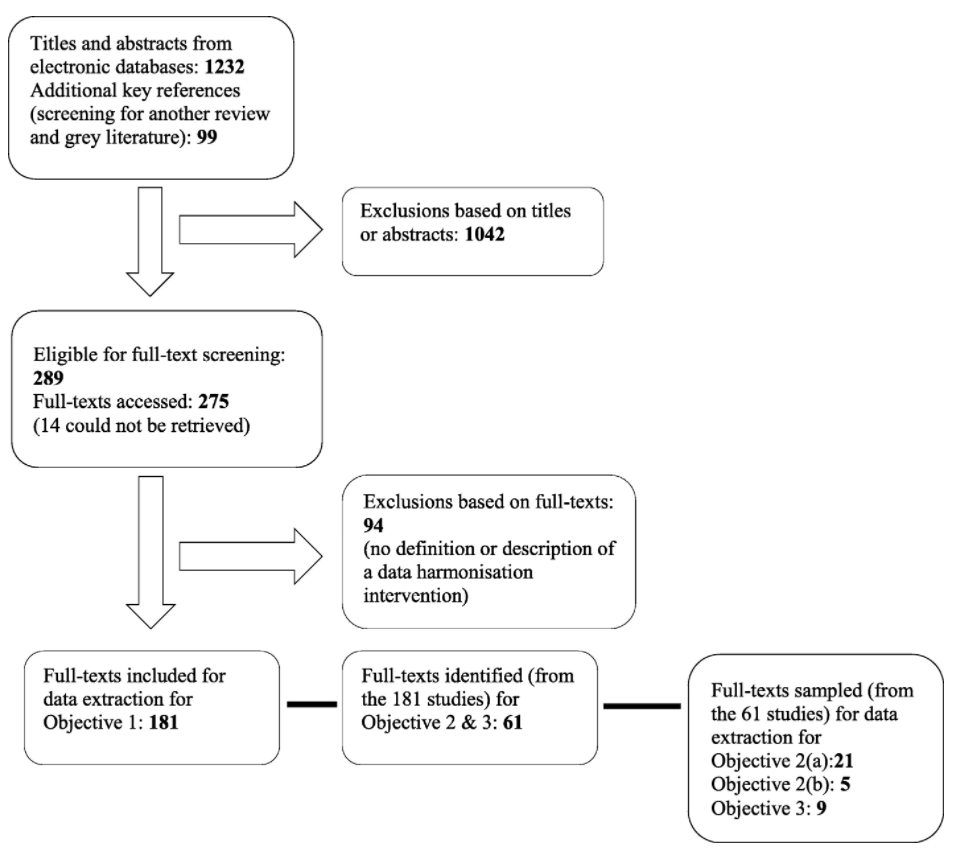 In this 2020 review article published in BMC Medical Informatics and Decision Making, Schmidt et al. detail the state of healthcare data harmonization (DH) literature, analyze commonalities among various DH terms, and determine "the causal relationship between DH and health management decision-making." Noting the value of organizing and integrating healthcare data in order to strengthen many aspects of how the healthcare system runs, the authors lay out the methodology and results of their scoping review of the topic. The group had three primary objectives: identifying the key components and processes of healthcare DH, synthesizing the various related definitions of DH, and documenting relationships between DH interventions and healthcare management decision-making. They conclude that "health information exchange" is the most commonly used term among seven key terms, and that there are nine vital characteristics to making DH work well. They also add that DH, when conducted well, positively contributes to clinic, operational, and population surveillance decision-making in healthcare settings.

