

March 13, 2024 - CSols Summit 2024: The Next-gen Lab: Pioneering Tomorrow, Today
 Learn how to optimize existing tools and embrace emerging technologies like artificial intelligence, data science, simulations, analytics, and lab informatics integrations for enhanced daily operations at this virtual conference - April 3 - 4, 2024. Gain insights on deriving additional value from organizational data, deepen your understanding of AI and digital twins, and be an early adopter of integration platforms and digital transformations. [Read More]
March 13, 2024 - What role does interoperability and systems integration play in the laboratory, and why is this important to address?
 Interoperability and integration are important to today's laboratories. Integration is a critical enabler for access, exchange, and cooperative use of data and information, the other components of interoperability. Whether it's a middleware solution, a LIMS, or a custom automation solution, each lab will need to address interoperability and integration in the greater scope of data, data standards, systems, workflows, inefficiencies, and organizational risks. [Read More]
March 13, 2024 - The Clock Ticks for US Food Testing Labs to be LAAF-Accredited
 FDA is gradually tightening the rules on food testing labs to mandate that, under certain circumstances, food testing must be performed only by LAAF-accredited laboratories. This article discusses how this affects contract testing labs and how the can comply with the amendments to Food Safety Modernization Act. The introduction of a laboratory accreditation program for food testing labs by the U.S. Food and Drug Administration (FDA) is intended to improve the testing of food under certain circumstances. [Read More]
March 13, 2024 - Why Choose QLIMS? Insights from a Customer
< In the competitive world of laboratory informatics, choosing the right LIMS can be a daunting task. We emphasise the features of QLIMS as the OnQ Software team, but we have decided that nothing will be more real than what we hear from a customer. We have compiled feedback from our customers and asked them why they chose us. Here is ‘Why Choose QLIMS’ insights from the customer. [Read More]
March 13, 2024 - Why equipping scientists to harness digitisation is key to driving laboratory innovation
 Digital transformation can deliver significant benefits for laboratories and their customers, but investing in the latest, greatest technology is not an immediate path to success. Technology is a key enabler when harnessed correctly, but it’s equally possible to invest in the wrong software for your business needs, or even implement the right software but fail to fully leverage its capabilities and reap the expected rewards. [Read More]
March 13, 2024 - WHITE PAPER: AI Use Case Catalog
 To compete in the era of Industry 4.0, laboratories must leverage artificial intelligence (AI) and machine learning (ML). The use cases in this white paper will show you why working with LabTwin can accelerate your organization’s realization of value from AI and ML. Request this white paper to read the presented use cases for situations familiar to many in biotechnology and pharmaceutical labs. [Read More]
March 13, 2024 - Why is it important for a LIMS to be scalable?
 LIMS scalability is the ability to handle growing amounts of data, users, and transactions without performance compromise. As your laboratory expands, the LIMS can adapt and accommodate increased data volume, user interactions, and overall workload. When considering a LIMS, assessing the scalability features, such as system architecture, database capabilities, and performance benchmarks, is essential for meeting current and future needs. [Read More]
March 6, 2024 - How does a LIMS help a food and beverage business improve HACCP compliance?
 The hazard analysis and critical control points (HACCP) principles, as applied to a food safety management system, help the implementing business identify and procedurally better control a wide variety of identified risks or hazards to food, beverage, and ingredient safety. Food Safety LIMS can improve lab workflows while enhancing food and beverage safety, quality, and compliance in a number of ways. [Read More]
March 6, 2024 - Seeking a LIMS for Your Lab? Understand the True Costs of Different Options
 A period of rapid growth is an exciting time for any laboratory. But it can also expose unexpected challenges that can only be solved by implementing a laboratory information management system (LIMS). If your lab is searching for a LIMS for the first time or you need to upgrade your existing system to one with more flexible and expanded capabilities, there are many variables to think about — cost being one of the most important. Before you decide which solution is best for your lab, let’s examine some of the challenges you are likely facing, the true costs of four LIMS options, and the significant benefits of an all-in-one solution. [Read More]
March 6, 2024 - WHITE PAPER: Why ELNs Need a Helping Hand
 The most significant drawback to an electronic lab notebook (ELN) is that it lives on a desktop computer and is often far from the lab bench. The risk of data loss or corruption is high when humans must remember to transcribe results correctly. Read this white paper to learn how LabTwin’s accurate, hands-free voice capture functions as your digital lab assistant at the bench. [Read More]
March 6, 2024 - Bayer’s 14-Year Partnership with STARLIMS: Transforming Global Crop Protection Laboratory Operations
 By consolidating the management of global laboratory operations within a centralized laboratory information management system (LIMS), Bayer CropScience’s regulatory and GxP labs are achieving streamlined compliance and digitalization for one of their most vital divisions. [Read More]
March 6, 2024 - Overcoming Challenges in Requirements Gathering
 It is impossible to overstate the importance of thoroughly gathering requirements for the success of an implementation project. Although that seems like hyperbole, unfortunately, it is not. When difficulties arise in a lab informatics or enterprise system implementation, it is almost always because of incomplete requirements gathering or a failure to understand the underlying workflows and processes fully. So, how do you ensure that requirements are gathered as thoroughly as possible? This blog post covers the fundamentals. [Read More]
March 6, 2024 - Three ways to successfully scale your toxicology laboratory
 The global toxicology laboratory testing market is booming. Increasing the efficiency and throughput of testing from order capture to instrument are front-of-mind for any toxicology laboratory. With the volume of forecasted growth in the market looking so strong, enabling your laboratory to move from handling daily volumes in the 100s to the 10,000s on a regular basis, as well as being ready to respond to unplanned peaks, is critical to capitalizing on this market growth. [Read More]
March 6, 2024 - Run Your Lab Like a Business – Part 2
 In the first blog post, we explored the importance of adopting a business approach in laboratory operations. Building on that foundation, we now turn our attention to maximising efficiency, measuring progress, and how a digital solution LIMS helps to achieve these goals. Whichever combination of ‘good’, ‘fast,’ or ‘cheap’ a lab opts to execute, it will make little progress if it lacks ways to reorganise resources to maximise efficiency. [Read More]
March 6, 2024 - What is the importance of food safety laboratories to society?
 Food and beverage testing labs are at the forefront of ensuring a safer, more reliable food supply. These labs fill an important gap in the larger risk assessment framework that can't supply inspectors for every producer, farm, or import channel. Food safety labs help minimize foodborne illnesses, reinforce economic stability, and give consumers the knowledge to make healthier, safer choices. [Read More]
February 28, 2024 - Essential Guide to – FHIR (Fast Healthcare Interoperability Framework from HL7 )
 Within modern healthcare technology, data interoperability has become a prominent topic. Electronic health records (EHRs) must be accessible across platforms for specified parties, while protecting data integrity. Seamless data exchange improvements are sought after in the field by healthcare providers, stake holders and developers. Fast Healthcare Interoperability Resources (FHIR) is the solution developed by the Health Level 7 standards organization (HL7 ). Today, we dive into an increasingly important push towards FHIR framework and what you need to know on its rise within the healthcare technology. [Read More]
February 28, 2024 - What standards and regulations affect a food safety laboratory?
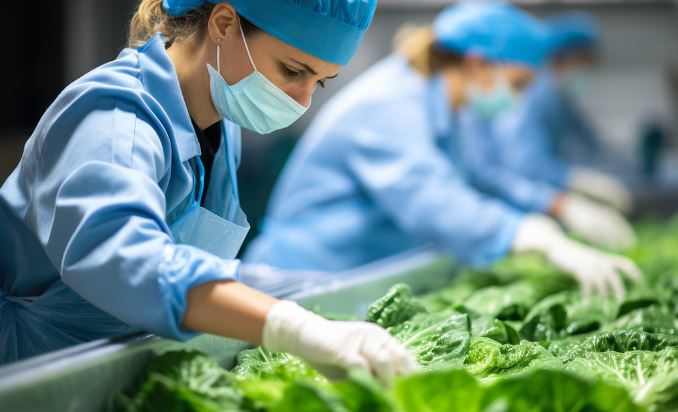 Food safety laboratories navigate a comprehensive regulatory environment, ensuring the security of the worldwide food supply. In order for the food and beverage industry to be a safer, more well-trusted industry, it must incorporate quality control and standardized manufacturing methods into its efforts, which in turn require laboratory analyses to ensure meeting those quality and manufacturing standards. [Read More]
February 28, 2024 - Run Your Lab Like a Business – Part 1
 In this blog article, we are discussing a very interesting and ambitious topic: Run Your Lab Like a Business. We will explore why it can be beneficial for some labs to adopt a managing business approach to their operations, aiming for best practices, optimal solutions, and greater achievements. Would running your lab like a business lead to real success? Why is this approach important, and how can it benefit your laboratory? We delve into the reasons why adopting this mindset can drive greater efficiency and success in your lab operations. [Read More]
February 28, 2024 - AZ Sint-Maarten goes paperless with DaVinci LIS
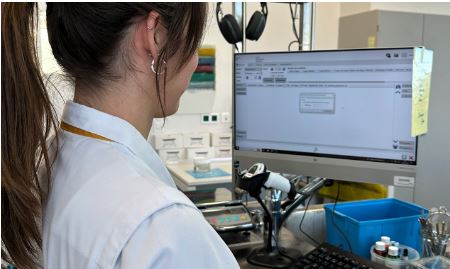 In March 2023, the Pathological Anatomy Laboratory at the AZ Sint-Maarten hospital in Mechelen, Belgium, went live with a new DaVinci environment. In addition to upgrading the existing DaVinci laboratory information system (LIS), three separate databases were also merged into a single, central, multi-site environment. The laboratory now operates with a process-driven and virtually paperless workflow. [Read More]
February 28, 2024 - What potential does a LIMS have in improving the safety and satisfaction of food and beverage consumers?
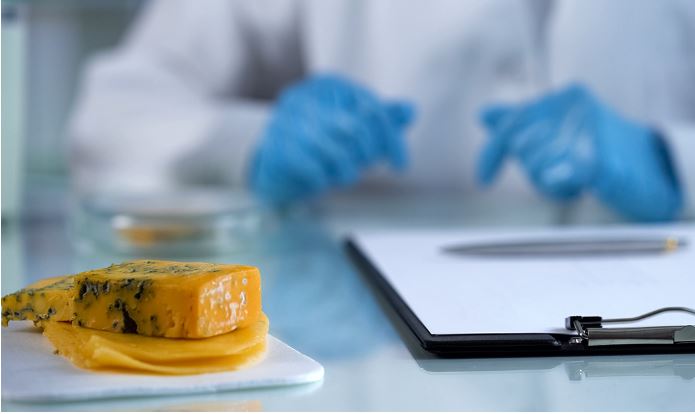 In food and beverage labs, paper-based approaches have given way to digital informatics approaches for maintaining the safety and satisfaction of consumer-driven demand for quality foods and beverages. This includes the laboratory information management system (LIMS), which brings the potential for greater traceability and improved insight into the processes of the food and beverage business. [Read More]

