

 While the LIMS implementation is a big undertaking, there are ways to prepare ahead of time to keep the process manageable and streamlined. Check out what we recommend you know before beginning the implementation process.
Imaging Management and Approaches to Consider When Developing a Coherent Roadmap
 The challenges to creating a solution for enterprise-wide image management may be numerous but they are not insurmountable. The key to easily overcome the challenges is to create a coherent roadmap with the participation of stakeholders as well as system architects and administrators. [Read More]
Laboratory Informatics Weekly Update – Volume 20, Issue 15
April 13, 2022 Laboratory Informatics Weekly Update Volume 20, Issue 15 In This Issue Featured Books LIMSjournal - Spring 2022 Featured Content 04/12/2022 - Is Your Forensic LIMS Ready to Adapt to New Technology Trends?Technological innovations are transforming forensic science, letting labs produce more objective, science-based analyses of evidence. However, a report from the National Institute of Justice (NIJ) found that improving forensic capabilities stimulates more demand from requesting agencies. [Read More] 04/12/2022 - CliniSys acquires ApolloLIMS to grow community and public health diagnostics capabilityCliniSys today announced it has acquired ApolloLIMS, a leading provider of laboratory information management systems based…Is Your Forensic LIMS Ready to Adapt to New Technology Trends?
 Technological innovations are transforming forensic science, letting labs produce more objective, science-based analyses of evidence. However, a report from the National Institute of Justice (NIJ) found that improving forensic capabilities stimulates more demand from requesting agencies.
[Read More]
Choosing a LIMS technology: Cloud-based or on-premises?
 In a previous article[1], we discussed what a Laboratory Information Management System (LIMS) is. In this piece, we’re going to look at two solution hosting methods: on-premises and cloud-based (also referred to as Software-as-a-Service, SaaS), and how they can benefit you and your lab’s operations.
[Read More]
QLIMS as a Platform (2) – API Accessibility
 For our second post in the QLIMS as a Platform series we will be discussing one of the core components, the Application Programming Interface (API). When we talk about APIs, we’re referring to interfaces that allow developers to access and modify the data and functions of the LIMS. [Read More]
Recommendations for Addressing Preclinical Staffing Challenges
 Biopharmaceutical companies are under intense pressure to improve both the efficiency and effectiveness of their R&D processes in order to reduce costs and shorten drug development timelines. Towards this end, many sponsoring organizations have turned to outsourcing preclinical activities...
[Read More]
Structure-based knowledge acquisition from electronic lab notebooks for research data provenance documentation
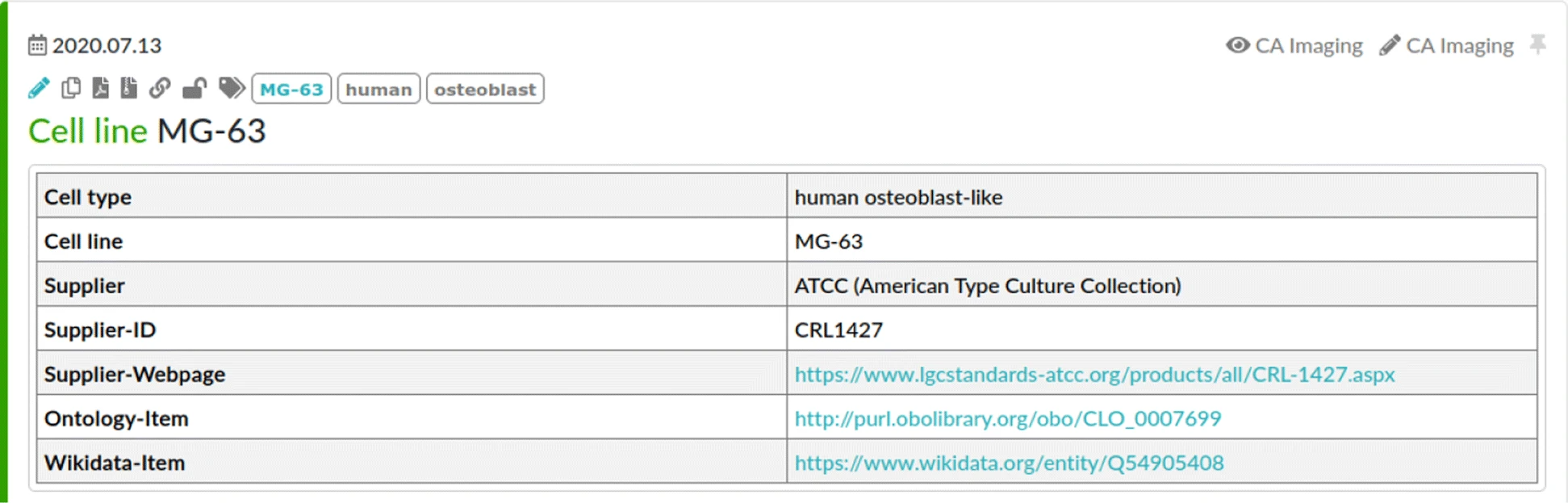 As a natural extension of the paper lab notebook, the electronic laboratory notebook (ELN) is an important component of modern research activities. However, as calls for reproducibility and data provenance in research grow, the voracity and semantic documentation of research data and experiment protocols logged in ELNs grows more important. In this 2022 paper from the Journal of Biomedical Semantics, Schröder et al. address this sort of semantic documentation of experiment protocols and take their own structure-based approach to doing it, using a biomedical wet lab experiment in an ELN as a test case. The authors present background information, related work, and information about their use case and approach to the task. After presenting and discussing the results of their semantic documentation efforts, they conclude that their "structure-based approach, in combination with RO-Crate bundling, can be used to successfully document research data based on the description in the form of ELN protocols." They add that bundling of the information into RO-Crate better enables "the sharing, publication, and archiving of the research data in terms of the FAIR principles."
The Dos and Don’ts of a LIMS Implementation
 Today, most laboratories produce extensive amounts of data that come from different sources. These sources are typically not integrated which causes data silos and other challenges, driving the need for a successful LIMS selection and implementation. [Read More]
Hire, Retain and Grow Talent Today without Breaking the Bank
 As anyone who has tried to fill Life Science positions lately can tell you, skilled individuals in a handful of industry sectors have become extremely difficult to find and hire. Growth in the Life Sciences industry is underscored by what’s happening in the real estate market. [Read More]
What to Know Before Beginning the LIMS Implementation Process
While the LIMS implementation is a big undertaking, there are ways to prepare ahead of time to keep the process manageable and streamlined. Check out what we recommend you know before beginning the implementation process.Addressing Molecular Diagnostic LIS Functionality Gaps: A JMD Response
 In a 2018 article in The Journal of Molecular Diagnostics (JMD), the authors identified critical gaps in functionality in laboratory information systems (LIS) for molecular labs. To continue the conversation, we collaborated with the Cleveland Clinic’s Molecular Pathology Section lab team on a response.
[Read More]





