

Strategies for laboratory professionals to drive laboratory stewardship
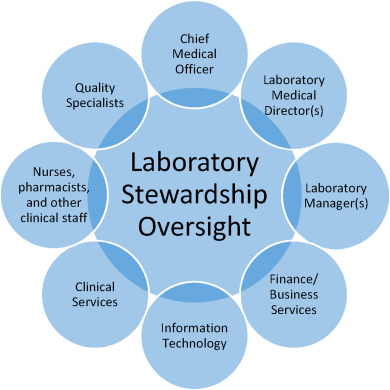 This 2021 article published in the journal Practical Laboratory Medicine examines laboratory testing in the scope of quality management and laboratory stewardship programs and the long-term benefits they bring to an organization. White et al. first discuss the evolution of quality in the laboratory and then introduce the concept of "laboratory stewardship" and its ability to improve patient care. The rest of the work focuses on implementing such a program and presenting a hypothetical case study to show how a laboratory stewardship program can have a practical impact on a healthcare system. The authors conclude that a well-implemented stewardship program "presents a valuable opportunity for laboratory professionals to engage with clinical colleagues and drive change." They also distill their work down to five key elements required for making such programs have maximum impact: "1) a clear vision and organizational alignment; 2) appropriate skills for program execution and management; 3) resources to support the program; 4) incentives to motivate participation; and, 5) a plan of action that articulates program objectives and metrics."
Laboratory Informatics Weekly Update – Volume 19, Issue 31
August 4, 2021 Laboratory Informatics Weekly Update Volume 19, Issue 31 In This Issue Featured Books LIMSjournal - Summer 2021 Featured Content 08/03/2021 - Why and How You Should Automate Workflow Tests for Clarity LIMSIn clinical diagnostic laboratories, end-to-end testing of complex LIMS workflows is a critical part of the laboratory validation process. Performing these tests manually takes a Herculean effort. That’s why we developed a reliable and cost-effective way to automate the testing of Clarity LIMS workflows. [Read More] 08/03/2021 - Best Practices to Maximize eLearning SuccessTechnological innovation is affecting all aspects of our lives, and corporate training…Essential oil of Cannabis sativa L: Comparison of yield and chemical composition of 11 hemp genotypes
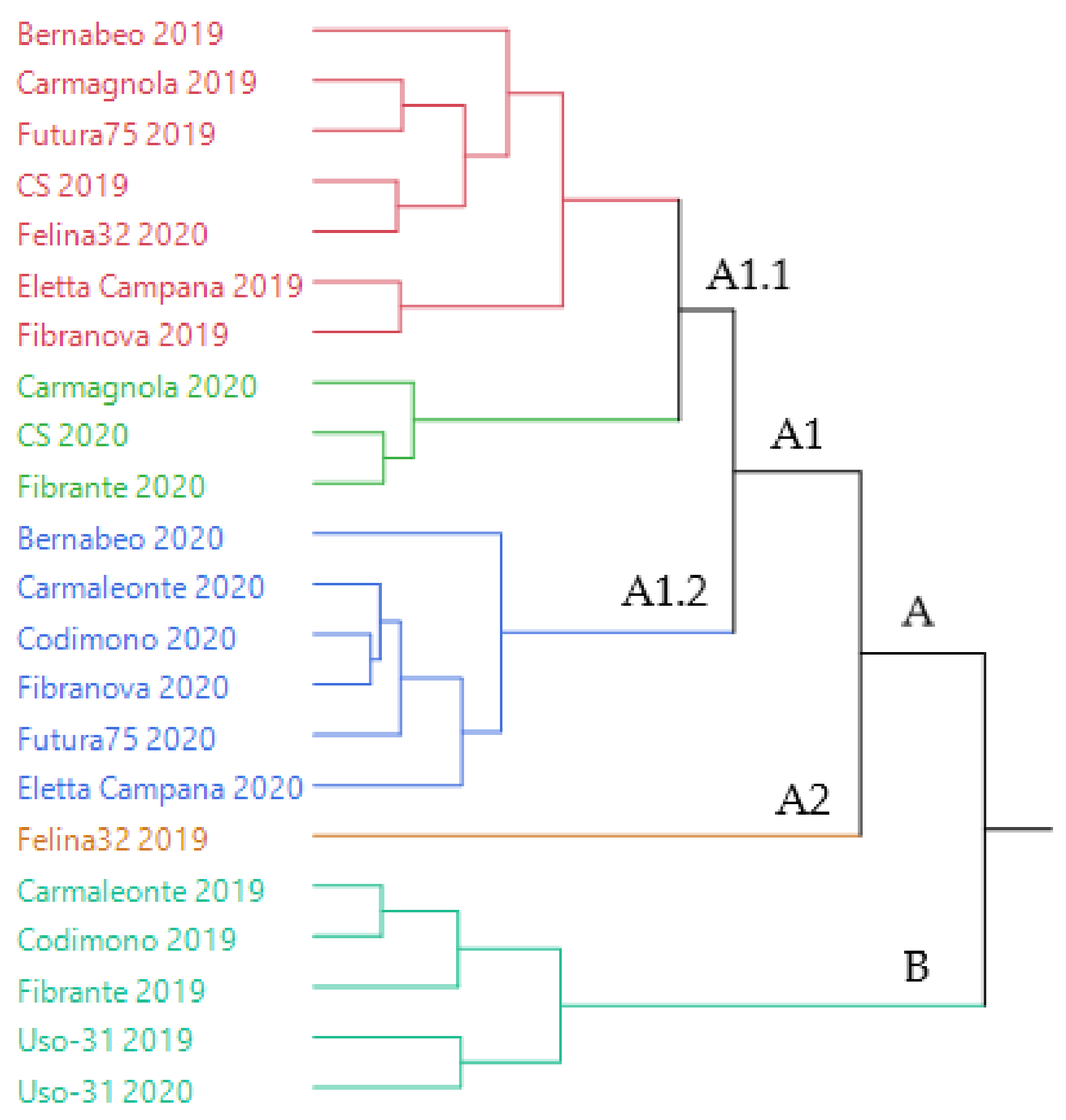 In this 2021 journal article published in Molecules, Pieracci et al. present the results of a two-year analysis and comparison of cannabis constituents in the essential oil of 11 hemp genotypes using gas chromatography—mass spectrometry (GC-MS). Noting prior researchers' difficulties in comparing "the chemical composition of the essential oils extracted from different Cannabis sativa L. genotypes," the researchers strived to conduct a thorough examination, demonstrating the ability of GC-MS methods to make the analyses necessary to determine most constituents, as well as "promote their employment as value-added by-products based on their peculiar characteristics." Through their efforts, the researchers were able to identify 116 compounds, representing 90.6–99.4% of the total composition of the essential oils (EO) gathered. After analyzing their results, the authors concluded "that both the EO chemical profile and extraction yield were significantly influenced by the genotype of the starting material, the year of cultivation, and the interaction between these two factors."
Why and How You Should Automate Workflow Tests for Clarity LIMS

In clinical diagnostic laboratories, end-to-end testing of complex LIMS workflows is a critical part of the laboratory validation process. Performing these tests manually takes a Herculean effort. That’s why we developed a reliable and cost-effective way to automate the testing of Clarity LIMS workflows.
[Read More]
[Read More]
Best Practices to Maximize eLearning Success
 Technological innovation is affecting all aspects of our lives, and corporate training has not been immune to the disruption. In today’s rapidly changing business environment, keeping employees up-to-date on newly implemented systems and/or market changes is a significant challenge for many firms. [Read More]
Using Standard Deviation to Dynamically Update LIMS Test Limits in QC Testing
 Many laboratories compare analytical results to known limits to determine if results are within specification. These specification limits can be based on the standard deviation calculated from previous known results. As the standard deviation can change over time limits may need to be recalculated. [Read More]
Selecting the Best LIMS Software for Your Lab
 Periodically scientists and laboratory professionals perform searches to determine “what is the best LIMS software.” With so many changes in technology, the results are overwhelming when comparing one vendor’s LIMS software to another’s.
Get to Know the LabWare Key Performance Indicators (KPIs)
 “On a Friday afternoon at 2:00 p.m., a sudden department meeting is scheduled within the hour to report the performance metrics of our labs. To do this, we’ll need information from our LabWare LIMS; how are we going to prepare for this meeting?” The scenario above is a familiar situation... [Read More]
Accelerating Material Development with Artificial Intelligence
 Formulation development is of critical importance in the research & development (R&D) lifecycle of a product. However, many organizations are struggling to manage the complexity of data arising from the modern formulation process. [Read More]
How to Digitalize the Entire Process of Sample Management?
 Sample Management involves all the activities during the lifecycle of a sample in the lab. Right from sample login to generation of certification of analysis (COA), all information must be diligently managed. [Read More]
Laboratory Informatics Weekly Update – Volume 19, Issue 30
July 28, 2021 Laboratory Informatics Weekly Update Volume 19, Issue 30 In This Issue Featured Books LIMSjournal - Summer 2021 Featured Content 07/28/2021 - Selecting the Best LIMS Software for Your LabPeriodically scientists and laboratory professionals perform searches to determine “what is the best LIMS software.” With so many changes in technology, the results are overwhelming when comparing one vendor’s LIMS software to another’s. [Read More] 07/28/2021 - Get to Know the LabWare Key Performance Indicators (KPIs)“On a Friday afternoon at 2:00 p.m., a sudden department meeting is scheduled within the hour to report the performance metrics of our…Cybersecurity impacts for artificial intelligence use within Industry 4.0
 This brief journal article published in Scientific Bulletin examines how organizations can mitigate the risks of implementing artificial intelligence (AI) and other Industry 4.0 technologies into manufacturing centers, particularly in regards to cybersecurity. Maurice Dawson of the Illinois Institute of Technology first gives a brief introduction on AI and cybersecurity, highlighting that "data science management" incorporates important technology skills, while also highlighting that the recognition of the cybersecurity component of data science management is perhaps lacking. Dawson then discusses the trend of Industry 4.0 and the promise it holds for manufacturers, while also addressing the ever-changing environment and the risks that must be highlighted within it. Noting the importance of manufacturing with the U.S. in particular, the author concludes that "as AI becomes increasingly prominent in critical industries such as manufacturing, it is essential to ensure that proper security controls are in place to thwart any possible threat, whether internal or external."





