

LIMS and COVID-19 Testing & Reporting


Known variously as coronavirus, COVID-19, novel coronavirus, 2019-nCoV and SARS-CoV-2, the current global pandemic has been reported in 191 Countries and Territories around the world as of March 23, 2020, with over 350,000 confirmed cases and more than 15,000 deaths. These figures are being tracked in real time by the Center for Systems Science and Engineering (CSSE) at Johns Hopkins University.
[Read More]
Laboratory biosafety guidance related to coronavirus disease (COVID-19): Interim Guidance, 19 March 2020
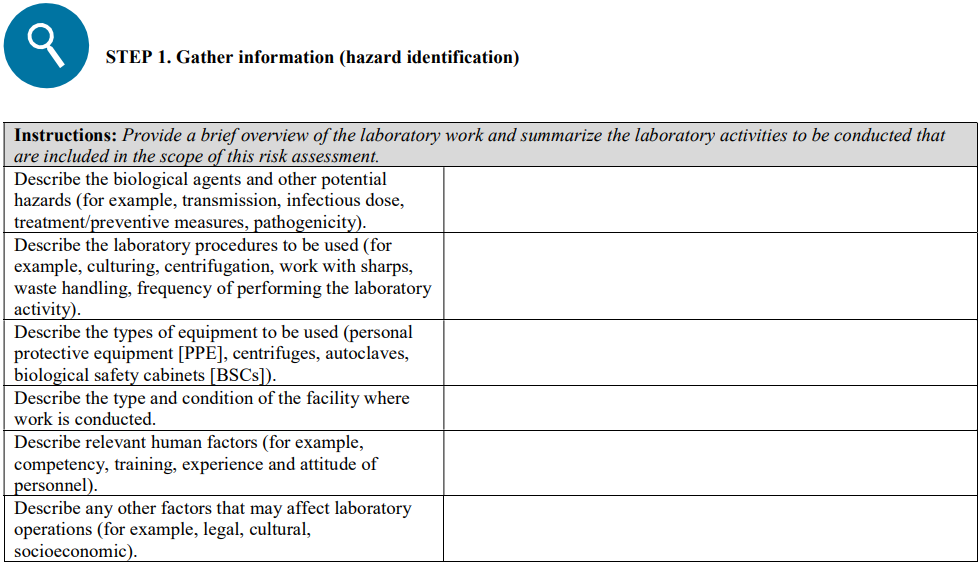 Again, not a journal article, but here rather we have another interim guidance document by the World Health Organization (WHO), this time in regards to laboratory biosafety related to COVID-19 testing. Effective March 19, 2020, this guidance document, complete with references, addresses laboratory biosafety principles to consider when handling and testing specimens believed to contain the COVID-19 virus. The WHO provides a bit of background, provides an overview of the key points, and then discusses those points in further detail. They also include two annex items: the core requirements of good microbiological practice and procedure (GMPP) and a risk assessment template for laboratories to borrow from.
Disaster Management for the Lab


Disaster management is, in a nutshell, about preparedness. Of course, the primary challenge in preparedness is anticipating just what it is for which you are preparing. In the case of disaster management, the possible scenarios vary a great deal – with some being virtually impossible to foresee – so any management plan faces potential failure right from the outset.
[Read More]
A Conversation with Dr. Nigel Mouncey, Director of the Joint Genome Institute: The next frontier of genomic breakthroughs
 Nigel Mouncey, PhD is the Director of the Joint Genome Institute (JGI), a U.S. Department of Energy Office of Science National User Facility located at Lawrence Berkeley National Laboratory in Berkeley, California. Previously, Dr. Mouncey held increasing leadership roles at Dow AgroSciences, most recently as the Director of R&D for Bioengineering and Bioprocessing. Before that, he led research groups at DSM Nutritional Products and Roche Vitamins. We sat down with Dr. Mouncey to discuss the most exciting ongoing developments in genomic research and how data will continue to shape life science R&D.
[Read More]
Generating FAIR — Findable, Accessible, Interoperable, Reusable — Resources with Marchantia, a Prototype for Plant Synthetic Biology
“Classic!” That’s a veteran lab member’s response when a new PhD student recognizes that a plasmid doesn’t have the expected sequence. I have personally heard this, and I have seen it happening around me many more times. DNA constructs from other labs, or even from former members of your own lab, can often be poorly documented. As a result, scientists waste time and resources by having to recheck or redo previous work. And that’s just the tip of the iceberg when it comes to data management challenges in a highly dynamic and resource-limited academic environment. In this environment, working practices and structural constraints have tended to prioritize innovation before documentation. Fortunately, this has been changing for some time, as data-driven biology and society have demanded well-characterized research and open science in order to make research more reproducible and more transparent.
[Read More]
Meeting ISBER Recommendations for Biobank Management
 LIMS can contribute significantly to the efficient management of any biobank facility. With every aspect of specimen handling from collection through storage, processing, distribution, and eventual disposal to be considered as well as the need to manage all the associated data and information, ISBER (International Society for Biological and Environmental Repositories) has published a set of recommendations (the ISBER Best Practices: Recommendations for Repositories Fourth Edition) for the most effective practices for managing biological and environmental specimen collections and repositories. ISBER has also created a very useful self-assessment tool to allow biobanks to evaluate how well their facilities already comply with the best practices. In a recent webinar Autoscribe Informatics explained how the Matrix Gemini Biobank Manager configuration addresses the recommendations from ISBER. This webinar is still available to view.
Laboratory testing for coronavirus disease (COVID-19) in suspected human cases: Interim Guidance, 19 March 2020
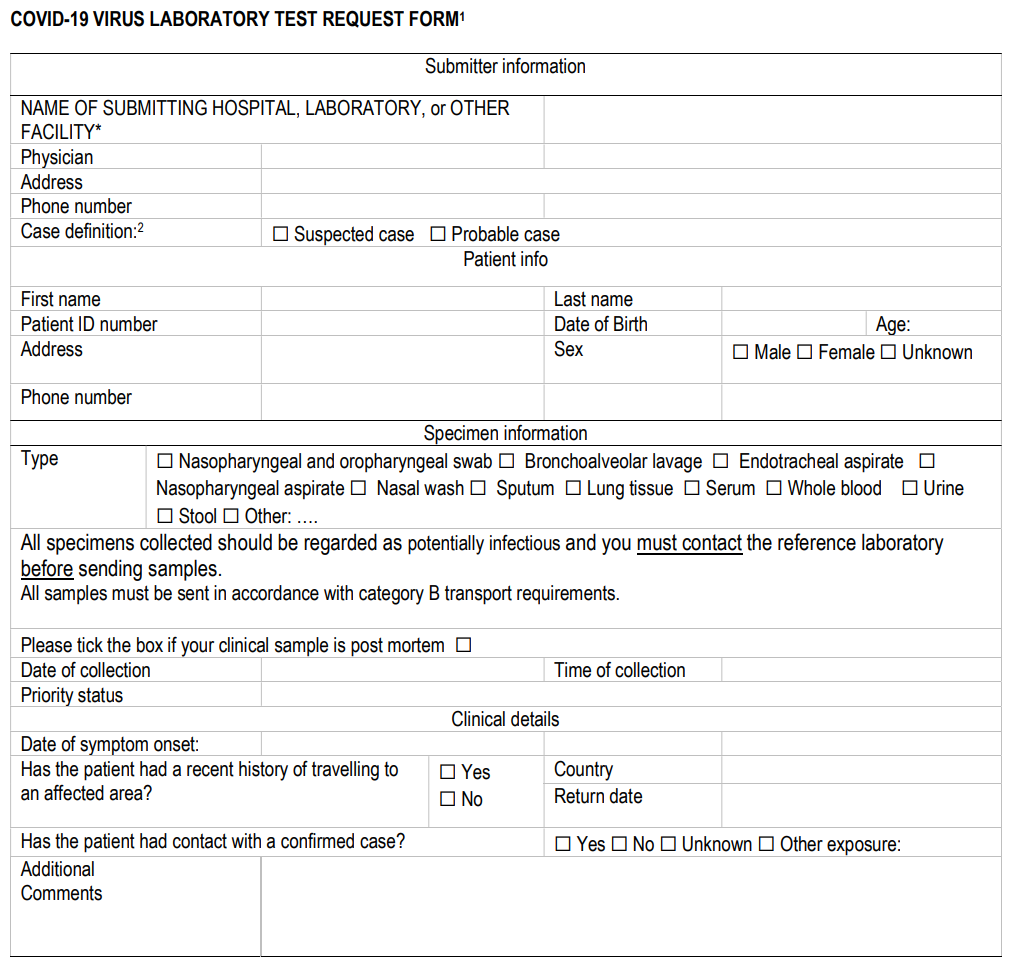 Breaking from the norm, rather than a journal article, this document represents official interim guidance on laboratory testing for COVID-19 from the World Health Organization (WHO), effective March 19, 2020. This guidance document, complete with references, addresses laboratory testing guidance principles for testing patients who meet the case definition for being infected with the COVID-19 virus. The WHO provides a bit of background, then addresses specimen collection and shipment, laboratory testing procedures, and reporting. They also include where further research must tread, as well as an ISO 15189:2012-compliant COVID-19 laboratory test request form. WHO closes by encouraging "the sharing of data to better understand and thus manage the COVID-19 outbreak, and to develop countermeasures."
SynBioBeta | Benching & Pairwise – The Future of Agriculture
This is a test
Through SynBioBeta's webinar series, Benchling and Pairwise came together to discuss how gene editing allows the production of new and improved crops that are more sustainable, more nutritious, and more affordable. We also covered the challenges and opportunities for using gene editing to bring better food to market.
Watch Now:

Tips for Upgrading Your Waters Empower System
 Waters Empower 3 is a chromatography data system (CDS) that links to chromatographic instruments to help facilitate management of chromatography test results through data acquisition, processing, reporting and distribution. Empower 3 generates lots of data with complex calculations and detailed reports and has several tools that address compliance and data integrity concerns such as electronic signatures and audit trails.
Waters Empower 3 is continuously upgraded to meet the changing needs of laboratories across all industries – pharmaceutical QC/RD, food and beverage, oil and gas, petrochemical, water and environmental, manufacturing, contract labs, and more. Each new feature release of Empower 3 contains new functionality that is built upon feedback and customer input from these sectors and could thus bring significant benefits to the Laboratory user.
[Read More]
The Dirty Secret of LIMS Implementations
 I’m not going to sugarcoat this…LIMS implementations can suck at first. The vendors may not tell you that in their seamless demos or slick PowerPoint presentations, but business practices will change throughout the whole organization, some things may take longer than they did before, and almost everyone’s likely to hate the new system. These considerable changes can lead to employee confusion, resistance, and a breakdown in communications. This has the potential to lower the system’s value and negatively impact your project’s ROI.
So, how do you effectively make the best of the situation? In this blog, we’ll advocate for well-established, effective Organizational Change Management (OCM) practices that can ease the pain of LIMS implementations and manage the changes that go along with a new enterprise application. OCM won’t help you avoid the pain altogether, but at least everyone will know that there’s a plan and it has an end point.
[Read More]
Laboratory Informatics Weekly Update – Volume 18, Issue 11
March 17, 2020 Laboratory Informatics Weekly Update Volume 18, Issue 11 In This Issue Featured Books Past, Present, and Future of Cannabis Laboratory Testing and Regulation in the United States Journal Articles Design and implementation of a clinical laboratory information system in a low-resource settingIn this 2019 journal article published in the African Journal of Laboratory Medicine, Mtonga et al. describe the efforts of developing a laboratory information system (LIS) for resource-poor regions, as well the benefits of other informatics interventions in those settings. Using open-source C4G BLIS as their base, the researchers then turned to "user stories" as…Design and implementation of a clinical laboratory information system in a low-resource setting
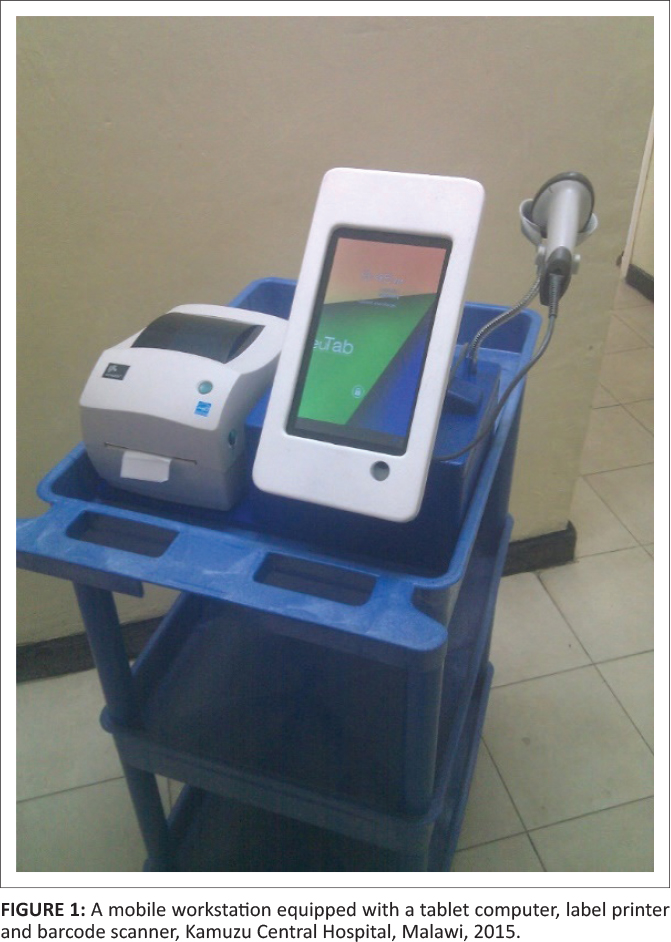 In this 2019 journal article published in the African Journal of Laboratory Medicine, Mtonga et al. describe the efforts of developing a laboratory information system (LIS) for resource-poor regions, as well the benefits of other informatics interventions in those settings. Using open-source C4G BLIS as their base, the researchers then turned to "user stories" as a recommended method for determining the system requirements the end users required, then updating with those requirements as well as critical functionality that would suitable for resource-poor hospitals and labs. The authors then deployed the resulting LIS in Kamuzu Central Hospital in Lilongwe, Malawi. They conclude their experience "highlights the potential of using informatics interventions to address systemic problems in the laboratory testing process in low-resource settings," though the implementation of those interventions "may require innovation of new hardware to address various contextual issues."





