

Information technology and medical technology personnel’s perception regarding segmentation of medical devices: A focus group study
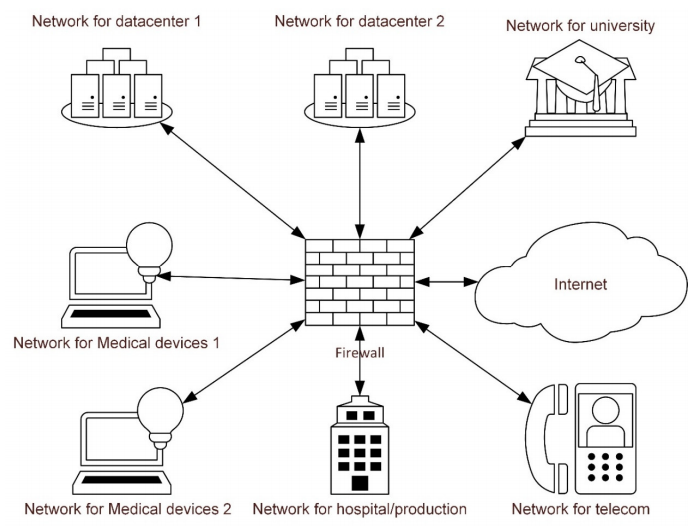 Cybersecurity is an increasingly relevant and critical topic for most industries, including the healthcare industry. In hospitals and other clinical settings, patient monitoring systems, medical imaging systems, and laboratory instruments are increasingly networked to get the most out of data management and operational efficiency. However, these devices are at risk of cyber attack, with potentially significant consequences. Johansson et al. acknowledge this problem and attempt to address the perceptions of information and medical technology experts on the topic of securing in-house medical devices through the practice of network segmentation. The authors present their discussion results with 18 stakeholders from the Swedish Region Skåne, and they conclude that the stakeholders "were positively receptive to the increase in cybersecurity provided by network segmentation but concerned about the increase in the administration that it will entail for medical devices." They note that these and other opinions stated in the research are vital for health networks to take into account when considering improving their cybersecurity.
Experience More from Your LIMS Vendor – Part 1: The Selection Process
 Selecting your laboratory information management system (LIMS) is one of the most crucial decisions you will make for your lab and your company.
Whether you need a LIMS to support a rapid period of growth, or you’re retiring aging infrastructure and want the assurances of a smooth, uninterrupted data migration and implementation, the LIMS partner you select should both address your current pain points and prepare you for the future.
[Read More]
Trends in FDA Data Integrity 483s and Warning Letters for Pharmaceutical Companies
 The manufacture of pharmaceutical drugs is a highly complex process that involves advanced scientific analysis and instrumentation at all stages of production and storage. In order to guarantee the safety and efficacy of both human and veterinary drugs, the FDA strives to verify data integrity in all cGMP records used to document and guide the manufacturing process.
The FDA first identified failures in data governance and data integrity in the year 2000 with a warning letter issued to Schein Pharmaceuticals that cited lack of proper controls over computerized laboratory systems. In the years since, the FDA focus on compliance with data integrity regulations in facility inspections has increased significantly. We have written extensively about how the FDA defines data integrity and the current FDA regulations and guidance in this area.
[Read More]
Find Your Informatics Match ❤️
 The early part of February has conditioned us all to celebrate finding our perfect match. But if you haven’t found a match, this time of year can be hard. If you’re reading this, we’re going to assume that you’re here looking for your laboratory informatics match.
In today’s world, we have many options for finding a match. You might get set up by a friend, via referral. You might end up in an arranged partnership, via merger or acquisition. You might try online dating, if you have a high tolerance for information overload from all those demos. After all that, you might engage a matchmaker, someone who gets to know your needs and is with you through the whole process of finding your perfect laboratory informatics match.
[Read More]
Laboratory Informatics Weekly Update – Volume 18, Issue 7
February 18, 2020 Laboratory Informatics Weekly Update Volume 18, Issue 7 In This Issue Upcoming Webinars 02/19/2020 - Webinar: LIMS Instrument Interfacing – The Times They Are A-Changing02/27/2020 - Astrix Webinar – Best Practices for Conducting Data Integrity Assessments03/25/2020 - Webinar: LIMS Configuration 101 Featured Books Web Application Security: A Comprehensive Overview Journal Articles ROBOT: A Tool for Automating Ontology WorkflowsOntologies are important to biological and biomedical researchers working with multiple data sources because, when implemented well, ontologies ensure heterogeneous, multimodal data across multiple domains and they aid with more effective data mining and discoveries. Ontologies also assist in…ROBOT: A Tool for Automating Ontology Workflows
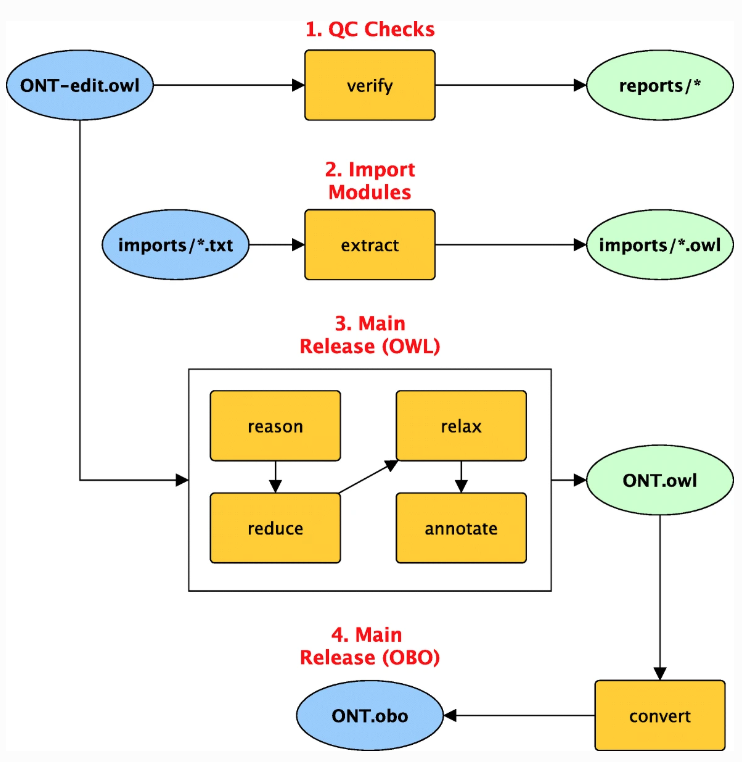 Ontologies are important to biological and biomedical researchers working with multiple data sources because, when implemented well, ontologies ensure heterogeneous, multimodal data across multiple domains and they aid with more effective data mining and discoveries. Ontologies also assist in improving data quality. In this 2019 paper, Jackson et al. highlight the importance of ontologies with their ROBOT open-source library, which aids with the automation of ontology development. They describe the various means which ROBOT "provides ontology processing commands for a variety of tasks, including commands for converting formats, running a reasoner, creating import modules, running reports, and various other tasks." They conclude that such automation allows developers to easily "configure, combine, and execute individual tasks in comprehensive, automated workflows." The authors also demonstrate how ROBOT can help catch logical errors and provide quality control mechanisms to ontology creation and updating.
What to look for when using a LIMS to help with ISO 17025 for starters


This blog will give you an introduction into the basics of ISO 17025 and just some of the requirements which LIMS can help with.
What is ISO 18025?
ISO 17025 is a laboratory accreditation standard that all testing and calibration laboratories vie to achieve to prove their technical competence in performing an array of testing, calibration and measurements for standard, non-standard and laboratory-developed methods.…
Tips on Implementing, Maintaining and Validating Empower 3 Software Custom Fields to Maximize Data Integrity
Waters Empower 3 software is a chromatography data system (CDS) that links to chromatographic instruments to help facilitate management of chromatography test results through data acquisition, processing, reporting and distribution. Waters Empower 3 generates lots of data with complex calculations and detailed reports and has several tools that address compliance and data integrity concerns such as electronic signatures and audit trails.
Given that Waters Empower 3 typically generates large amounts of data, transcribing the data from Empower 3 to an external system can present huge risks from a data integrity perspective. As a result, scientific laboratories are looking for ways to maximize their results output from Empower and ideally utilize this system as their only solution for chromatographic results.
[Read More]
MELLODDY Consortium Employs Federated Learning and Blockchain to Enhance AI Drug Discovery
A new consortium of pharmaceutical, technology and academic partners is hoping to improve collaboration and competitive data sharing among pharmaceutical companies in ways that would address IP concerns. Utilizing blockchain and federated learning technologies, the MELLODDY (Machine Learning Ledger Orchestration for Drug Discovery) Consortium aims to use deep learning methods on the chemical libraries of 10 pharma companies to create a modeling platform that can more quickly and accurately predict promising compounds for development, all without sacrificing the data privacy of the participating companies.
Over the last few years, pharma and biotech companies have been adopting artificial intelligence (AI) and big data approaches, particularly machine learning and deep learning, in hopes that these technologies will change the way the industry discovers, develops, and manufactures medicines. Advances in computational power have opened up the possibility of creating digital models utilizing machine learning that can dramatically accelerate innovation and yield inexpensive predictions from expensive data.
[Read More]
Supporting Life Science IT with Laboratory Informatics as a Service
Modern Life Science laboratories typically utilize many different applications and legacy systems to manage their workflows and data, but unfortunately, there is often very little integration between these systems. As such, managing all the IT dependencies in these modern labs is a significant undertaking.
Today’s Life Science IT professionals need to be both knowledgeable across scientific domains and experts at the informatics. The reality is that creating the necessary integrated laboratory ecosystem and the subsequent support, maintenance, and extension of it is such a significant undertaking that only large companies with sufficient budget and resources have been able to attempt it.
With the rate of data generation increasing exponentially in Life Science R&D laboratories, there has never been a time when laboratories are so tightly coupled to informatics systems and scientists so dependent on IT. In this challenging environment, IT professionals often get bogged down in supporting current infrastructure instead of developing and maintaining strategic roadmaps to be ready for future demand. In order to future-proof your lab, a third-party informatics vendor with industry experience and expertise in laboratory informatics systems can be a valuable partner to your organization by providing Laboratory Informatics as a Service (LIaaS).
[Read More]
Laboratory Informatics Weekly Update – Volume 18, Issue 6
February 11, 2020 Laboratory Informatics Weekly Update Volume 18, Issue 6 In This Issue Upcoming Webinars 02/19/2020 - Webinar: Operationalizing Business Associate Risk Management for Compliance with HIPAA Regulation02/19/2020 - Webinar: LIMS Instrument Interfacing – The Times They Are A-Changing02/27/2020 - Astrix Webinar – Best Practices for Conducting Data Integrity Assessments03/25/2020 - Webinar: LIMS Configuration 101 Featured Books LIMSjournal - Winter 2019 Journal Articles Universal LIMS-based platform for the automated processing of cell-based assaysIn this brief article by Schmieder et al., the authors provide an example of applying laboratory informatics to research activities for drug discovery and personalized medicine.…Universal LIMS-based platform for the automated processing of cell-based assays
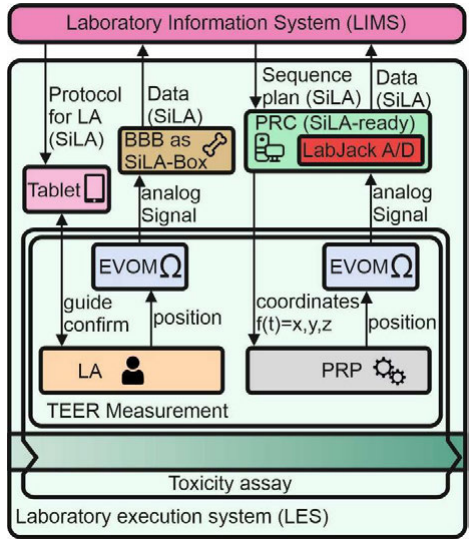 In this brief article by Schmieder et al., the authors provide an example of applying laboratory informatics to research activities for drug discovery and personalized medicine. In particular, the authors look at the in vitro nephrotoxicity assay and the use of transepithelial electrical resistance (TEER) to evaluate the barrier function of cellular layers. Citing issues such as the significant multi-step processes involved with this type of testing, the authors attempt to demonstrate how a laboratory information management system (LIMS), laboratory execution system (LES), and automation standards such as SiLA can be used together to decrease the workflow complexity of such cell-based assays.





