Target Analysis S.A. is the new QLIMS distributor in Greece

We are pleased to announce that renowned solution provider of the scientific sector, Target Analysis, will be adding QLIMS to their product portfolio and be our new sales distributor in Greece.
Adding QLIMS to their portfolio fits in with their vision to provide quality services that will highlight Target Analysis SA as a Total Solution Provider for the supply and after sales support of scientific equipment and software.
Their product range includes: pre-owned systems, analytical instruments, consumables & spare parts, laboratory equipment, software, solvents & chemicals, by a wide network of internationally recognized manufacturers.
In conjunction with ELBIS's establishment of the QLIMS support centre in Thessaloniki, this partnership now puts Greek laboratories in the unique position of having local access to:
- a highly trained sales team - Target Analysis
- a quality LIMS solution available in Greek - QLIMS
- local support and technical service – ELBIS
Strategies for Surviving an FDA Audit
 As part of its mission to ensure public safety, the FDA inspects manufacturers or processors of FDA-regulated products to verify that they comply with relevant regulations. The FDA also inspects facilities that conduct clinical trials with humans and laboratories that conduct studies with animals or microorganisms when these studies are used to apply for FDA approval of a medical product. A typical inspection will last for 2-3 days.
In the United States, the FDA is not required to provide advance notice of an inspection. In facilities where violations were noted during a previous inspection, the FDA will likely provide no advance notice. If your last inspection was without violation or if this is a pre-approval visit, however, you will likely be given notice of an impending inspection.
There are few events that engender as much anxiety for company stakeholders as an FDA audit. Are you prepared for when the FDA shows up at your front door? Do your employees know how to interact with FDA inspectors when they are on site? Do you have Standard Operating Procedures (SOPs) in place for handling an FDA audit?
Surviving an FDA audit can be significantly less daunting if you know what to expect and have a strategy in place to ensure the best possible outcome. In this blog, we will provide best practice guidelines to help you prepare for an FDA inspection, as well as understand how to best interact with the inspector – both while they are on site and post-inspection.
[Read More]
Laboratory Informatics Weekly Update – Volume 17, Issue 42
October 16, 2019 Laboratory Informatics Weekly Update Volume 17, Issue 42 In This Issue Upcoming Webinars 10/17/2019 - Webinar: Analytical and Clinical Validation Requirements for Next Generation Sequencing Laboratory-Developed Tests10/22/2019 - Webinar: Setting Up a Cannabis Lab10/23/2019 - CSols, Inc. Webinar: Change Management – Maximizing Return on Investment Featured Books LIMSpec 2019-r1 EditionThe Complete Guide to LIMS & Laboratory Informatics Journal Articles Data sharing at scale: A heuristic for affirming data culturesThe concept of data sharing and open science have been touted more over the past decade, often in the face of claims of lack of reproducibility and the…Identification of Cannabis sativa L. (hemp) retailers by means of multivariate analysis of cannabinoids
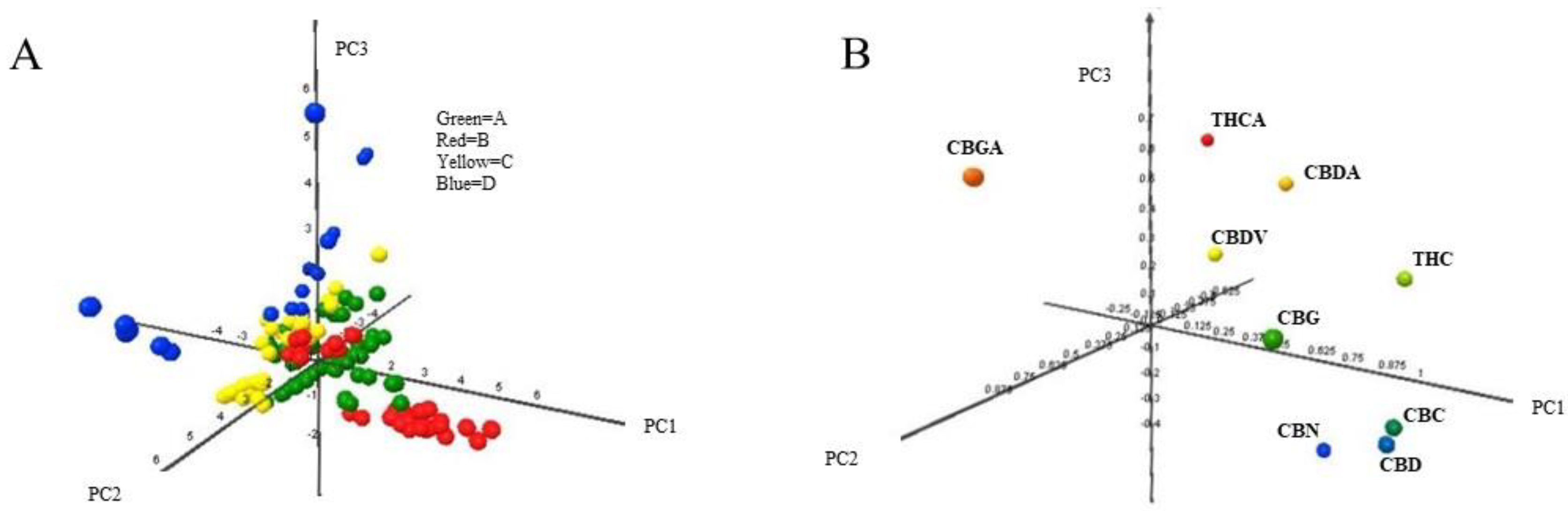 In this 2019 article published in Molecules, Palmieri et al. demonstrate their ability to use nine cannabinoids, a specific analytical method, and multivariate analysis—without any other identifying information—to identify the retailer of 161 hemp samples from four retailers. Highlighting the fact that simply using analyses of Δ9-tetrahydrocannabinol (THC) and cannabidiol (CBD) "to extrapolate the phytochemical composition of hemp" may be insufficient in some cases, the researchers turn to high-performance liquid chromatography–tandem mass spectrometry (HPLC-MS/MS) and partial least squares discriminant analysis (PLS-DA) to identify hemp sample origins. The authors note that using their techniques, "92% of the hemp samples were correctly classified by the cannabinoid variables in both fitting and cross-validation." They conclude "that a simple chemical analysis coupled with a robust chemometric method could be a powerful tool for forensic purposes."
New QLIMS European Support Centre
OnQ Software and ELBIS are proud to announce the opening of the new QLIMS European support centre and LIMS centre of excellence.
The centre will be based in Thessaloniki, Greece at the offices of leading Greek electrical engineering and IoT development company, ELBIS.
We are happy to leverage ELBIS skills and reputation for providing excellent customer support to ensure QLIMS customers have the best experience possible.
The centre of excellence will allow for:
- Provision of support and technical services to European QLIMS customers
- Showcase of next generation technologies and integrations relating to LIMS
Best Practices for Integrating LIMS with Empower
In the recent past, scientific laboratories utilized multiple separate informatics systems, lots of paperwork and numerous standardized operating procedures (SOPs) to achieve data integrity and comply with all regulatory requirements and best practices. Improving sample throughput and data integrity in this scenario was challenging, however, as it relied heavily on user intervention, purchase of extra systems or even new hires to be able to handle the extra workload.
With massive increases in data volume over the last decade, and the growing concern from regulatory agencies around data integrity, integration between informatics systems has become a necessity, especially on systems that generate large amounts of data or that are crucial to the overall laboratory data workflow. Two examples of systems that fall into this category are LIMS (Laboratory Information Management System) and CDS (Chromatography Data System).
[Read More]
Back from the Cannabis Quality Conference & Expo
Laboratory Informatics Weekly Update – Volume 17, Issue 41
October 9, 2019 Laboratory Informatics Weekly Update Volume 17, Issue 41 In This Issue Upcoming Webinars 10/17/2019 - Webinar: Analytical and Clinical Validation Requirements for Next Generation Sequencing Laboratory-Developed Tests10/22/2019 - Webinar: Setting Up a Cannabis Lab10/23/2019 - CSols, Inc. Webinar: Change Management – Maximizing Return on Investment Featured Books LIMSjournal - Fall 2019LIMSpec 2019-r1 Edition Journal Articles Design and evaluation of a LIS-based autoverification system for coagulation assays in a core clinical laboratoryIn this 2019 paper published in BMC Medical Informatics and Decision Making, Wang et al. of China Medical University demonstrate the results of an attempt to…Data sharing at scale: A heuristic for affirming data cultures
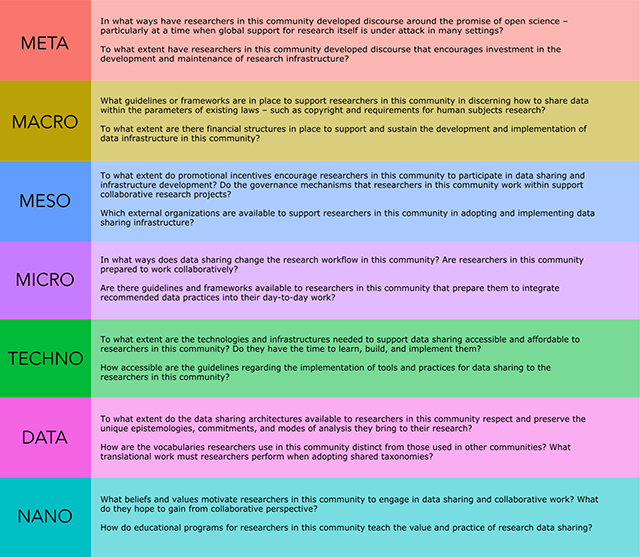 The concept of data sharing and open science have been touted more over the past decade, often in the face of claims of lack of reproducibility and the need for more collaboration across scientific disciplines. At times researchers will point to a specific "culture" evident in their organization that helps or hinder the move towards data sharing. But the concept of aligning data cultures—particularly through the lens of identifying and solving the inherent differences between disciplines—isn't the way to look at data sharing, argue Poirier and Costelloe-Kuehn. Instead, we must " showcase and affirm the diversity of traditions and modes of analysis that have shaped how data gets collected, organized, and interpreted in diverse settings," they say. In this essay, the authors present their heuristic (a problem solving and self-discovery method) for sharing data at scale, from the meta level down to the nano level, giving researchers the tools to "affirm and respect the diversity of cultures that guide global and interdisciplinary research practice."
Future Proofing Your Lab to Match the Pace of Innovation
The 21st century has seen a rapid increase in the pace of technological innovation in life sciences. For example, while the first mapping of the human genome in 2003 took 13 years and 3 billion dollars to accomplish, next-generation sequencing (NGS) technology now can complete the whole genome sequencing in hours for less than $1000, generating terabytes of data in just a single run.
With the digital age now in full swing, technological advancements are quickly changing the landscape for laboratories in the life science industry.
[Read More]
Best Practices for Utilizing Personality Assessments in Hiring
Retiring baby boomers combined with economic growth has resulted in the number of open positions now exceeding the number of people who are unemployed in the United States. In addition, the number of employees quitting their jobs is high – a recent report by the Labor Department put the “quits rate” at the highest it’s been since 2001. This has created significant hiring pressure in many organizations. In a survey of over 350 hiring professionals across 15 different industries, Criteria Corp reports that hiring volume is expected to increase 2.3% from 2018 to 2019.
The bottom line is that competition to hire and retain talent has never been fiercer, leading many organizations to increase HR budgets in an attempt to attract great candidates – Criteria Corp’s survey also revealed a predicted 6.7% increase in HR budgets from 2018 to 2019. Pre-employment tests are one of the many tools organizations are utilizing to develop more predictive accuracy in their recruitment process. According to the Talent Board’s 2016 Candidate Experience Research report, 82 percent of companies are now using some form of pre-employment assessment testing in their hiring process.