Design and evaluation of a LIS-based autoverification system for coagulation assays in a core clinical laboratory
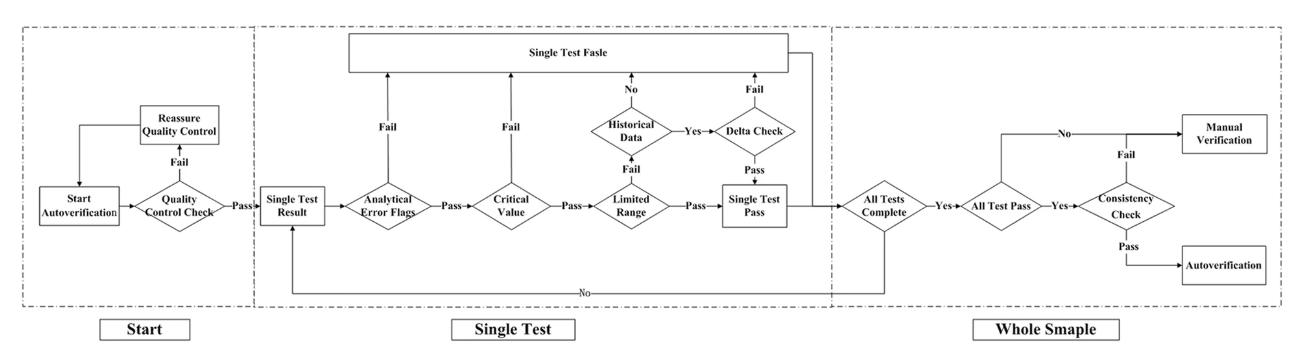 In this 2019 paper published in BMC Medical Informatics and Decision Making, Wang et al. of China Medical University demonstrate the results of an attempt to add autoverification mechanisms for coagulation assays into their laboratory information systems (LIS) to better improve both operations and patient care. After providing background on coagulation assays and autoverification guidelines, the researchers describe their methodology for programmatically developing autoverification decisions rules and implementing them into their laboratory workflow. Additionally, they discuss how best assess validation of the new system and its results. The authors conclude that not only has the new system improved turnaround time in the lab, but it also has improved the level of medical safety in its diagnoses in the affiliated hospitals.
Laboratory Informatics Weekly Update – Volume 17, Issue 39
September 26, 2019 Laboratory Informatics Weekly Update Volume 17, Issue 39 In This Issue Upcoming Webinars 10/01/2019 - Webinar: Ensuring Your Biorepository Follows ISBER Best Practices10/01/2019 - Webinar: Intelligent Automation in Healthcare10/02/2019 - Webinar: Ensuring Your Biorepository Follows ISBER Best Practices Featured Books The Complete Guide to LIMS & Laboratory Informatics Journal Articles CyberMaster: An expert system to guide the development of cybersecurity curriculaIn this 2019 paper published in the International Journal of Online and Biomedical Engineering, authors Hodhod et al. present their expert system CyberMaster, designed to "to assist inexperienced instructors with cybersecurity course design." They highlight the…CyberMaster: An expert system to guide the development of cybersecurity curricula
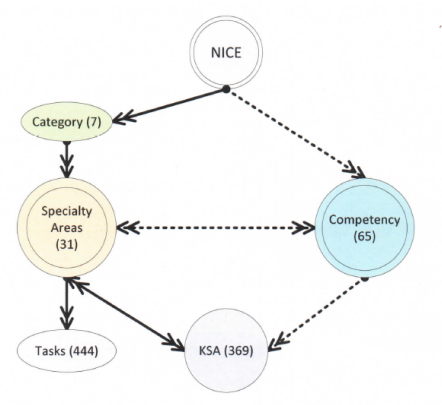 In this 2019 paper published in the International Journal of Online and Biomedical Engineering, authors Hodhod et al. present their expert system CyberMaster, designed to "to assist inexperienced instructors with cybersecurity course design." They highlight the need for improved cybersecurity training in not only universities but also the workplace and give some underlying reasons for why cybersecurity issues seem to be increasing. The authors turn to the National Institute of Standards and Technology (NIST) National Initiative for Cybersecurity Education Framework (NICE Framework) for the development of CyberMaster. After describing its creation and implementation, they conclude that "[t]he system contributes to changing the current status of cybersecurity education by helping instructors anywhere in the world to develop cybersecurity courses."
Automation in Agriculture Testing Laboratories to Meet Regulatory, Reporting Requirements
The agricultural market is one of the fastest rising industries globally, with a projected growth of USD 6.29 billion by 2022. This growth is mainly attributed to the increasing demand for food and outbreaks of food-related illnesses, that puts safety regulations on the forefront in agriculture testing laboratories
To read the complete blog, please visit: https://cloudlims.com/blog/automation-in-agriculture-testing-laboratories-to-meet-regulatory-reporting-requirements.html
The best choice for a LIMS in Australia?

Discover how Australian LIMS users can benefit from Matrix Gemini LIMS
There are plenty of reasons why anyone needing a LIMS in Australia should look no further than Matrix Gemini from Autoscribe Informatics. These include:
- A team of LIMS sales and support experts based in Australia
- A versatile system that can be configured to the needs of any laboratory
- A LIMS solution that is being successfully used in a host of industries, including environmental/water, dairy/farming/veterinary, biobanking, mining/petrochemical, food/viticulture and research/contract laboratories
- A LIMS that can help to meet ISO and NATA requirements
[Read More...]
Why Strategic Planning is a Critical for Developing an Effective Laboratory Informatics RFP
 Data has become ubiquitous in modern scientific laboratories. In order to turn this data into the insights that drive innovation, industry-leading enterprises are investing heavily in laboratory informatics technologies (e.g., LIMS, ELN, SDMS, CDS, advanced analytics, reporting tools, etc.). Given the many different informatics vendors to choose from, however, along with increasing vendor specialization and demands for cloud-based applications, choosing the best system for your unique laboratory is more difficult than ever.
An important part of the technology selection process is the development of a request for proposal (RFP). This document is used to solicit business proposals from a list of potential software vendors via a bidding process. In our experience, many companies make the mistake of developing an RFP without doing the strategic planning necessary to ensure that it asks the right questions.
The Astrix Team has been called upon to fix many an implementation project gone wrong where the problems can be traced back to a poorly designed RFP. In this blog, we will discuss critical best practice recommendations for creating an RFP that will help to establish a solid foundation for a successful implementation project providing maximum business value for your organization.
[Read More]
Laboratory Informatics Weekly Update – Volume 17, Issue 38
September 18, 2019 Laboratory Informatics Weekly Update Volume 17, Issue 38 In This Issue Upcoming Webinars 09/25/2019 - Webinar: Is Your Lab Ready for a Data Integrity Audit?10/01/2019 - Webinar: Ensuring Your Biorepository Follows ISBER Best Practices10/02/2019 - Webinar: Ensuring Your Biorepository Follows ISBER Best Practices Featured Books CannaQA LiMS Catalog Journal Articles Costs of mandatory cannabis testing in CaliforniaCompared to other U.S. states, California arguably has some of the most strict laws regarding the laboratory testing of cannabis. Economically, what have been some of the effects of these regulations? Valdes-Donoso et al. attempt to contribute to that conversation…Costs of mandatory cannabis testing in California
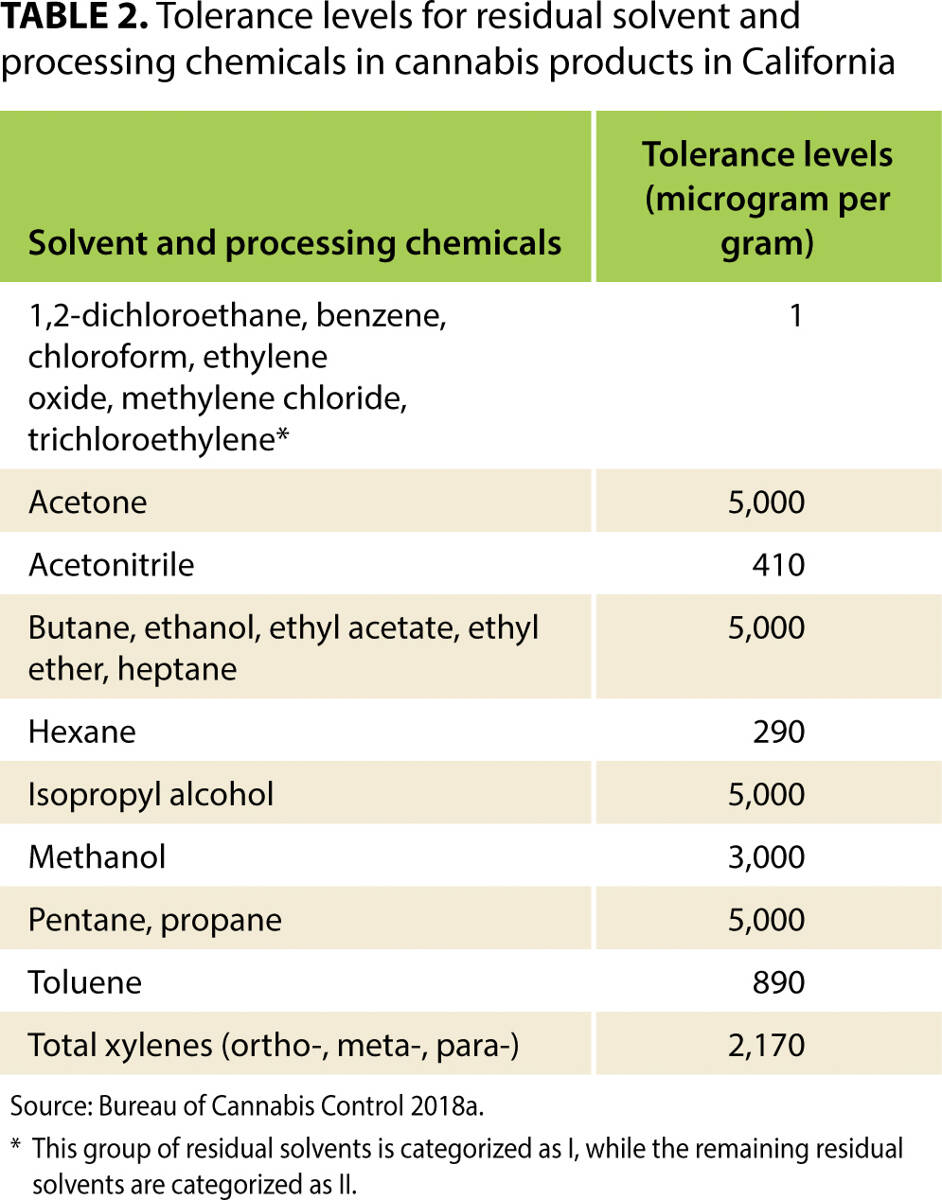 Compared to other U.S. states, California arguably has some of the most strict laws regarding the laboratory testing of cannabis. Economically, what have been some of the effects of these regulations? Valdes-Donoso et al. attempt to contribute to that conversation in this 2019 paper published in California Agriculture. Using state regulations, expert opinions, primary data from California's laboratories, and data from cannabis testing equipment manufacturers, the authors attempt to estimate the cost per pound of testing and sampling under the state's regulatory framework. This includes what they consider to be particularly costly: cases where cannabis is rejected for testing failure. They conclude their research by discussing the economic and regulatory implications of their findings, including supply and demand issues, costs of legal vs. illegal cannabis, and comparisons to other state-mandated agricultural testing in the state.
Laboratory Informatics Weekly Update – Volume 17, Issue 37
September 11, 2019 Laboratory Informatics Weekly Update Volume 17, Issue 37 In This Issue Upcoming Webinars 09/12/2019 - Astrix Webinar – Digital Data Strategy for the Lab09/25/2019 - Webinar: Is Your Lab Ready for a Data Integrity Audit?10/01/2019 - Webinar: Ensuring Your Biorepository Follows ISBER Best Practices10/02/2019 - Webinar: Ensuring Your Biorepository Follows ISBER Best Practices Featured Books The Complete Guide to LIMS & Laboratory Informatics Journal Articles An integrated data analytics platformIn this brief paper published in Frontiers in Marine Science, Armstrong et al. present the details of their OceanWorks integrated data analytics platform (IDAP) (which later was…CloudLIMS @Cannabis Quality Conference & Expo
CloudLIMS is pleased to announce its participation at the Cannabis Quality Conference & Expo to be held at the Renaissance Schaumburg Convention Center in Schaumburg, Illinois, USA, from October 1-3, 2019. Hundreds of attendees are expected to participate in the event. Our CEO, Mr. Arun Apte, is delivering a talk titled “ISO 17025 Accreditation: Preparing for Your Cannabis Testing Laboratory Audit Using a Cloud-based LIMS” at the event.
To read the complete blog, please visit: https://cloudlims.com/blog/cannabis-quality-conference-and-expo-2019.html
Selecting an ELN to Maximize IP Protection
In the race to patent or publish in life sciences, time is critical. For any researcher, securing Intellectual Property (IP) is equally critical. In order to receive a patent on an invention, inventors must be able to document the work they did to prove that the invention substantially performs against the claim. Additionally, this proof must be corroborated by someone (e.g., custodian of records) not directly involved in the work. Effective documentation and corroboration of the work done on an invention is also necessary to protect IP against challenges to the U.S. Patent and Trademark Office (USPTO) and possible litigation from competing inventors.
[Read More]
An integrated data analytics platform
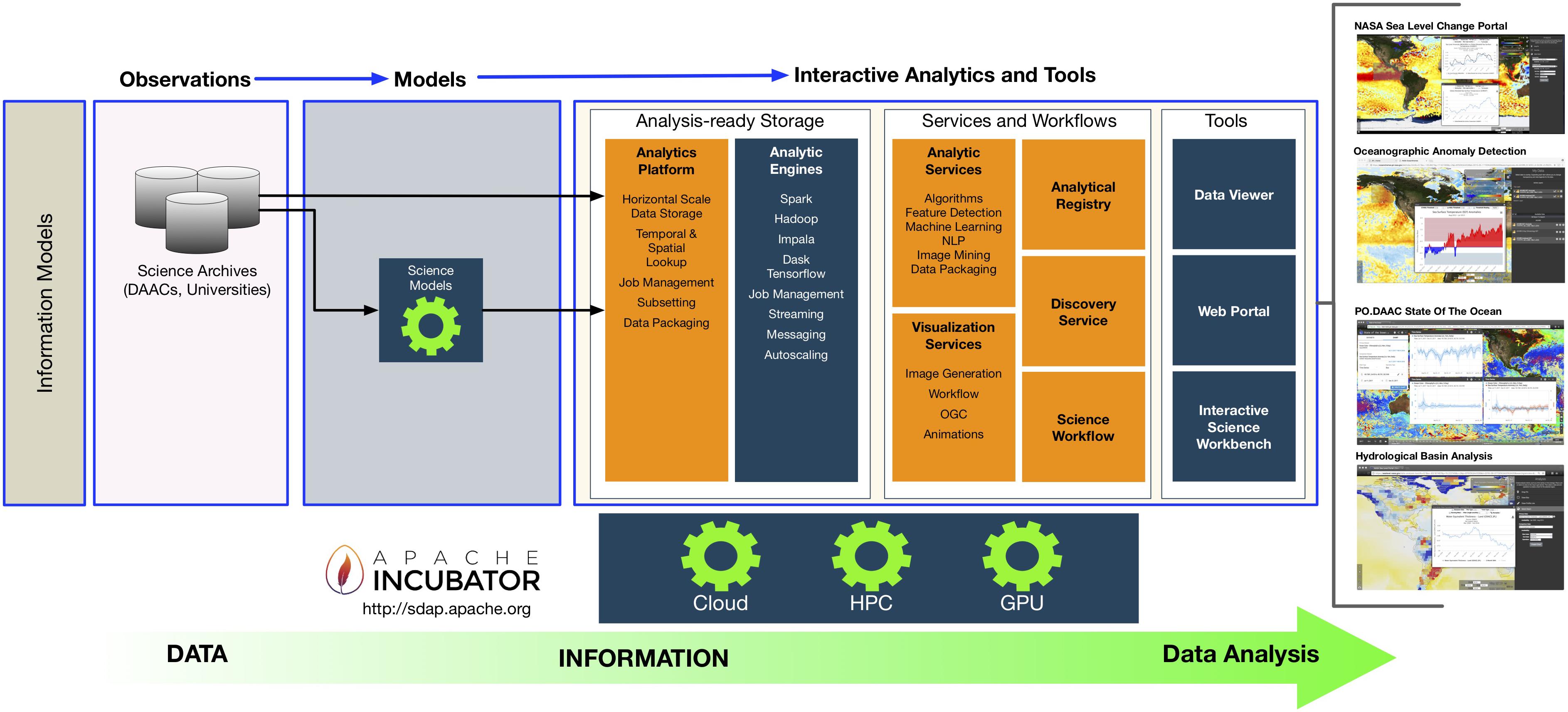 In this brief paper published in Frontiers in Marine Science, Armstrong et al. present the details of their OceanWorks integrated data analytics platform (IDAP) (which later was open sourced as the Apache Science Data Analytics Platform [SDAP]). Confronted with disparate data management solutions for performing research on oceanographic research data, the authors developed OceanWorks to provide an integrated platform capable of advanced data queries, data analysis, anomaly detection, data matching, data subsetting, and more. Since its creation, OceanWorks has been deployed in multiple NASA environments to handle a wide variety of data management tasks at various deployment intensities. They conclude that under its open-source SDAP iteration, the software platform will "continue to evolve and leverage any new open-source big data technology" in order "to deliver fast, web-accessible services for working with oceanographic measurements."