Laboratory Informatics Weekly Update – Volume 17, Issue 45
November 7, 2019 Laboratory Informatics Weekly Update Volume 17, Issue 45 In This Issue Upcoming Webinars 11/12/2019 - Lonza to Host New Webinar – “Paper to EBR in 9 Months: How a Strong Collaboration Leads to Project Success”11/20/2019 - Webinar: Don’t roll the dice on your lab informatics implementation – Fill each required role with care Featured Books Laboratory Information Management for Cannabis Quality AssuranceNext-Generation Sequencing: A Brief Introduction Journal Articles Development and validation of a fast gas chromatography–mass spectrometry method for the determination of cannabinoids in Cannabis sativa LIn this 2018 paper published in the Journal of Food…Process variation detection using missing data in a multihospital community practice anatomic pathology laboratory
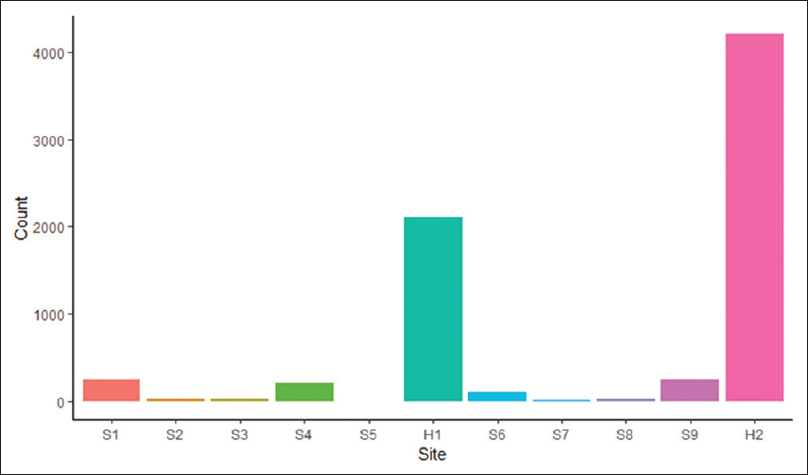 In this brief journal article by Ochsner Health System's Gretchen Galliano, a case is made for a programmatic approach to analyzing missing data in various laboratory information systems (LIS) and determining potential correlations with procedural and systemic processes in the health system. Using the R programming language, homemade scripts, and existing R packages, Ochsner Health Systems visualized and analyzed data from more than 70,000 cases of missing timestamp data, splitting the various cases into five pools. Galliano concludes that the process of "evaluating cases with missing predefined process timestamps" has the potential for improving "the ability to detect other data variations and procedure noncompliance in the AP workflow in a prospective fashion." She added that as an additional benefit, "[p]eriodically evaluating data patterns can give AP LIS teams and operations teams insight into user–LIS interactions and may help identify areas that need focus or updating."
LIMS Master Data Best Practices Part 1: Defining the Terms
 Globalization and outsourcing trends, along with technological advancements that have dramatically increased the volume, complexity and variety of data, have created significant data management challenges for modern scientific laboratories. Most laboratories have responded to these challenges by implementing a Laboratory Information Management System (LIMS) that automates business processes and data capture associated with laboratory workflows. With these systems comes vast amounts of data. Ensuring you are managing your LIMS Master Data properly begins with understanding the key terms
LIMS implementations usually demand a substantial investment of time, money and resources, typically costing hundreds of thousands to millions of dollars and requiring hundreds of person days to accomplish. Failure of a LIMS project can be a huge waste of time and resources, and a financial disaster for the organization involved. As such, it is critical to get a LIMS implementation right the first time in order to preserve your return on investment.
One important facet of any successful LIMS implementation and/or migration is the design and configuration of master data. In our experience, many companies involved in LIMS implementations tend to focus on software testing and configuration and put off dealing with master data until the end of the project. This is a huge mistake. Master data design and configuration is typically a much bigger job than anticipated and has multimillion-dollar impacts down the road on things like operational efficiency, time to market and LIMS return on investment (ROI).
[Read More]
Cultivating a Strong Corporate Culture to Attract and Retain Talent
The booming economy and record low unemployment in the United States has many companies struggling to attract needed talent amid tight labor pools. In addition to this talent shortage, the digital age has engendered greater workforce mobility. Using websites like Glassdoor, LinkedIn, Facebook, and others, employees can now easily become aware of other opportunities and find a job that better aligns with their values, goals and interests.
A new survey from CareerBuilder revealed that, while 50% of workers feel like they have a long-term career at their current company, the other half feel like they just have jobs. A surprising 32% of survey respondents plan to change their jobs this year. A recent Labor Department report confirmed that these employees are in fact following through on their intentions – the number of employees voluntarily leaving their jobs is at the highest rate it’s been since 2001. To keep pace with technological advances and remain competitive, companies require an experienced workforce with institutional knowledge to maximize productivity and operational efficiency. Given these trends, employee engagement and retention have emerged as top issues for business leaders.
[Read More]
Live Webinar: Preparing for an ISO 17025 Audit: What to expect from a LIMS?
Introduction: CloudLIMS is pleased to announce a complimentary webinar titled “Preparing for an ISO 17025 Audit: What to expect from a LIMS?” on November 19, 2019, at 12 PM EST (5 PM GMT). The webinar will be presented by Mr. Arun Apte, CEO, CloudLIMS.com.
To read the complete blog, please visit: https://cloudlims.com/blog/preparing-for-an-iso-17025-audit-what-to-expect-from-lims.html
Matrix Gemini LIMS Improves Water Testing Laboratory Efficiency

A new case study (https://www.autoscribeinformatics.com/case-studies/matrix-gemini-lims-speeds-up-throughput-in-water-testing) has been published by Autoscribe Informatics which shows how the Culligan Analytical Lab in Illinois, USA has made significant improvements in laboratory efficiency by using the Matrix Gemini LIMS (Laboratory Information Management System). Culligan Water provides innovative water treatment solutions to domestic, commercial and industrial markets. Laboratory testing to provide an accurate analysis of a customer’s water quality is a key component of the company’s success, especially as many customers are using well water.
Development and validation of a fast gas chromatography–mass spectrometry method for the determination of cannabinoids in Cannabis sativa L
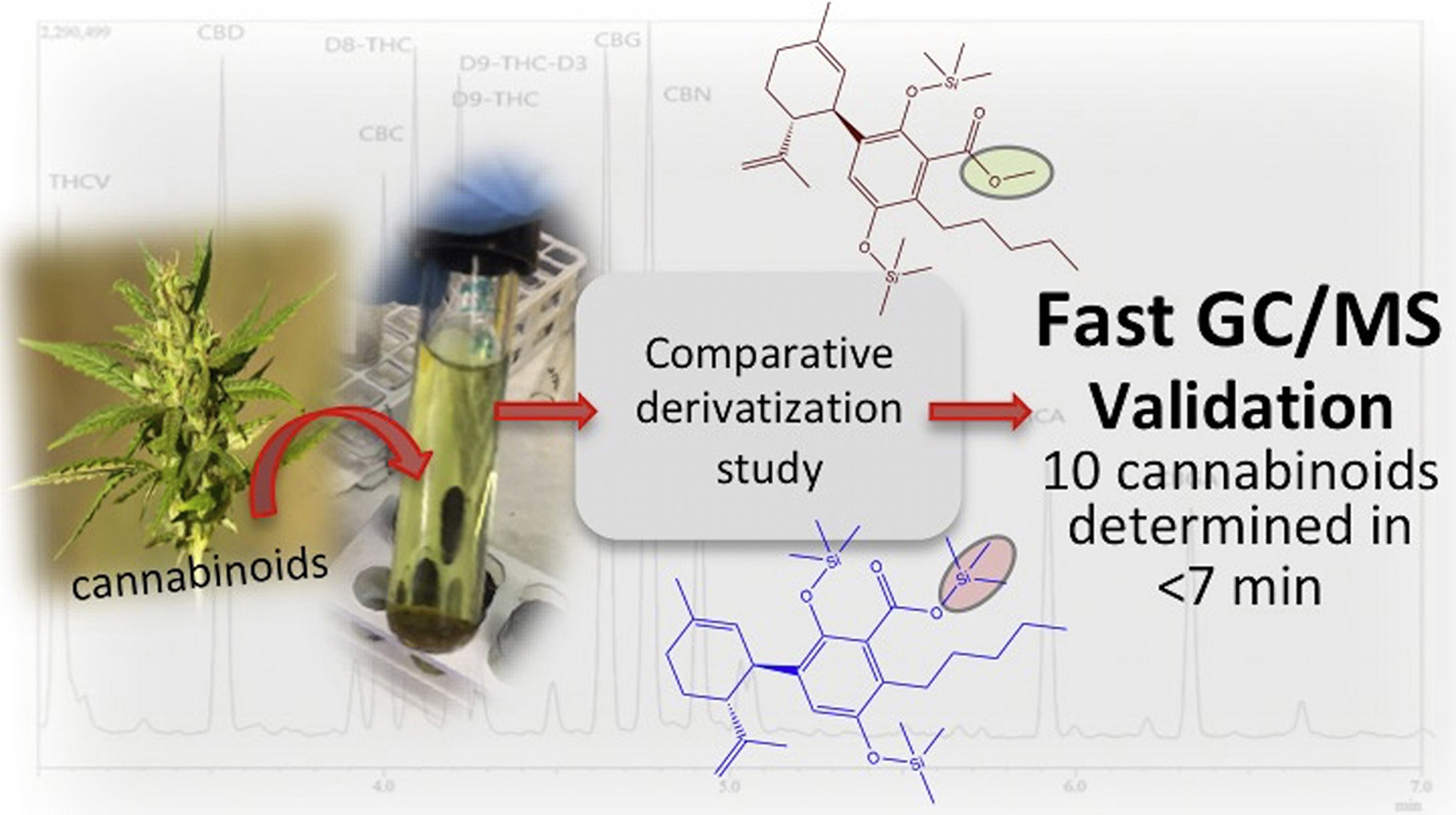 In this 2018 paper published in the Journal of Food and Drug Analysis, Cardenia et al. discuss their development of a "routine method for determining cannabinoids" in the flowers of Cannabis sativa L. using fast gas chromatography coupled to mass spectrometry (fast GC-MS), with appropriate derivatization approaches that take into account potential decarboxylation. The authors discuss the various problems with other methods then present their materials and methods. After considerable discussion of their results, they conclude that the procedure is fast (within seven minutes), has good resolution (R > 1.1), and remains cost-effective. Sensitivity was also high, with "a high repeatability and robustness in both cannabinoid standard mixtures and hemp inflorescence samples."
Laboratory Informatics Weekly Update – Volume 17, Issue 44
October 30, 2019 Laboratory Informatics Weekly Update Volume 17, Issue 44 In This Issue Upcoming Webinars 11/05/2019 - Webinar: Data Quality and Efficiency in Laboratory Projects – Part 4: So Many Choices in Data Delivery, So Little Time!11/07/2019 - Webinar: Lab Automation11/12/2019 - Lonza to Host New Webinar – “Paper to EBR in 9 Months: How a Strong Collaboration Leads to Project Success” Featured Books LIMSpec 2019-r1 EditionThe Complete Guide to LIMS & Laboratory Informatics Journal Articles Design and refinement of a data quality assessment workflow for a large pediatric research networkClinical data research networks (CDRNs)—consisting of a variety…How the UK Biobank is Revolutionizing Precision Medicine
In the last decade, there has been a paradigm shift in the development of gene sequencing diagnostics. This revolution has occurred mainly due to the development of ultra-high throughput next-generation sequencing (NGS) technology that allows a human genome to be sequenced in just a few days. Combined with clinical data, readily accessible genomic data is also accelerating the development of personalized, targeted treatments in a medical model known as Precision Medicine. The UK Biobank Project is on the forefront of this initiative.
In order to develop the genetic diagnostics and personalized treatments characteristic of Precision Medicine, scientists must sift through and effectively analyze immense data sets. This necessity has led to the rapid growth of a new engineering field known as bioinformatics – an interdisciplinary field of scientific research that utilizes biology, computer science, data engineering, mathematics and statistics to increase our understanding of biological processes. Bioinformatics has played a major supportive role in the emergence and continued development of precision medicine.
Bioinformatics scientists need access to the health and genetics data of large cohorts so that the influence of genetics on disease states can be sussed out and incorporated into tailored treatments. In order to facilitate access to the large amounts of biological and health data that bioinformatics scientists need, many nations have launched biobank projects, including the United States, United Kingdom, China, Austria, Qatar, Estonia, Japan, Canada and Finland.
The United Kingdom’s Biobank (UKB) project recently released a vast collection of genetic data to health researchers around the world, offering an unparalleled resource to enhance our understanding of human biology and aid in the advancement of precision medicine. In this blog, we will discuss the types of data made available by the UK Biobank project, along with the details on how scientists can access this important data.
[Read More]
Laboratory Informatics Weekly Update – Volume 17, Issue 43
October 23, 2019 Laboratory Informatics Weekly Update Volume 17, Issue 43 In This Issue Upcoming Webinars 10/24/2019 - Webinar: Colorado Hospital Association Tackles Opioid Epidemic Head on with Analytics10/29/2019 - Webinar: An Introduction to CLIA Regulations: What You Need to Know and Document11/07/2019 - Webinar: Lab Automation Featured Books LIMSjournal - Fall 2019LIMSpec 2019-r1 Edition Journal Articles Identification of Cannabis sativa L. (hemp) retailers by means of multivariate analysis of cannabinoidsIn this 2019 article published in Molecules, Palmieri et al. demonstrate their ability to use nine cannabinoids, a specific analytical method, and multivariate analysis—without any other identifying information—to identify…Design and refinement of a data quality assessment workflow for a large pediatric research network
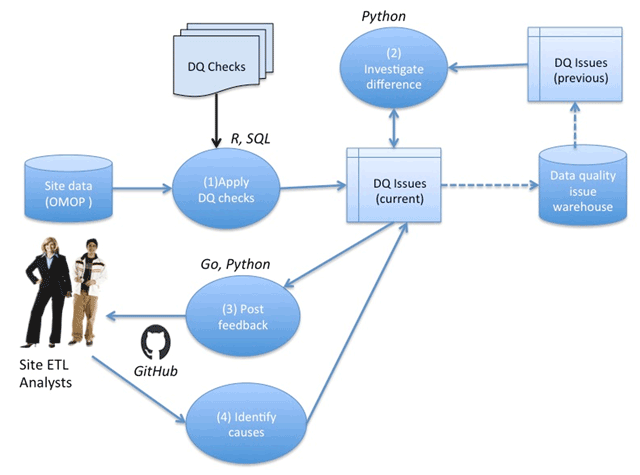 Clinical data research networks (CDRNs)—consisting of a variety of health care delivery organizations that share deidentified clinical data for clinical research purposes—constitute yet another collaboratory mechanism for scientific researchers to pool data and make new discoveries. However, one of the faults of CDRN data is that it typically comes from electronic health records (EHRs), which contain data with a lean more towards supporting "clinical operations rather than clinical research." This means data quality is of the utmost importance when pooling and putting to effective use such disparate data sources. In this research, Khare et al.propose a systematic workflow for making quality assessments of CRDN's data before use, a workflow that includes hundreds of systematic data checks and a GitHub-based reporting system to track and correct issues in a more timely fashion. They conclude that their publicly available toolkit definitively has value, though implementers should be advised that "sufficient resources should be dedicated for investigating problems and optimizing data" due to the time-intensive nature of the entire process.
Back from the Europe Biobank Week 2019
CloudLIMS is back from the Europe Biobank Week 2019 held at the Music and Congress Center of Lübeck (MuK), Germany, from October 8-11, 2019. We showcased our purpose-built, in the cloud SaaS LIMS with zero upfront cost, CloudLIMS, at the Europe Biobank Week.
To read the complete blog, please visit: https://cloudlims.com/blog/back-from-europe-biobank-week-2019.html