Posted on December 7, 2016
By Corinne Jones
Newsletter
December 07, 2016 Laboratory Informatics Weekly Update Volume 14, Issue 47 In This Issue Featured Journal Article Bioinformatics workflow for clinical whole genome sequencing at Partners HealthCare Personalized Medicine Genomic data is increasingly used to provide better, more focused clinical care. Or course, its associated datasets can be large, and it can take significant processing power to utilize and manage effectively. In this 2016 paper published in Journal of Personalized Medicine, Tsai et al. of Partners Healthcare describe their "bioinformatics strategy to efficiently process and deliver genomic data to geneticists for clinical interpretation." They conclude that with more research comes…
Posted on December 1, 2016
By Corinne Jones
Blog
A comprehensive LIMS Glossary and Acronyms e-book with important definitions of Laboratory information management system (LIMS) & related terminologies.
Posted on December 1, 2016
By Corinne Jones
Blog
LIMS whitepaper underlining the evolution of LIMS, different types of LIMS architecture, benefits and risks of cloud computing and how SaaS models leverage cloud technology to maximize ROI by minimizing TCO.
Posted on November 30, 2016
By LabLynx
Blog
Moving data between systems via an electronic exchange (interoperability) while keeping it clean is always a challenge. Data exchanged between electronic health records (EHR) and immunization information system (IIS) is no exception, as Woinarowicz and Howell demonstrate in this 2016 paper published in Online Journal of Public Health Informatics. Working for the North Dakota Department of Health, Division of Disease Control, the duo explain how setting up their IIS for interoperability with provider EHRs "has had an impact on NDIIS data quality." They conclude: "Timeliness of data entry has improved and overall doses administered have remained fairly consistent, as have the immunization rates ... [but more] will need to be done by NDIIS staff and its vendor to help reduce the negative impact of duplicate record creation, as well as data completeness."
Posted on November 30, 2016
By Corinne Jones
Newsletter
November 30, 2016 Laboratory Informatics Weekly Update Volume 14, Issue 46 In This Issue Featured Journal Article The impact of electronic health record (EHR) interoperability on immunization information system (IIS) data quality Moving data between systems via an electronic exchange (interoperability) while keeping it clean is always a challenge. Data exchanged between electronic health records (EHR) and immunization information system (IIS) is no exception, as Woinarowicz and Howell demonstrate in this 2016 paper published in Online Journal of Public Health Informatics. Working for the North Dakota Department of Health, Division of Disease Control, the duo explain how setting up their…
Posted on November 28, 2016
By John Jones
Journal articles

Moving data between systems via an electronic exchange (interoperability) while keeping it clean is always a challenge. Data exchanged between electronic health records (EHR) and immunization information system (IIS) is no exception, as Woinarowicz and Howell demonstrate in this 2016 paper published in
Online Journal of Public Health Informatics. Working for the North Dakota Department of Health, Division of Disease Control, the duo explain how setting up their IIS for interoperability with provider EHRs "has had an impact on NDIIS data quality." They conclude: "Timeliness of data entry has improved and overall doses administered have remained fairly consistent, as have the immunization rates ... [but more] will need to be done by NDIIS staff and its vendor to help reduce the negative impact of duplicate record creation, as well as data completeness."
Posted on November 21, 2016
By John Jones
Journal articles
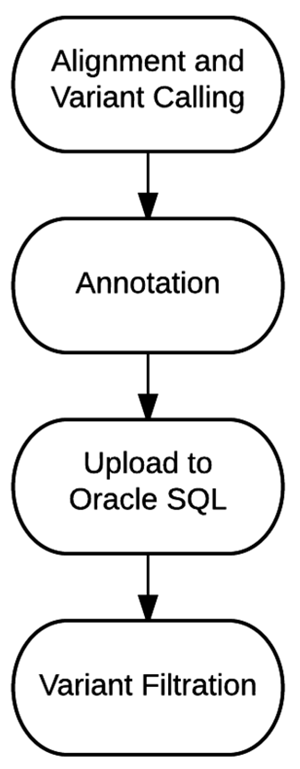
Genomic data is increasingly used to provide better, more focused clinical care. Or course, its associated datasets can be large, and it can take significant processing power to utilize and manage effectively. In this 2016 paper published in
Journal of Personalized Medicine, Tsai
et al. of Partners Healthcare describe their "bioinformatics strategy to efficiently process and deliver genomic data to geneticists for clinical interpretation." They conclude that with more research comes improved workflows and "filtrations that include larger portions of the non-coding regions as they start to have utility in the clinical setting, ultimately enabling the full utility of complete genome sequencing."
Posted on November 16, 2016
By John Jones
Journal articles
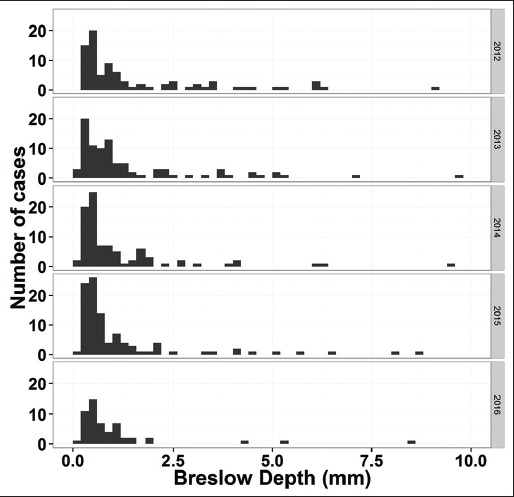
Synoptic reporting is an important part of not only managing patient testing information but also reporting that data for research and data mining purposes. As such, the extraction of particular elements from these types of reports — including those recording major cancer information — has historically been difficult. Recent developments in extracting key information from synoptic reports have made it easier, however, including the use of the R programming language. In this paper by J.J. Ye, the process of extracting melanoma data from pathology datasets is used to describe a broader, wide-ranging application of R and the associated RODBC package for extracting useful data from synoptic reports. Ye concludes: "This approach can be easily modified and adopted for other pathology information systems that use relational database for data management."
Posted on November 15, 2016
By Corinne Jones
Newsletter
November 15, 2016 Laboratory Informatics Weekly Update Volume 14, Issue 44=5 In This Issue Webcast Focus NOVEMBER 16, 2016, 2:00 PM EST: Improving the Flexibility and Efficiency of STARLIMS Reporting The reporting needs of a laboratory organization can be very broad, such that the development of reports can take up a considerable amount of time and effort, both during the initial STARLIMS implementation and on an on-going basis. This effort can be minimized while optimizing the flexibility of your reporting capabilities in many ways. Join this webinar to learn more. Webinar: Reduce cost, reduce risk, improve lab efficiency with LabVantage…
Posted on November 14, 2016
By CSols Inc.
Blog
A fundamental question that many people new to the informatics world ask is “What does a LIMS do?” The real answer is the answer given by Shrek who when asked about the nature of ogres replied “ogres are like onions, they have layers”. You read correctly, LIMS are like onions; they too have layers.
Posted on November 10, 2016
By John Jones
Journal articles
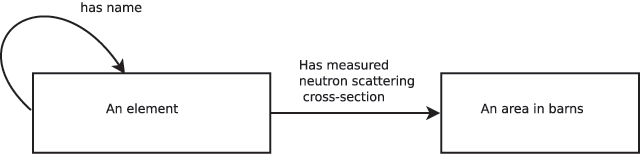
In this 2016 paper published in
Data Science Journal, Australian researcher James Hester provides "a simple formal approach when developing and working with data standards." Using ontology logs or "ologs" — category-theoretic box and arrow diagrams that visually explains mapping elements of sets — and friendly file formats, adapters, and modules, Hester presents several applications towards a useful scientific data transfer network. He concludes: "These ontologies nevertheless capture all scientifically-relevant prior knowledge, and when expressed in machine-readable form are sufficiently expressive to mediate translation between legacy and modern data formats." This results in "a modular, universal data file input and translation system [that] can be implemented without the need for an intermediate format to be defined."
Posted on November 9, 2016
By Corinne Jones
Blog
In recent years, a wide range of business intelligence (BI) technologies have been applied to different areas in order to support the decision-making process. BI enables the extraction of knowledge from the data stored. The healthcare industry is no exception, and so BI applications have been under investigation across multiple units of different institutions.





