Posted on May 15, 2024
By onQ Software
Blog

Data migration can be a
daunting task for laboratories looking to transition to a new
Laboratory Information Management System (LIMS). The process of transferring data from one system to another requires careful planning, execution, and validation to ensure that all data is accurately transferred and accessible in the new system. In this blog post, we will dive into the
data migration for LIMS.
[Read More]
Posted on May 15, 2024
By Sapio Sciences
Blog

Data entry in laboratories was previously performed using physical notebooks. Not only was this tedious, but it also resulted in errors and inefficiency in operations. With the advent of Electronic Lab Notebook (ELN) software, traditional notebooks became obsolete. While this led to improved efficiency and collaboration, a wide variety of ELNs started appearing on the market, making it difficult for labs to find the right solution. If you are in a similar situation, here’s a comprehensive guide to the different types of electronic lab notebooks available.
[Read More]
Posted on May 15, 2024
By LabLynx
Blog

In a rapidly evolving world driven by technology, laboratories are increasingly prioritizing mobility and remote access to data. LabLynx, a leading provider of laboratory information management systems (LIMS), is spearheading this shift by offering innovative solutions that empower teams to streamline workflows and maintain productivity from any location.
[Read More]
Posted on May 13, 2024
By LabLynx
Journal articles
In this 2023 article published in the
Journal of Applied Clinical Medical Physics, Kapoor
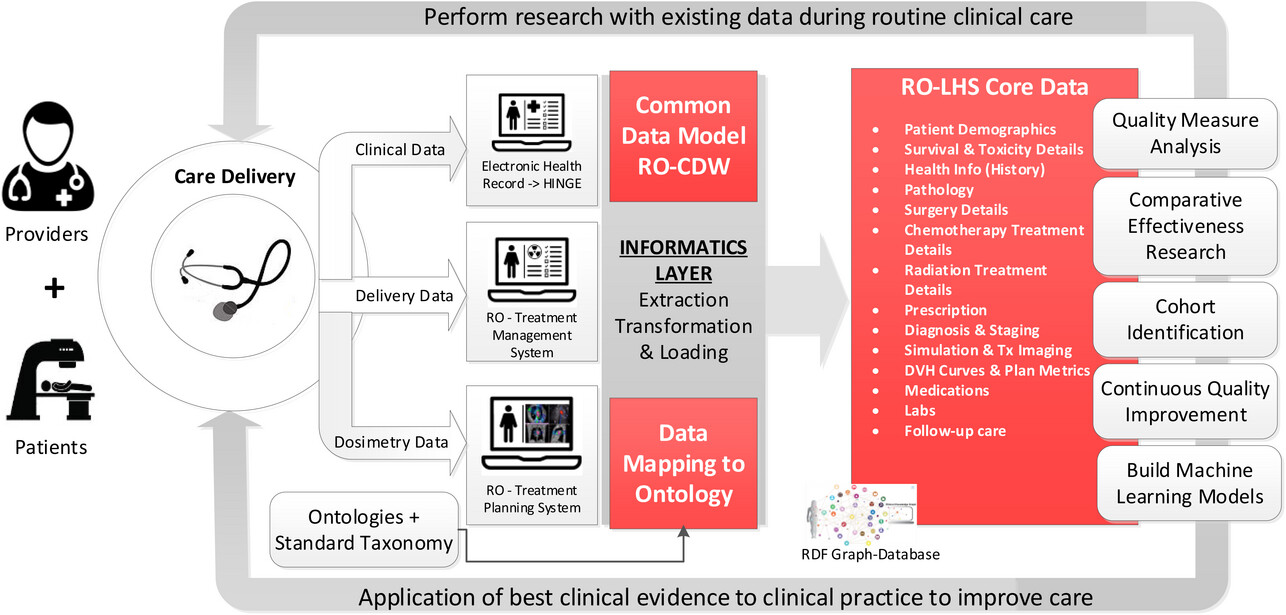
et al. of Virginia Commonwealth University present their approach to managing radiation oncology research data in a FAIR (findable, accessible, interoperable, and reusable) way. The authors focus on the advantages of a knowledge graph-based database combined with ontology-based keyword search, synonym-based term matching, and a variety of visualization tools. After presenting background on the topic, Kapoor
et al. describe their approach using 1,660 patient clinical and dosimetry records, standardize terminologies, data dictionaries, and Semantic Web technologies. They then discussed the results of their mapping efforts, as well as the discovered benefits of a knowledge graph-based solution over a traditional relational database approach. They conclude that their approach "successfully demonstrates the procedures of gathering data from multiple clinical systems and using ontology-based data integration," with the radiation oncology datasets being more FAIR "using open semantic ontology-based formats," which in turn helps "facilitate interoperability and execution of large scientific studies."
Posted on May 9, 2024
By Corinne Jones
Newsletter
May 9, 2024 Laboratory Informatics Weekly Update Volume 22, Issue 19 In This Issue Featured Books The Complete Guide to LIMS and Laboratory Informatics - 2024 Edition Featured Content Are You Happy with Your LIMS?In today’s fast-paced scientific landscape, Laboratory Information Management Systems (LIMS) play a pivotal role in ensuring the efficiency and accuracy of laboratory operations. From biotech companies to environmental agencies, the use of a LIMS can significantly influence the workflow and overall productivity of a laboratory. However, as with any technology, the satisfaction levels can vary significantly among users. Are you truly happy with your current…
Posted on May 8, 2024
By LabLynx
Blog

In today’s fast-paced scientific landscape, Laboratory Information Management Systems (LIMS) play a pivotal role in ensuring the efficiency and accuracy of laboratory operations. From biotech companies to environmental agencies, the use of a LIMS can significantly influence the workflow and overall productivity of a laboratory. However, as with any technology, the satisfaction levels can vary significantly among users. Are you truly happy with your current LIMS? This article explores various facets of LIMS satisfaction, helping you evaluate your system against industry benchmarks and personal expectations.
[Read More]
Posted on May 8, 2024
By Kalleid
Blog

In drug discovery, artificial intelligence (AI) and machine learning (ML) technologies have significantly changed the way researchers analyze and interpret chemical data. From molecular modeling to predicting drug responses, AI-driven approaches offer opportunities to expedite the drug development process. To unlock the full potential of AI in drug discovery, however, it is imperative to lay a strong foundation with properly structured and high-quality chemical data. In this blog, we explore key strategies for preparing AI-ready chemical data and maximizing its utility in drug discovery endeavors.
[Read More]
Posted on May 8, 2024
By Astrix Technology Group
Blog

Quality control (QC) testing is paramount in ensuring the efficacy and safety of therapeutic biologics. These complex molecules, derived from living organisms, require stringent testing to meet regulatory standards and ensure patient safety. While state-of-the-art molecular methods have been established, many laboratories still rely heavily on animal testing, using protocols developed in the 1970s. In November 2023, the International Council for Harmonisation (ICH) announced the adoption of guidelines encouraging the biopharmaceutical industry to adopt new standards in biologics QC, including next-generation sequencing (NGS)-based assays.
[Read More]
Posted on May 8, 2024
By onQ Software
Blog
Cloud computing has transformed the way organisations and laboratories manage their
data, providing
online access and
storage that eliminates the need for local computer storage, especially recently. This innovation has been particularly beneficial for laboratories, offering a
secure,
scalable and
cost-effective solution for managing laboratory data. Let’s dive into AWS for LIMS (Laboratory Information Management Systems) together.
[Read More]
Posted on May 8, 2024
By STARLIMS Corporation
Blog

Last year, STARLIMS revealed momentous news in our 36+ year history. We announced the strategic acquisition of Labstep—and their cutting-edge Electronic Lab Notebook (ELN)—to expand our solution portfolio. Read below for answers to our most Frequently Asked Questions about the acquisition and what it means for STARLIMS—and your—future.
[Read More]
Posted on May 8, 2024
By Astrix Technology Group
Blog

Clinical research involving human subjects is crucial for the development of new treatments, drugs, and therapies, but it must be conducted in an ethical manner that protects the rights and well-being of the participants. Informed consent is the cornerstone of ethical research, requiring that participants or donors are provided with sufficient information about the study to make an informed decision about whether to participate or not.
[Read More]
Posted on May 8, 2024
By LabLynx
Blog

Clinical diagnostic labs ensure accurate and timely diagnostic information, aiding tailored treatments. During outbreaks, they swiftly identify pathogens, aiding containment and vaccination strategies. In research, they drive innovations in diagnostics and therapeutics, advancing personalized medicine. Additionally, they offer preventive health screenings, empowering proactive well-being management, from cholesterol to cancer screenings, promoting a healthier society.
[Read More]





