Posted on April 11, 2024
By Corinne Jones
Newsletter
April 11, 2024 Laboratory Informatics Weekly Update Volume 22, Issue 15 In This Issue Featured Books LIMSjournal - Spring 2024 Featured Content Avoiding Virtual Data SilosDecoupling data inputs from their isolated sources continues to be challenging for organizations. Data silos not only hinder organizational collaboration and decision making but also undermine an organization’s ability to unlock the potential of its most precious resource—its data. Advancements like cloud computing, platforms, and blockchain are giving most organizations the tools to transition away from traditional, physical data silos. [Read More] Can the LabLynx ELab LIMS be integrated with any lab instrument?Most laboratory instruments can be…
Posted on April 10, 2024
By LabLynx
Journal articles

In this 2024 article published in the journal
Microbiology Spectrum, Trigueiro
et al. "explore the relative impact of laboratory automation and continuous improvement events (CIEs) on productivity and [turnaround times (TATs)]" in the clinical microbiology laboratory. Noting numerous advantages to applying the concept of total laboratory automation (TLA), the authors implemented WASPLab and VITEK MS and compared pre-conversion workflow results with post-conversion workflow results. The group also incorporated change management, CIEs, and key performance indicators (KPIs). They concluded that "conversion resulted in substantial improvements in KPIs. While automation alone substantially improved TAT and productivity, the subsequent implementation of lean management further unlocked the potential of laboratory automation through the streamlining of the processes involved." However, they also noted that while effective, some cost is involved with TLA, and labs need "to find ways of maximizing the benefits of the use of [laboratory automation] technology."
Posted on April 4, 2024
By Corinne Jones
Newsletter
April 4, 2024 Laboratory Informatics Weekly Update Volume 22, Issue 14 In This Issue Featured Books LIMSjournal - Spring 2024 Featured Content Can investing in a LIMS provide a competitive edge?As demands on laboratories continue to soar, researchers, scientists, and lab managers find themselves in a race against time, struggling to keep up with increasing sample volumes, complex workflows, and stringent quality standards. A laboratory information management system (LIMS) can be the ultimate game-changer, offering a transformative solution that saves time and resources, supercharges productivity, enhances data integrity, and provides a competitive advantage. [Read More] Informatics Systems: A Serving…
Posted on April 3, 2024
By LabLynx
Blog

As demands on laboratories continue to soar, researchers, scientists, and lab managers find themselves in a race against time, struggling to keep up with increasing sample volumes, complex workflows, and stringent quality standards. A laboratory information management system (LIMS) can be the ultimate game-changer, offering a transformative solution that saves time and resources, supercharges productivity, enhances data integrity, and provides a competitive advantage.
[Read More]
Posted on April 3, 2024
By CSols Inc.
Blog

Depending on how long you have been working in the lab informatics industry, you may have noticed that the list of acronyms feels almost endless. Since this blog was first written more than 10 years ago, that list of acronyms has only grown. This blog post updates the original list to provide insight into an expanded list of the most common acronyms.
[Read More]
Posted on April 3, 2024
By Autoscribe Informatics Inc.
Blog

When selecting a laboratory information management system (LIMS), whether it’s your first or you’re replacing an existing solution, the temptation is to concentrate solely on your user requirements. It really does make sense to document these and match them to the features of potential LIMS products. However, remember that it is extremely unlikely, if not impossible, that any LIMS will exactly meet your needs when delivered out-of-the-box, and anyway those needs will certainly change over time.
[Read More]
Posted on April 3, 2024
By LIMS Wizards
Blog

LabTwin is built on three pillars—its AI-powered large language model, its integration with the lab informatics landscape, and its support for general good practices (GxP); whether manufacturing, clinical, laboratory, or documentation. A prior blog post described how the AI features in the LabTwin voice-powered digital lab assistant support the Lab of the Future. Here, we’ll look at the second pillar that underlies LabTwin’s software and support for GxP organizations.
[Read More]
Posted on April 3, 2024
By LabLynx
Blog

A food and beverage lab's LIMS can revolutionize incident and corrective action management by ensuring quality outcomes, swiftly identifying incidents, and implementing effective corrective measures. With cutting-edge functionality like sample management and tracking, audit trails, and incident management tools, the LIMS empowers food and beverage businesses to improve how it identifies, reacts, corrects, and prevents such future incidents.
[Read More]
Posted on April 3, 2024
By STARLIMS Corporation
Blog

R&D leaders face growing pressure to innovate quickly and cost-effectively. However, manual paper-based data collection methods stifle innovation, while outdated systems slow productivity and introduce data quality and traceability issues. We explored this topic in our webinar:
Revolutionizing Research: Enhancing Experiment Efficiency with an ELN. In this webinar we explore the history of scientific documentation, the importance of data quality, and the benefits of using modern ELN technology to advance innovation.
[Read More]
Posted on April 1, 2024
By LabLynx
Journal articles
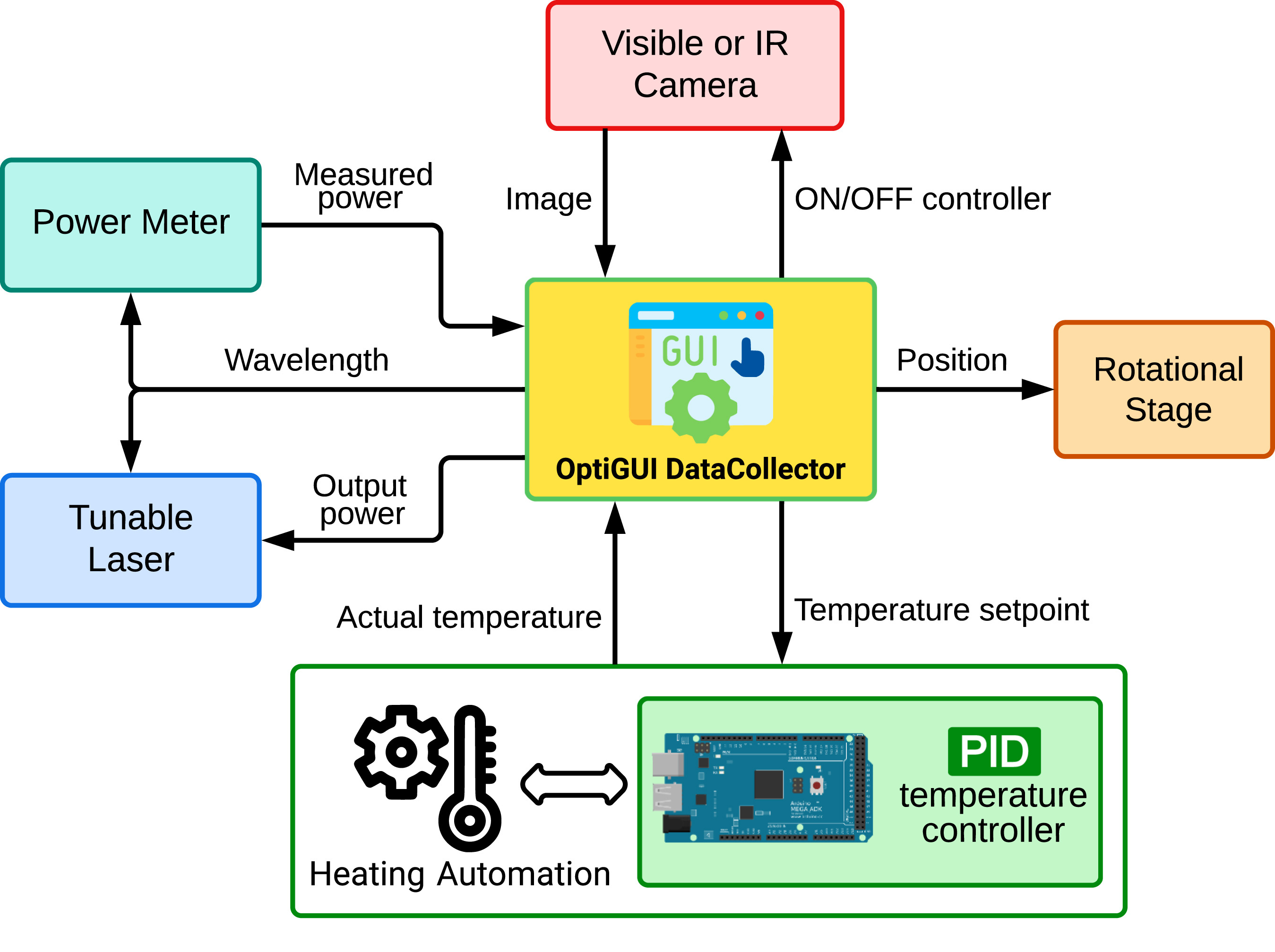
Wanting to integrate instruments and electronic systems in a laboratory is nothing new, and it is in fact increasingly desired. The optics and photonics lab is no exception to this fact. In this 2023 article published in the journal
SoftwareX, Soto-Perdomo
et al. address this desire with their OptiGUI DataCollector, a modular system that integrates optical and photonic devices, simplifies experiment workflows, and automates numerous workflow aspects in the lab, which in turn reduces the number of human-based errors. After a brief introduction to their reasoning for the system, the authors fully describe it and provide illustrative examples of its use. They conclude that the "software's automation capabilities accelerate data acquisition, processing, and analysis, saving researchers time and effort," while also improving reproducibility of research experiments.
Posted on March 28, 2024
By Corinne Jones
Newsletter
March 28, 2024 Laboratory Informatics Weekly Update Volume 22, Issue 13 In This Issue Featured Books LIMS Selection Guide for ISO/IEC 17025 Laboratories Featured Content AI Trends in LaboratoriesArtificial Intelligence (AI) is revolutionising the way laboratories operate, offering new capabilities that improve efficiency, accuracy, and innovation. From automation to predictive analytics, AI is transforming every aspect of laboratory workflows. Let’s explore some key AI trends that are reshaping the field of laboratory science. [Read More] Why Should You Upgrade Your LIMS?As technology advances and regulatory requirements evolve, labs must adapt to ensure efficiency, compliance, and optimal performance. One critical…
Posted on March 27, 2024
By onQ Software
Blog

Artificial Intelligence (AI) is revolutionising the way laboratories operate, offering new capabilities that improve efficiency, accuracy, and innovation. From automation to predictive analytics, AI is transforming every aspect of laboratory workflows. Let’s explore some key AI trends that are reshaping the field of laboratory science.
[Read More]





