Posted on March 27, 2024
By LabLynx
Blog

As technology advances and regulatory requirements evolve, labs must adapt to ensure efficiency, compliance, and optimal performance. One critical aspect of this adaptation is replacing outdated Laboratory Information Management Systems (LIMS) with modern, feature-rich solutions. Decide when to replace your existing LIMS with some critical considerations, including how modern LIMS solutions can streamline workflows, enhance compliance, and unlock future possibilities.
[Read More]
Posted on March 27, 2024
By Clinisys
Blog

Enterprises, including laboratories, want to capitalise on complex, data-intensive AI/ML and advanced analytics workloads that involve petabytes of data. To accomplish that, they are reprioritising data as an organizational asset and reestablishing their enterprise information architecture around data models that are designed to generate reliable, structured data.
[Read More]
Posted on March 27, 2024
By LabLynx
Blog

The most important features of a LIMS may vary depending on your specific laboratory requirements and long-term goals, but core features include sample tracking, workflow management, and reporting. However, there are additional features that are expected from a modern, professional LIMS. These features are driven by the underlying purpose of a LIMS—helping labs efficiently produce timely, accurate, and repeatable results—and by regulatory, standard, management, and economic pressures.
[Read More]
Posted on March 27, 2024
By onQ Software
Blog

As a long-time supplier to the Environmental and Water & Waste Water public sector we understand that lab managers are facing pressure to meet testing demands with fewer resources. They need to do more with less and identify workload issues or bottlenecks. This is where QLIMS comes in. With a large global presence, we understand the fundamental issues our customers are facing. In this blog post, we will dive into QLIMS features for Water and Environmental Testing.
[Read More]
Posted on March 26, 2024
By LabLynx
Journal articles
For many years, the journal
PLOS Computational Biology has been publishing a series of "Ten Simple Rules" articles as they relate to data management and sharing in laboratories and research institutes. In this latest installment of the series, Berezin
et al. tap into their collective experience to address the management of laboratory data and information, particularly leveraging systems like a laboratory information management system (LIMS). In these rules, the authors examine aspects such common culture development, inventory management, project management, sample management, labeling, and more. They conclude that apart from "[i]mparting a strong organizational structure for your lab information ... the goal of these rules is also to spur conversation about lab management systems both between and within labs as there is no one-size-fits-all solution for lab management." However, the application of these rules isn't exactly a straightforward process; their success "relies on the successful integration of effective software tools, training programs, lab management policies, and the will to abide by these policies."
Posted on March 21, 2024
By Corinne Jones
Newsletter
March 21, 2024 Laboratory Informatics Weekly Update Volume 22, Issue 12 In This Issue Featured Books LIMS Selection Guide for ISO/IEC 17025 Laboratories Featured Content How does ISO/IEC 17025 impact laboratories?ISO/IEC 17025:2017 impacts laboratories by placing some burdens on the lab to improve quality, while the lab also realizes several benefits. Various laboratory workflow requirements must be met, from generalized requirements to more narrowly focused commitments. Benefits include expanding business opportunities, controlling waste and costs, improving measurement accuracy, improving productivity, efficiency, and turnaround times, and gaining happier customers. [Read More] Laboratory Technology Trends to follow in 2024The outlook for…
Posted on March 20, 2024
By LabLynx
Blog

ISO/IEC 17025:2017 impacts laboratories by placing some burdens on the lab to improve quality, while the lab also realizes several benefits. Various laboratory workflow requirements must be met, from generalized requirements to more narrowly focused commitments. Benefits include expanding business opportunities, controlling waste and costs, improving measurement accuracy, improving productivity, efficiency, and turnaround times, and gaining happier customers.
[Read More]
Posted on March 20, 2024
By Astrix Technology Group
Blog

The outlook for lab technology trends in 2024 promises to capitalize on the foundations of the Lab of the Future concept. While Digital Transformation has ushered in a new era of digitalization and optimized laboratory workflows, cloud computing has provided an affordable, scalable IT framework with access to an array of novel applications to support this vision further. The widespread use of Artificial Intelligence (AI) has propelled digital capabilities, leading to unprecedented scientific advancement.
[Read More]
Posted on March 20, 2024
By STARLIMS Corporation
Blog

Elypta is on a mission to revolutionize early cancer detection with a pioneering metabolism-based liquid biopsy. Elypta’s research relies heavily on the simultaneous analysis of thousands of samples, which lacked a consistent cataloging process. This inconsistency posed difficulties for research teams in managing, updating, and tracking thousands of samples effectively. Learn how the Labstep ELN from STARLIMS enhanced Elypta’s R&D speed and productivity by keeping data secure, traceable, and collaborative.
[Read More]
Posted on March 20, 2024
By LabLynx
Blog

The safety, quality, and suitability of construction materials for a given construction task is paramount, and this is better ensured with lab testing. Not only are fasteners, lumber, and adhesives tested, but also the underlying soil and rock of a construction site. A wide range of materials (e.g., wood, iron, concrete, shingles) are tested using standardized test methods, measuring properties such as tensile strength, water penetration, and impact resistance.
[Read More]
Posted on March 18, 2024
By LabLynx
Journal articles
In this 2023 paper published in
Nature Communications, Signoroni
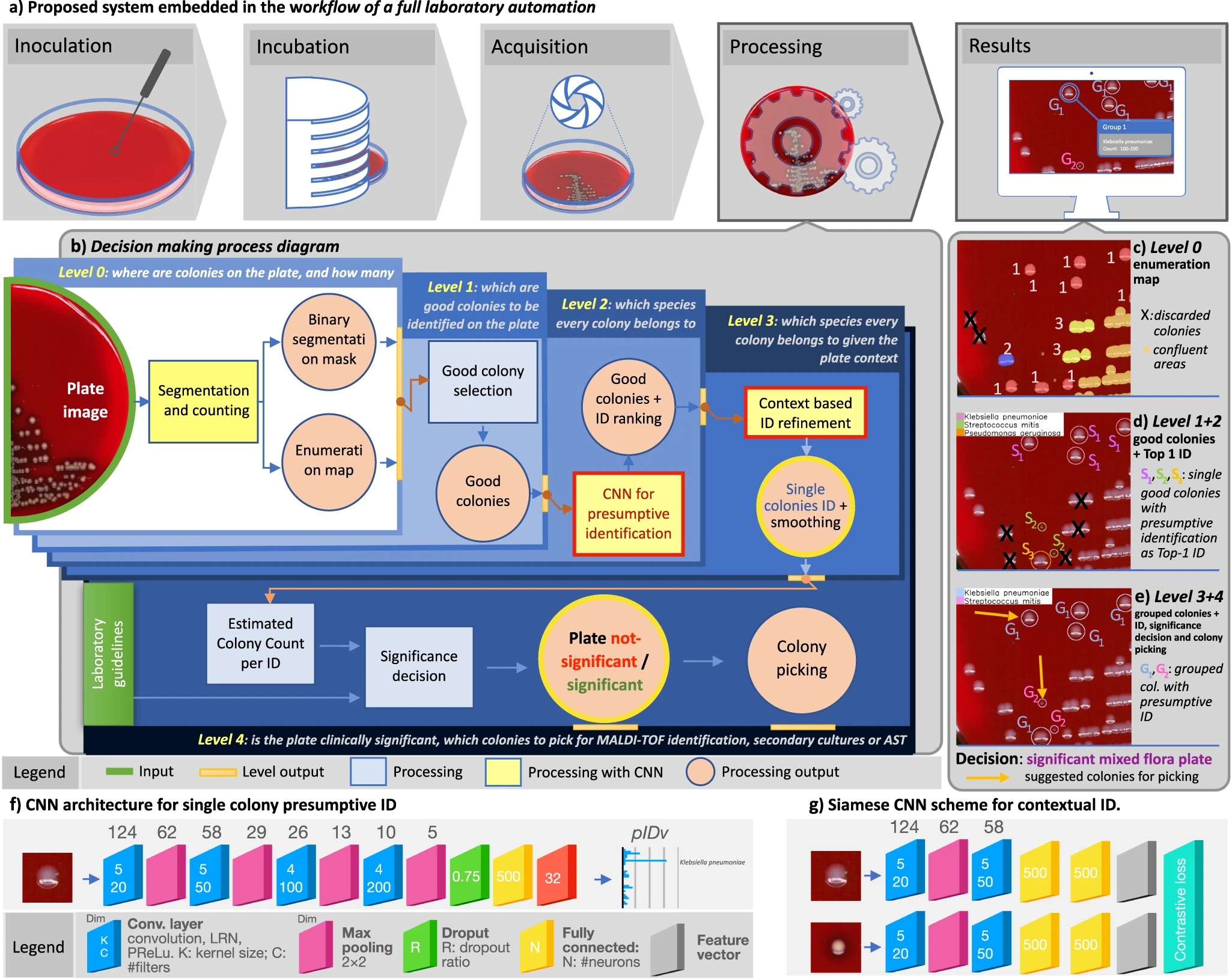
et al. present the results of their efforts towards a system designed for "the global interpretation of diagnostic bacterial culture plates" using deep learning architecture. Noting the many challenges of human-based culture interpretation, the authors present the results of DeepColony," a hierarchical multi-network capable of handling all identification, quantitation, and interpretation stages, from the single colony to the whole plate level." After reviewing the results, the authors conclude that given the "high level of agreement" between DeepColony's results and the interpretation of humans, their system holds significant promise. They add that DeepColony can be viewed as "a unique framework for improving the efficiency and quality of massive routine activities and high-volume decisional procedures in a microbiological laboratory, with great potential to refine and reinforce the critical role of the microbiologist."
Posted on March 14, 2024
By Corinne Jones
Newsletter
March 14, 2024 Laboratory Informatics Weekly Update Volume 22, Issue 11 In This Issue Featured Books LIMS Selection Guide for ISO/IEC 17025 Laboratories Featured Content CSols Summit 2024: The Next-gen Lab: Pioneering Tomorrow, TodayLearn how to optimize existing tools and embrace emerging technologies like artificial intelligence, data science, simulations, analytics, and lab informatics integrations for enhanced daily operations at this virtual conference - April 3 - 4, 2024. Gain insights on deriving additional value from organizational data, deepen your understanding of AI and digital twins, and be an early adopter of integration platforms and digital transformations. [Read More] What…





