Posted on February 22, 2024
By Corinne Jones
Newsletter
February 22, 2024 Laboratory Informatics Weekly Update Volume 22, Issue 8 In This Issue Featured Books The Complete Guide to LIMS and Laboratory Informatics - 2024 Edition Featured Content How does a LIMS benefit microbiological sampling and testing in the food and beverage industry?Microbiology labs are critical in ensuring food and beverage safety. A purpose-built LIMS helps streamline operations for food-safety-oriented microbiology labs with well-developed and standardized sampling and test methods. Factors like flexibility, data integrity, and integration capabilities with monitoring devices help enhance efficiency, data integrity, and regulatory compliance. [Read More] Artificial Intelligence (AI) within LIMS and the…
Posted on February 21, 2024
By LabLynx
Blog

Microbiology labs are critical in ensuring food and beverage safety. A purpose-built LIMS helps streamline operations for food-safety-oriented microbiology labs with well-developed and standardized sampling and test methods. Factors like flexibility, data integrity, and integration capabilities with monitoring devices help enhance efficiency, data integrity, and regulatory compliance.
[Read More]
Posted on February 21, 2024
By STARLIMS Corporation
Blog

With countless systems, complex workflows, and vast amounts of data, navigating the complex world of informatics is enough to make your head spin. Homegrown systems and disconnected data silos decrease productivity and increase risk in already complicated industries. Laboratory Information Management Systems (LIMS) are essential for productivity in laboratory testing, helping teams manage samples, workflows, and inventory to keep processes and workflows moving forward.
[Read More]
Posted on February 21, 2024
By LIMS Wizards
Blog

Interconnected systems and data are what the future lab will run on. If you want to bring your lab into the future, an AI-enabled and voice-powered digital lab assistant like LabTwin can be a foundational step. LabTwin’s 95% accuracy with voice capture means that you can be confident that your data is accurately transcribed. In this blog post, you’ll learn how the AI features in LabTwin can help when you adopt a digital lab assistant to bring your organization closer to the Lab of the Future today.
[Read More]
Posted on February 21, 2024
By Astrix Technology Group
Blog

A well-deployed LIMS can have a myriad of benefits for your R&D laboratory. From operational efficiency to speed to market, LIMS can play a vital role in these and other mission critical business and scientific processes. This white paper takes a close look at some of the key ways in which a LIMS should be deployed and used to reap the most benefit in your lab.
[Read More]
Posted on February 21, 2024
By CSols Inc.
Blog

Artificial intelligence (AI) is a term we see and hear a lot nowadays. It is associated with the things surrounding us daily: home electronics, cars, public transportation, shopping, etc. Has this trend reached the benches of the general research and development (R&D) lab yet? Can AI make the lives of R&D lab analysts easier? Well, yes, but not in all aspects of the work—at least not yet. This blog looks at potential applications of AI in R&D labs today and where it might still need to improve.
[Read More]
Posted on February 21, 2024
By onQ Software
Blog

LIMS are evolving rapidly, driven by technological advancements and the changing needs of modern laboratories. Keeping up with these trends is crucial for laboratories looking to enhance their efficiency, data management, and compliance. In this article, we’ll explore some of the trends in LIMS.
[Read More]
Posted on February 21, 2024
By LabLynx
Blog

Materials testing is as diverse as the available material types and industrial applications of those material types, and such testing is found across a wide variety of domains. from automotive and aerospace to metals and rubbers. Materials science testing methodologies can be divided into destructive or non-destructive analysis of physical, mechanical, chemical and biological properties.
[Read More]
Posted on February 20, 2024
By LabLynx
Journal articles
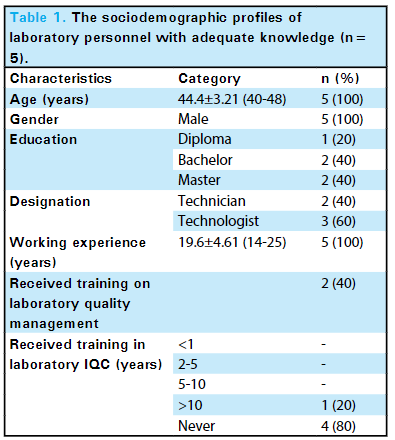
In this brief study by Mishra
et al. in the
Journal of Nepal Medical Association, the level of knowledge of internal quality control (IQC) in the Department of Biochemistry, B.P. Koirala Institute of Health Sciences (BPKIHS), a tertiary care center, is explored. Noting the importance of laboratory quality control and knowledge of IQC to patient outcomes, the authors conducted a descriptive cross-sectional study of its laboratory staff (
n=20), asking questions related to "the understanding of the purpose of IQC, the types of control materials, various control charts, how and when IQC should be performed, and interpretations of the Levey-Jennings Chart using the Westgard rule." The authors concluded from their results were inline with other studies conducted in similar environments (25% had adequate knowledge of IQC), their facility had work to do in improving IQC knowledge and quality management systems more broadly. They add: "Hence, providing training opportunities on laboratory IQC can be reflected as a necessity in our current laboratory set-up. This could add value to the knowledge of IQC on laboratory personnel to ensure that the reports generated within the laboratory are accurate, reliable, and reproducible."
Posted on February 15, 2024
By Corinne Jones
Newsletter
February 15, 2024 Laboratory Informatics Weekly Update Volume 22, Issue 7 In This Issue Featured Books The Complete Guide to LIMS and Laboratory Informatics - 2024 Edition Featured Content Conquering Laboratory Data Management: Decoding Data Platforms for Life SciencesBusinesses in the life sciences sector are navigating complex decisions regarding their laboratory data management. They face demands for data accuracy, compliance, and integrity that drive decisions about data platform use. A platform serves as a bespoke hub for data regardless of which or how many data sources are involved. Your platform choice can be a game changer for accessibility, flexibility,…
Posted on February 14, 2024
By CSols Inc.
Blog

Businesses in the life sciences sector are navigating complex decisions regarding their laboratory data management. They face demands for data accuracy, compliance, and integrity that drive decisions about data platform use. A platform serves as a bespoke hub for data regardless of which or how many data sources are involved. Your platform choice can be a game changer for accessibility, flexibility, and data management as the life sciences industry adapts to technological advancements.
[Read More]
Posted on February 14, 2024
By LabLynx
Blog

A construction & engineering lab can involve many test methods defined by various accreditations and regulations, benefiting from various LIMS functionalities. Many LIMS vendors will already provide support for unique sample IDs, user qualification management, and data import and export. However, FAQ examines more specific functionality specific to a construction and engineering laboratory.
[Read More]





