

Beckman Coulter Introduces Total Laboratory Automation Solution That Sets New Standard for Turnaround Time
Beckman Coulter, a global leader in clinical diagnostics, announced today that the latest addition to its market-leading automation portfolio, the DxA 5000 total laboratory automation solution has achieved European CE Mark and China Food and Drug Administration approval.Sphera Acquires Chemical Data Management Software Company SiteHawk
Sphera Solutions Acquires SiteHawk to Expand Product Stewardship and Chemical Software Solution Capabilities With Cloud-based TechnologyLaboratory Informatics Weekly Update – Volume 17, Issue 19
May 8, 2019 Laboratory Informatics Weekly Update Volume 17, Issue 19 In This Issue Upcoming Webinars 05/22/2019 - Prepare for a Successful LabVantage LIMS Implementation05/24/2019 - Free LABTrack Webinar – Justifying an ELN06/06/2019 - Astrix Webinar – The Importance of Strategic Planning in Laboratory Informatics Projects06/12/2019 - Ensuring ISO 17025:2017 compliance in your Laboratory06/19/2019 - Webinar: Case Studies in Lab Acquisitions—The Impact on Clinical and Lab Operations Journal Articles Assessing cyberbiosecurity vulnerabilities and infrastructure resilienceHere is one more journal article on the topic of cyberbiosecurity, this time discussing related vulnerabilities and the need for a resilient infrastructure to limit…Assessing cyberbiosecurity vulnerabilities and infrastructure resilience
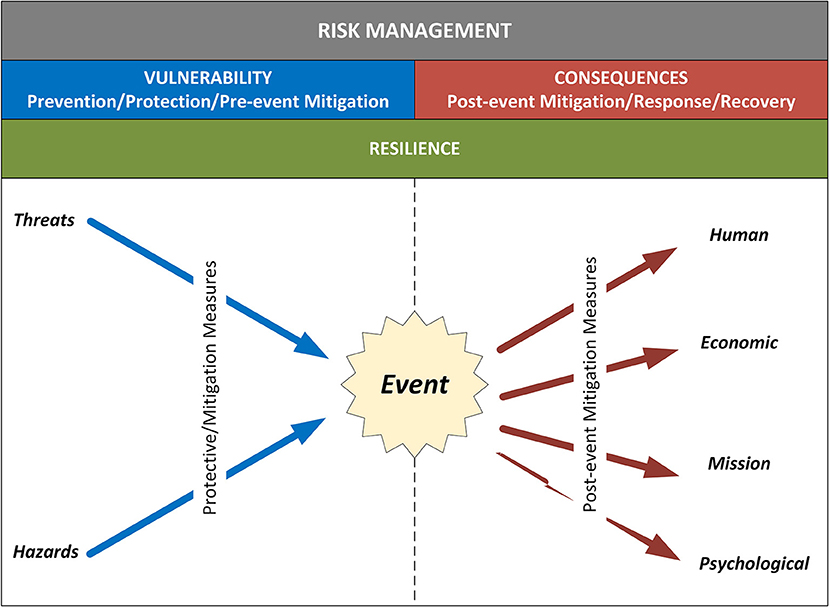 Here is one more journal article on the topic of cyberbiosecurity, this time discussing related vulnerabilities and the need for a resilient infrastructure to limit them. Schabacker et al. of the Argonne National Laboratory present a base "assessment framework for cyberbiosecurity, accounting for both security and resilience factors in the physical and cyber domains." They first discuss the differences between "emerging" and "converging" technologies and how they contribute to vulnerabilities, and then they lead into risk mitigation strategies. The authors also provide clear definitions of associated terminology for common understanding, including the topics of dependency and interdependency. Then they discuss the basic framework, keeping vulnerabilities in mind. They close with a roadmap for a common vulnerability assessment framework, encouraging the application of "lessons learned from parallel efforts in related fields," and reflection on "the complex multidisciplinary cyberbiosecurity environment."
Astrix Technology Group at 2019 BIOVIA User Conference
 Astrix Technology Group is pleased to be attending the 2019 BIOVIA User Conference in San Diego, CA from June 4-6 at the beautiful Paradise Point Resort. This year’s conference is a three-day, interactive event that will provide attendees with the opportunity to deepen their understanding of BIOVIA’s broad Scientific offering.
This year’s conference features:
- Plenary session featuring presentations from customer keynote speakers, BIOVIA executives and scientists
- Demonstrations of the latest BIOVIA technology and best practices
- Customer panels and case study presentations across the industries served
- Valuable scientist- with-scientist networking
- Insights into how BIOVIA solutions fit within the wider Dassault Systèmes ecosystem
- Opportunities for useful and informative discussions for product steering committees and segment interest groups
- Highly interactive, hands-on product training

Highlights from the 2019 Bio-IT World Conference & Expo
Since its inception in 2002, the annual Bio-IT World Conference & Expo has become a premier event for showcasing the wide-array of IT and informatics applications and enabling technologies that drive biomedical research, drug discovery & development, and clinical and healthcare initiatives.
[Read More]
LIMS and ELN Planning: Having the Right Non-Laboratory Team Members
 This blog post is part of an on-going series about the LIMS and ELN implementation journey, specifically the Do’s and Don’ts of the implementation planning phase. Today’s post discusses who should be on your project team from outside the lab. We’ll take a look at who should be on the team and some of the activities they should complete.
[Read More]
What is a Biobank?
A biobank is the centralized source of high-quality human biological specimens. Biobanks are often called biorepositories, however, there exists a fine distinction between the two. A biorepository involves the collection of plants, animals and other non-human samples; whereas a biobank mainly store biological samples obtained from humans. Biobanking is the process of collecting, storing and distributing human biological samples and related data for clinical research purpose.
To read the complete blog, please visit: https://freelims.org/blog/what-is-a-biobank.html

