

Laboratory Informatics Weekly Update – Volume 17, Issue 22
May 29, 2019 Laboratory Informatics Weekly Update Volume 17, Issue 22 In This Issue Upcoming Webinars 06/04/2019 - A Structured Approach to Implementing a LIMS06/06/2019 - Astrix Webinar – The Importance of Strategic Planning in Laboratory Informatics Projects06/12/2019 - Ensuring ISO 17025:2017 compliance in your Laboratory06/19/2019 - Webinar: Case Studies in Lab Acquisitions—The Impact on Clinical and Lab Operations Featured Books Laboratory Information Management for Cannabis Quality AssuranceThe Complete Guide to LIMS & Laboratory Informatics Journal Articles Chemometric analysis of cannabinoids: Chemotaxonomy and domestication syndromeIn this 2018 paper published in Scientific Reports, Mudge et al. of the University of…Chemometric analysis of cannabinoids: Chemotaxonomy and domestication syndrome
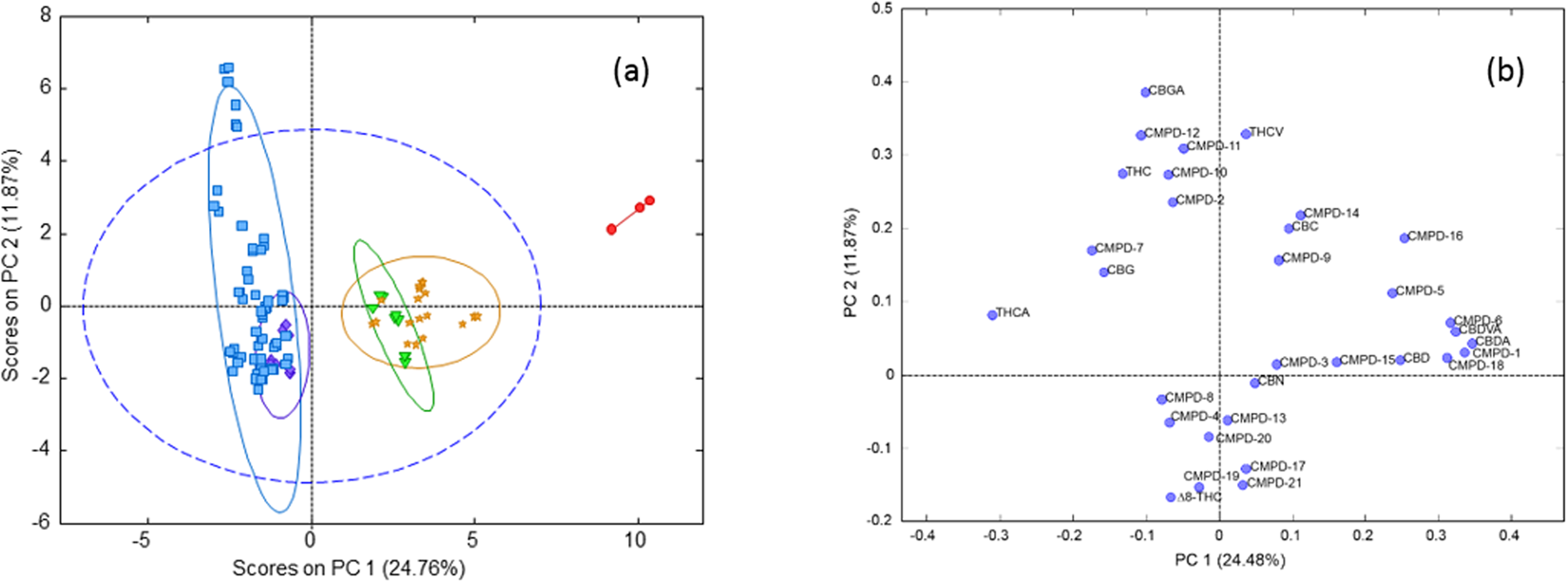 In this 2018 paper published in Scientific Reports, Mudge et al. of the University of British Columbia attempt to demonstrate how a growing loss of biodiversity is occurring across strains of Cannabis due to cultivation practices. The authors introduce current research on the "understanding of metabolite commonality and diversity within plant species" and hypothesize that simply measuring cannabinoid potency (Δ9-tetrahydrocannabinol or THC) and cannabidiol (CBD) content is not sufficient in painting a proper picture of cannabinoid composition and the resulting impact of breeding programs. The authors then get into the results of their analytical research, discuss their findings, and conclude that, at least in Canada, " evaluating single metabolite classes [of available Cannabis strains] does not provide sufficient information to understand the phytochemical diversity available."
5 Things to Document When Justifying a LIMS or ELN
 As clients go through the process of getting approval for laboratory informatics purchases, CSols experts often field questions like, “How much does a LIMS cost?” or “Is an ELN worth the investment?” or “What is the ROI for LIMS?”
[READ MORE]
CloudLIMS May 2019 newsletter is now out. It contains information about our latest releases.
CloudLIMS May 2019 newsletter is now out. It contains information about our latest releases: Version Release CloudLIMS version 1.83 , Poster - "Leveraging Cloud-based LIMS for Managing Tissue Samples at RGCIRC Biorepository to facilitate Cancer Research”, and a LIMS Tutorial.CloudLIMS Version 1.83 Released!
CloudLIMS, an advanced cloud-based SaaS LIMS, accelerates biobanking, clinical research, and testing laboratory operations by efficiently managing laboratory data, automating laboratory workflows, and following regulatory compliance such as ISO/IEC 17025:2017. The new version of CloudLIMS, version 1.83, is equipped with several new features and enhancements to better meet the data management and reporting requirements of testing laboratories, such as clinical, cannabis, agriculture and food & beverage. The highlights of this version are the ability to configure dependent analyte attributes for auto-calculation of complex test results and improvements in the test report template.
To read the complete blog, please visit: https://cloudlims.com/blog/releases/cloudlims-version-183.html
Laboratory Informatics Weekly Update – Volume 17, Issue 21
May 22, 2019 Laboratory Informatics Weekly Update Volume 17, Issue 21 In This Issue Upcoming Webinars 05/24/2019 - Free LABTrack Webinar – Justifying an ELN06/06/2019 - Astrix Webinar – The Importance of Strategic Planning in Laboratory Informatics Projects06/12/2019 - Ensuring ISO 17025:2017 compliance in your Laboratory06/19/2019 - Webinar: Case Studies in Lab Acquisitions—The Impact on Clinical and Lab Operations Featured Books LIMSjournal - Spring 2019Laboratory Information Management for Cannabis Quality Assurance Journal Articles National and transnational security implications of asymmetric access to and use of biological dataWe take another look at the security of biological data, this time through…National and transnational security implications of asymmetric access to and use of biological data
We take another look at the security of biological data, this time through the eyes of Berger and Schneck, and the discussion of major players such as China. The authors first introduce advances in biotechnology and benefits and challenges that arise from it today, including exploitation of the resulting data "by state actors, malicious nonstate actors, and hackers." They then discuss common approaches used to protect this soft of data, as well as the various vulnerabilities that come from (or from the lack of) those approaches. The authors close their paper by offering four specific strategies "toward protecting biological data from unauthorized acquisition and use, enhancing efforts to preserve data integrity and provenance, and enabling future benefit of biotechnological advances."Data Integrity: The Importance of a Quality Culture
 Verification of data integrity is a critical part of the FDA’s mission to ensure the safety, efficacy and quality of human and veterinary drugs, biological products, and medical devices. As such, the FDA’s expectation is that all data generated to support the quality of manufactured products is both reliable and accurate.
Compliance violations involving data integrity have led to numerous regulatory actions by the FDA in recent years, including warning letters, import alerts, and consent decrees. In 2018 alone, the FDA issued 54 warning letters that had references to data integrity and data management deficiencies in pharmaceutical companies, 10 of which were in the United States. An analysis of 2018 warning letters by FDAzilla found that 45% of GMP-related warning letters issued to pharmaceutical companies based in the United States included a data integrity deficiency.
[Read More]
ACD/Labs Announces Technology Modernization of its Molecular Property Calculators
New web-based technology facilitates ease of deployment and support for IT while continuing to deliver ACD/Labs' industry leading physicochemical, ADME, and toxicity calculators to scientistsSartorius Stedim Biotech Introduces New SIMCA® 16 Software for Multivariate Data Analytics
Sartorius Stedim Biotech (SSB), a leading international partner of the biopharmaceutical industry today announced the new SIMCA® 16 software for multivariate data analytics is available from its subsidiary Sartorius Stedim Data Analytics.How LIMS Supports Food Safety Best Practices
Food and beverage providers have a great responsibility to ensure the release of safe and healthy food products to the tables of consumers. With the globalization of the food supply chain in recent years, this responsibility has grown more complex as the progression from raw materials to production and packaging involves an increased number of players. Furthermore, public demand for a wide variety of foods that are available year-round create more opportunity for error.
To read the complete blog, please visit: https://cloudlims.com/blog/how-lims-supports-food-safety-best-practices.html
Back from the ISBER 2019 Annual Meeting & Exhibits
CloudLIMS is back from the ISBER 2019 Annual Meeting & Exhibits held in Shanghai, China. For the first time, ISBER hosted its annual meeting in the Asia Pacific region. More than 700 repository professionals participated in the annual meeting.
To read the complete blog, please visit: https://cloudlims.com/blog/back-from-isber-2019-annual-meeting-and-exhibits.html
Sapio Announces the Availability of Exemplar ELN Essentials SaaS Solution
Sapio Sciences is pleased to announce the availability of Exemplar ELN Essentials, a self-service SaaS solution.Autoscribe Informatics Further Expands and Strengthens European Team
 Autoscribe Informatics is delighted to announce the appointment of Jason Jones as Technical Sales Manager in the UK. The new position significantly strengthens Autoscribe Informatics capabilities and positions it for continued aggressive growth plans in the LIMS market during the next five years.
Multi-functional LIMS on show at LABVOLUTION
The latest release of the Matrix Gemini LIMS (Laboratory Information Management System) from Autoscribe Informatics fits perfectly with the strong focus on digital integration and connectivity to be found at LABVOLUTION 2019, Autoscribe will be at Hall 19, Stand D77, at LABVOLUTION, Hannover, Germany, 21 - 23 May 2019
Laboratory Informatics Weekly Update – Volume 17, Issue 20
May 15, 2019 Laboratory Informatics Weekly Update Volume 17, Issue 20 In This Issue Upcoming Webinars 05/22/2019 - Prepare for a Successful LabVantage LIMS Implementation05/24/2019 - Free LABTrack Webinar – Justifying an ELN06/06/2019 - Astrix Webinar – The Importance of Strategic Planning in Laboratory Informatics Projects06/12/2019 - Ensuring ISO 17025:2017 compliance in your Laboratory06/19/2019 - Webinar: Case Studies in Lab Acquisitions—The Impact on Clinical and Lab Operations Journal Articles Developing workforce capacity in public health informatics: Core competencies and curriculum designIn this 2019 paper published in Frontiers in Public Health, Wholey et al. propose a curriculum for an effective…Developing workforce capacity in public health informatics: Core competencies and curriculum design
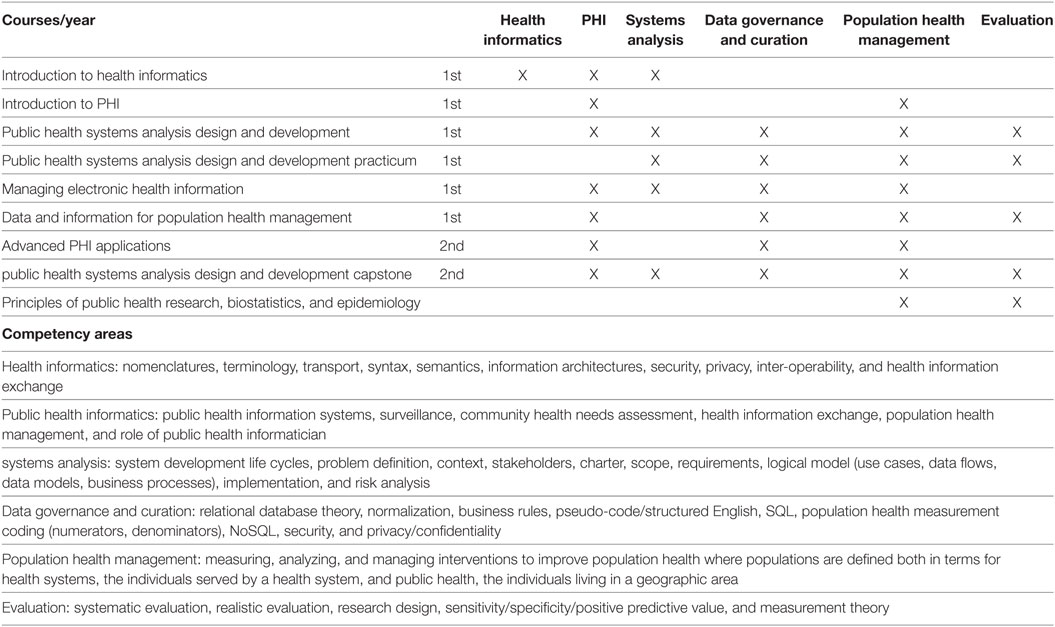 In this 2019 paper published in Frontiers in Public Health, Wholey et al. propose a curriculum for an effective and modern public health informatics (PHI) higher education program. Drawing competencies from computer, information, and organizational sciences, the researchers provide program design objectives, competencies, and challenges involved in implementing such a curriculum focused on the professional role of the informatician. Based on the information systems program of Carnegie Mellon, the authors report that their proposed curriculum has already seen success with its implementation at the School of Public Health at the University of Minnesota. They conclude that the proposed curriculum "is a starting point," keeping in mind that practices, knowledge, and technology change often, requiring program vigilance for improvement to best ensure "an effective and relevant workforce that can navigate the changing trends of public health to improve population health."
Meeting the Challenges of a Multi-Generational Workforce
Due to the 75 million strong Baby Boomer generation reaching retirement age, a wide range of industries in the United States are currently experiencing labor shortages. Combine this with the fact that, for a variety of reasons, many Baby Boomers are delaying their retirement and you have a recipe for significant generational diversity in the modern American workplace. It is not uncommon these days for a 20-year-old new hire to work with colleagues 50+ years their senior. Many companies are, in fact, now employing a workforce that spans four different generations.

