

Public health informatics, human factors, and the end-users
In this brief commentary article published in Health Services Research and Managerial Epidemiology, Matthews and Proctor of the University of Central Florida argue that simply building out public health informatics infrastructure isn't enough to ensure better public health data and improved health outcomes in the populace. The duo notes that when considering the build out of such technologies, it's vital the implementing organization(s) ask "who are we building this product for, and do we have the right information to back up our theories on implementation and use?” Improved technology skills within the public health workforce aren't enough, they argue, and important human factors research is being neglected when planning for systems implementations. After discussing the importance of health factors research in public health practice and what it should look like, they conclude with four critical recommendations for new and existing public health informatics implementations, including stakeholder collaboration, theoretically informed and validated data collection, proper documentation, and malleable but well-informed technology requirements statements for the future.Cell Therapies Documentation Specialist
Kalleid is looking for a Cell Therapies Documentation Specialist to join our team!
Kalleid, Inc., is a boutique laboratory IT consulting firm that has served the scientific community since 2014. We work across the value chain in R&D, clinical and quality areas to deliver support services for software implementations in highly complex, multi-site organizations.…
No Code Development Platform Approaches to LIMS Configuration
 In previous blogs we have looked at the differences between Configuration and Customization. In this blog we discuss Autoscribe Informatics’ approach to configuration using a No-Code Development Platform (NCDP), and why NCDP provides advantages over traditional approaches to LIMS configuration.
Quality 4.0 & Digitization – Key Consideration for the Life Sciences Industry
 The advances in technology in the past decade have resulted in a new industrial revolution. This is frequently referred to as the fourth industrial revolution or “Industry 4.0.” The revolution is being driven by the exponential growth of disruptive technologies and...
[Read More]
Are You Using Your LIMS Effectively?
 It’s simply a fact that while many laboratories have a laboratory information management system (LIMS), many simply do not use their LIMS to its fullest capacity and value – and in many cases, only a fraction of functionality is utilized. Typically, a LIMS selection process includes defining the requirements for the LIMS within the lab...
[Read More]
QLIMS 2021 Starter Pack Promotion
 Do you need a LIMS which does not cost a fortune and take months to implement?
QLIMS is a real SaaS LIMS reduced to only EURO 9.995 per year.
Valid until 15th of December 2021.
From Good to Great: The Evolving Journey of STARLIMS
 The past 5 years have been busy for STARLIMS. Being one of the global Laboratory Information Management Systems (LIMS) leaders in the market for over 3 decades, its evolving journey has picked up the pace. Back in 2016, STARLIMS set out on the journey from good to great, together with a tremendous amount of diverse and great customers globally.
Matrix Covid LIMS Provides Fast Start for Clinical Diagnostic Laboratories
 Autoscribe Informatics has announced the release of a LIMS specifically optimized for Covid testing. The Matrix Covid LIMS is pre-configured for fast deployment into laboratories performing Covid testing.
Laboratory Informatics Weekly Update – Volume 19, Issue 34
August 25, 2021 Laboratory Informatics Weekly Update Volume 19, Issue 34 In This Issue Featured Books LIMSjournal - Laboratory Technology Special Edition Featured Content 08/25/2021 - No Code Development Platform Approaches to LIMS ConfigurationIn previous blogs we have looked at the differences between Configuration and Customization. In this blog we discuss Autoscribe Informatics’ approach to configuration using a No-Code Development Platform (NCDP), and why NCDP provides advantages over traditional approaches to LIMS configuration. [Read More] 08/25/2021 - Quality 4.0 & Digitization – Key Consideration for the Life Sciences IndustryThe advances in technology in the past decade have resulted in a new…Software Developer
About Semaphore
Founded by software industry experts, Semaphore is the leading global provider of software solutions for high throughput and high complexity molecular diagnostic laboratories. Our clients are pushing the limits of genetic sequencing and other molecular diagnostic technologies to fight cancer, increase diagnostic accuracy, and improve health outcomes for the general population.…
Fostering reproducibility, reusability, and technology transfer in health informatics
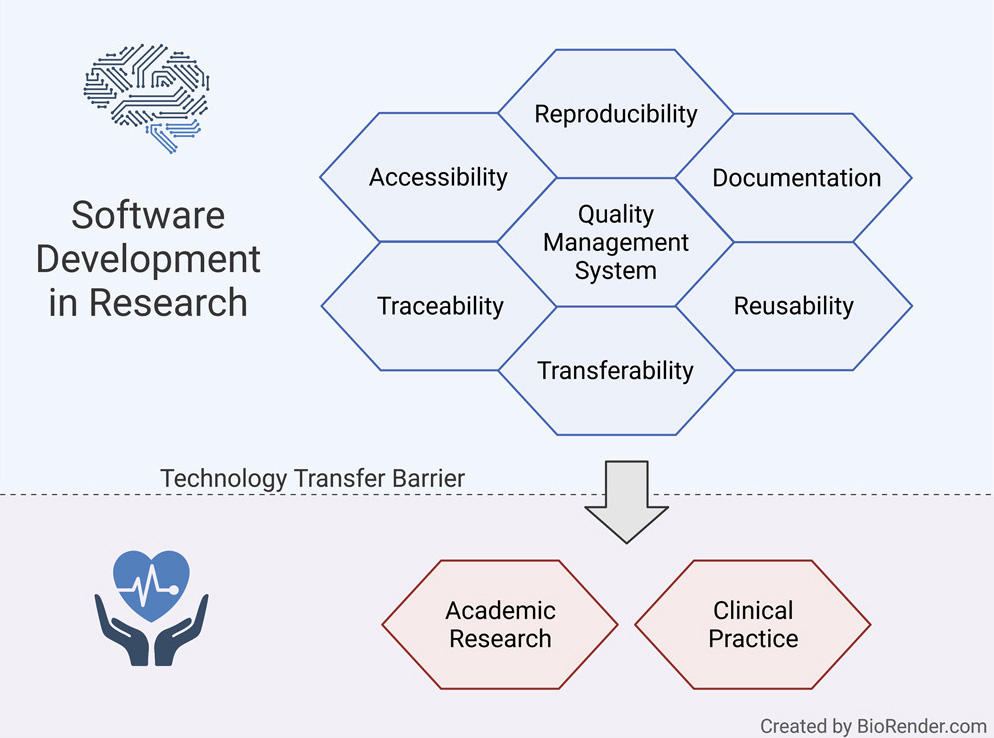 In this 2021 perspectives article published in the journal iScience, Hauschild et al. of Philipps University of Marburg lay out what they believe to be the first guidelines for an academic organization needing to incorporate a manageable and approachable quality management system (QMS) to support academic research, particularly that involving software developed in-house. Noting the challenges of academic scientific software development in health informatics and bioinformatics environments, the authors propose flexible quality management mechanisms as a means to "facilitate technology transfer as much as possible while keeping the overhead for researchers and developers in a well manageable range." After presenting the foundational guidelines for academic organizations to implement to not only promote reproducibility and reusability, but also support FAIR principles, the authors conclude that their guidelines effectively lower "the hurdle for research organizations to set up quality management" and " significantly facilitate reproducibility and reusability of scientific software and speed up technology transfer in a controlled and predictable way."
Project Manager
Kalleid is looking for a Project Manager to join our team!
Kalleid, Inc. is a boutique laboratory IT consulting firm that has served the scientific community since 2014. We work across the value chain in R&D, clinical and quality areas to deliver support services for software implementations in highly complex, multi-site organizations.…
OnQ Software at London Tech Week 2021
 We’re very happy to be taking part in London Tech Week in conjunction with Global Victoria and Creative Victoria who in partnership with the UK Department of International Trade will lead the virtual trade mission between 20-29 September.
Enabling Food Safety with SampleManager LIMS™
 The Food Safety Modernization Act of 2011 and the EFSA regulation of 2010 require food safety labs to be certified under ISO/IEC 17025 and ISO 22000. Hazard analysis and critical control points (HACCP) certification is part of these requirements. A SampleManager LIMS can play a key role in this certification process...
[Read More]
Introducing STARLIMS Lab Execution System (LES) V1.1
 The Informatics division of Abbott is pleased to announce the STARLIMS Laboratory Execution System (LES) v1.1. Built on the latest STARLIMS Quality Manufacturing QM 12.2, integrated in the results entry by run application.
How to Create a Successful Software Credentialing Program
 In today’s fast-paced, digitally enabled, remote-work world, competition for technology-related jobs is fierce. One way for technology professionals (e.g., IT professionals, scientists, instructional designers, etc.) to increase their attractiveness to hiring managers is to pursue credentials (e.g., certificates, certification, etc.) from software vendors or professional associations.
Laboratory Informatics Weekly Update – Volume 19, Issue 33
August 18, 2021 Laboratory Informatics Weekly Update Volume 19, Issue 33 In This Issue Featured Books COVID-19 Testing, Reporting, and Information Management in the Laboratory Featured Content 08/18/2021 - OnQ Software at London Tech Week 2021We’re very happy to be taking part in London Tech Week in conjunction with Global Victoria and Creative Victoria who in partnership with the UK Department of International Trade will lead the virtual trade mission between 20-29 September. [Read More] 08/18/2021 - Enabling Food Safety with SampleManager LIMS™The Food Safety Modernization Act of 2011 and the EFSA regulation of 2010 require food safety labs to be…When to Call in the Software Experts, and How to Get the Best Results
 The success of any clinical diagnostic laboratory software project depends on multiple factors—including how much preparation the lab has done before calling in a consultant, whether they have a thorough understanding of their requirements, and if they have identified specific areas where they need help. In this post, we describe several common scenarios where labs have reached out to us for help. We also include tips on how your lab can evaluate whether you’re ready to engage a contractor and what you can do to prepare so that time working with a consultant is well-spent and leads to an efficient, successful project.

Development of a core competency framework for clinical informatics
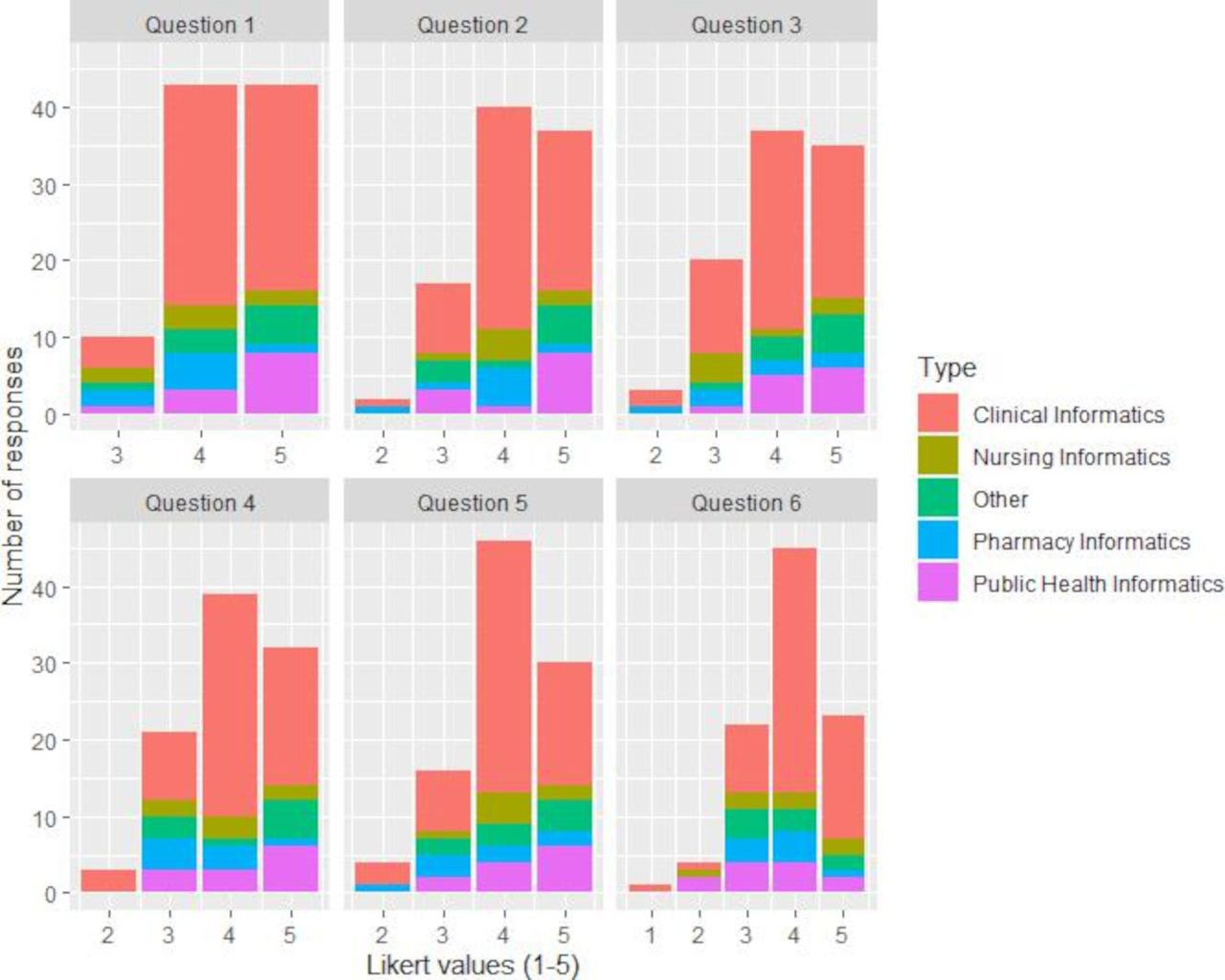 Clinical informatics continues to be a vital component for helping to ensure quality clinical outcomes for patients. But what of those who must learn about clinical informatics and what it entails? What of its core competencies for learning? Davies et al. explore this topic in the scope of the United Kingdom and the NHS, noting that no national core competency framework for clinical informatics exists in that country. The authors provide an introduction to clinical informatics and a background review of building their Core Competencies Project in an attempt to develop a U.K.-based competency framework. Their methods—heavily leaning on interviews and a survey—are then described, along with the resulting final competency framework. After a discussion of their results and their limitations, the authors conclude that their mixed-methods approach allowed them to "take a systematic and structured approach to co-designing the framework with no major issues," adding that the "combination of qualitative and quantitative methods contributed to the robustness of the final output." However, the application of the framework still requires professional considerations and attentiveness to the needs of all stakeholders to ensure it's not too unwieldy, which can lead to knowledge "burnout."

