Posted on November 16, 2022
By CSols Inc.
News

CSols Inc. was recently contracted to validate WinLIMS for Zosano Pharma, a clinical-stage biopharmaceutical company that planned to transition away from paper record-keeping and take advantage of the increased efficiency and data accessibility offered by
implementing a new laboratory information management system (LIMS). WinLIMS is a product of Quality System International Corporation (QSI).
[Read More]
Posted on November 16, 2022
By Agilent
News

Agilent Technologies Inc. (NYSE: A) today announced the release of the AssayMAP Bravo Protein Sample Prep Workbench 4.0 software. This release adds 21 CFR Part 11 compliance-enabling features that allow AssayMAP Bravo-based automated sample preparation in workflows across the biopharma drug development process.
[Read More]
Posted on November 16, 2022
By Corinne Jones
Newsletter
November 16, 2022 Laboratory Informatics Weekly Update Volume 20, Issue 46 In This Issue Featured Content 11/16/2022 - LIMS Selection Workbook for All LaboratoriesWhen planning a project of any type, it makes perfect sense to initially research and detail the specifics of the project to lay a solid foundation to work from. This is particularly true with software development, where careful initial planning is vital to ensuring the project is legitimate in the eyes of critical stakeholders and will meet specified goals. This demands the creation of a software requirements specification. Many specification documents for laboratory informatic systems have…
Posted on November 14, 2022
By LabLynx
Journal articles
In this 2022 journal article published in
Advances in Sample Preparation, Capetti
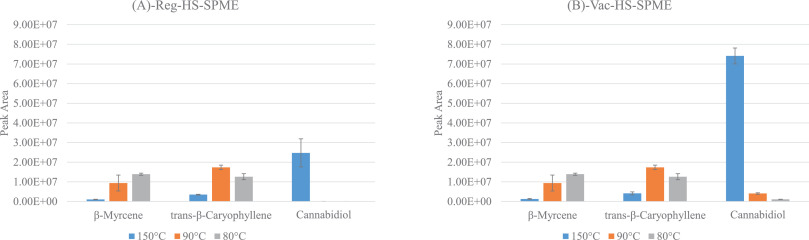
et al. of Università di Torino investigate the advantages and disadvantages that vacuum-assisted headspace solid-phase microextraction (Vac-HSSPME) may lend to the process of
Cannabis inflorescence preparation and subsequent testing, by gas chromatography–mass spectrometry (GC-MS), in order to accurately characterize both terpenoid and cannabinoid profiles. After providing an introduction on the topic, the authors describe the materials and methods used, as well as the results of their study. They conclude that "compared to standard HSSPME, vacuum conditions in the headspace ensure the fast recovery of cannabinoid markers at considerably lower sampling temperature (i.e., 90°C) that do not discriminate the most volatile fraction nor cause the formation of artifacts when the sampling time is minimized." They add that, in combination with GC-MS, Vac-HSSPME can prove to be "fast, totally automatable, and solvent-free," representing a more green analytical approach to
Cannabis inflorescence testing.
Posted on November 14, 2022
By Shawn Douglas
Education, Tutorials and Classes

This is a University of Adelaide course that is released on the edX platform. The ten-week course is designed to provide greater "understanding of the various applications of big data methods in industry and research." The course is free to take, with a Verified Certificate of completion available for $199. This course is also part of Adelaide's Big Data MicroMasters program. The course requires on average eight to ten hours a week of effort. Access to the class began in the fall of 2022, and the free audit track is available until January 23, 2023.
Posted on November 9, 2022
By Kalleid
Blog

No organization, no matter how large or small, is safe from missteps in their efforts to progress and evolve. Mergers and acquisitions are the largest and loftiest of all change efforts a company can set out to achieve, with roughly 70 to 90 percent of them failing abysmally according to the Harvard Business Review. Failure isn’t limited to large-scale change pursuits, though. HBR cites studies that indicate a staggering 60-70 percent rate of failure for all organizational change projects
[Read More]
Posted on November 9, 2022
By LabLynx
Blog

With all that’s going on in the world and its economies today, there’s no better time for manufacturers to turn to robotics solutions. From labor shortages and inflated material costs to supply chain backups and a potential recession, manufacturers are faced with many challenges. Those manufacturers who must design, produce, and test their products in controlled laboratory environments are no exception.
[Read More]
Posted on November 9, 2022
By Astrix Technology Group
Blog

In recent years, there has been an increased focus on
environmental, social, and governance (ESG) issues in the business world. From large corporations to small businesses, more and more organizations are looking for ways to incorporate ESG Initiatives principles into their operations. But what does this shift mean for the workforce? How are employees responding to these changes – and what does it mean for your business?
[Read More]
Posted on November 9, 2022
By onQ Software
News

We are pleased to announce the addition of our new LES (laboratory execution system) functionality to the QLIMS platform further enabling Lab 4.0 and the paperless, digital laboratory.
[Read More]
Posted on November 9, 2022
By Labbit
Blog

Whether you’re choosing your first LIMS or thinking of upgrading to a different platform, it’s tempting to focus solely on product features and capabilities. But that’s only looking at part of the equation. It’s equally important to consider the services available for the product through the vendor and/or third parties.
[Read More]
Posted on November 9, 2022
By Clinisys
News

Clinisys’
recent merger with
Sunquest Information Systems & the subsequent acquisition of
HORIZON Lab Systems, and
ApolloLIMS has created the world’s largest laboratory informatics provider. Together now as Clinisys, we have over 3,000 customers in 34 countries, & our solutions power laboratories across the world that span healthcare, life sciences, environmental sciences, & public health.
[Read More]
Posted on November 9, 2022
By Agaram Technologies
Blog

Logilab SDMS has been designed and demonstrated to be fit for purpose in a GLP environment and introduced in a pre-planned manner. The system’s operational validation process during its original product development as well as any project implementation stage includes requirement specification, design documentation, industry coding standards, unit and system testing processes with test documents and reports.
[Read More]
Posted on November 9, 2022
By Astrix Technology Group
Blog

Since
Pharmacovigilance programs are designed to manage—if not prevent—surprises, preparedness is a focus of enabling vigilance. To support executives tasked with managing their company’s PV and Safety risk, Astrix has developed the first-of-its-kind Program Preparedness Self-Assessment. Just as Open-Source software is code that is designed to be publicly accessible, the Astrix PV Preparedness Self-Assessment is being made freely available for use by the PV/Safety community.
[Read More]
Posted on November 9, 2022
By Corinne Jones
Newsletter
November 9, 2022 Laboratory Informatics Weekly Update Volume 20, Issue 45 In This Issue Featured Content 11/09/2022 - LIMS Selection Workbook for All LaboratoriesWhen planning a project of any type, it makes perfect sense to initially research and detail the specifics of the project to lay a solid foundation to work from. This is particularly true with software development, where careful initial planning is vital to ensuring the project is legitimate in the eyes of critical stakeholders and will meet specified goals. This demands the creation of a software requirements specification. Many specification documents for laboratory informatic systems have…
Posted on November 7, 2022
By LabLynx
Journal articles
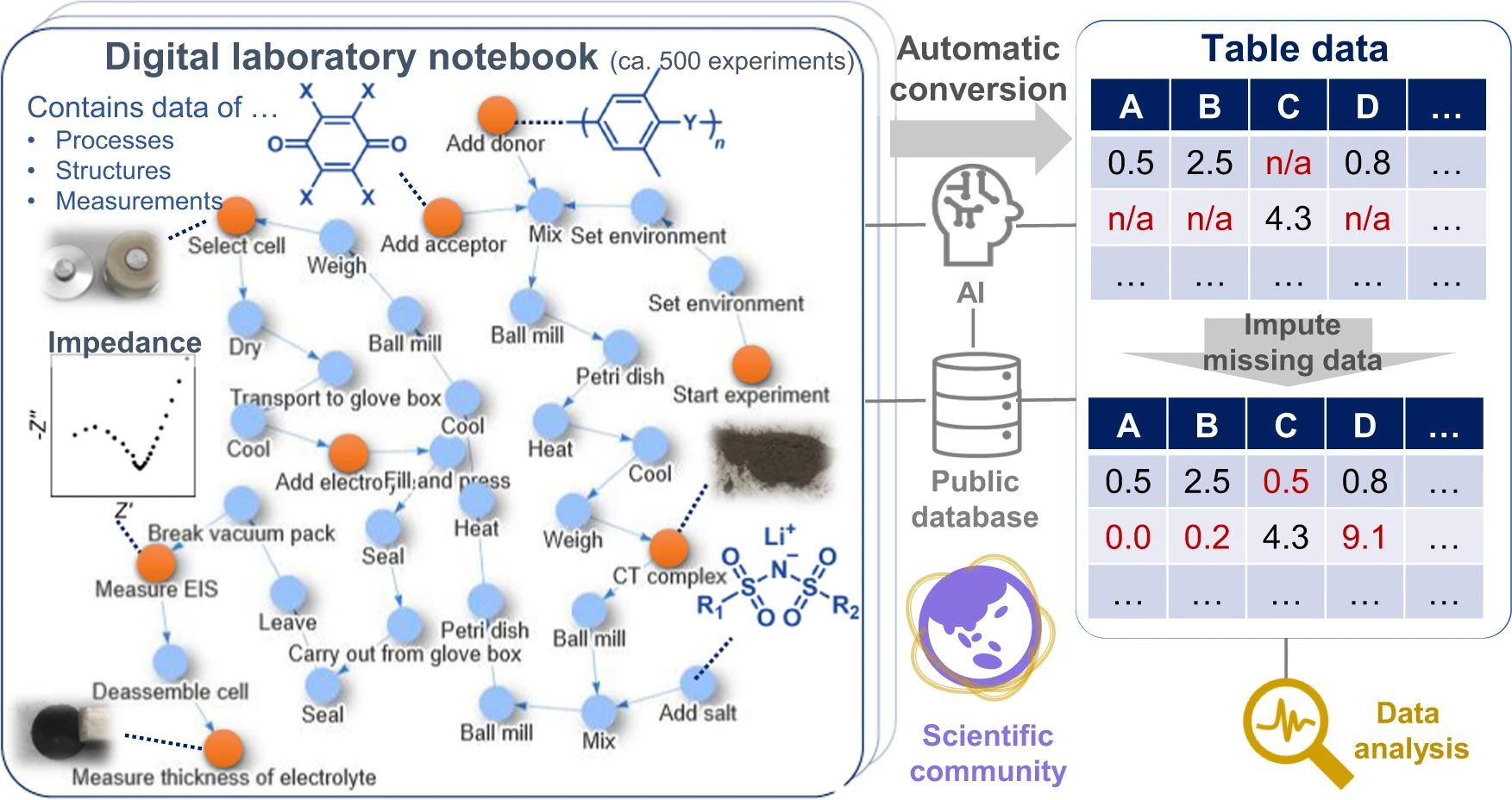
Like many other scientific disciplines, materials science is seeing many advances thanks to advanced computer systems that records large volumes of data and analyze it with speed. However, this data capture, analysis, and sharing has its challenges in material science, requiring more sophisticated systems. Hatakeyama-Sato
et al. highlight this fact with their materials informatics software platform that "losslessly describes the relationships of structures, properties, and processes as graphs in electronic laboratory notebooks (ELNs)." After describing the impetus for developing the platform, the authors explain its use within the context of materials informatics using a specific use case involving hundreds of experiments related to organic superionic glassy conductors. The authors include the methodology for those experiments and a wealth of supplementary information, while concluding their platform enables direct data sharing of material research, which "will improve scientific communication and accelerate integration of material knowledge."
Posted on November 2, 2022
By LabLynx
Blog

Can a laboratory operate successfully without the use of laboratory informatics? To some, the answer is always “yes, informatics makes it easier, but it isn’t a requirement”, and that is true in a technical sense, but in reality, the practical answer is “not anymore”. The use of informatics in the environmental industry is an example we’ll be looking at in this piece.
[Read More]
Posted on November 2, 2022
By Labbit
Blog

At Semaphore Solutions, we’re conducting UX research for our Labbit Intelligent Lab System, a full order-to-result software solution for molecular diagnostic laboratories.
Our goal is to make Labbit one of the best LIMS in the world — from its architecture and infrastructure right through to the user experience. We want your input!
[Read More]
Posted on November 2, 2022
By Astrix Technology Group
Blog

The United States is home to some of the world’s leading life science hubs. From Boston to San Francisco, these cities attract top talent and investment dollars in the life sciences sector. Here are ten of the top locations for life science hubs in the United States.
[Read More]
Posted on November 2, 2022
By Agaram Technologies
Blog

Agaram Technologies’ Logilab SDMS is a generic software application designed to handle scientific instrument data from any analytical instrument and can facilitate data management with access control. Logilab SDMS will perform scheduled data capture, cataloguing, archival and facilitate restoring data and has capabilities to extract data of interest from instrument output to be pushed to external systems like Electronic Note Book (ELN), Laboratory Information Management System (LIMS) and Enterprise Resources Planning (ERP).
[Read More]
Posted on November 2, 2022
By Strateos, Inc.
Blog

The collaborative spirit in the life sciences sector is at an all-time high. The Lab of the Future Congress examines the role of new and emerging technologies to unlock advancements in the scientific research lab through the digitalization of processes in the modern laboratory to better handle challenges now and in the future. Strateos had the opportunity to connect with industry peers at our booth during this year’s congress in Amsterdam.
[Read More]


