

WED. DECEMBER 7, 2016, 6 PM – 8 PM EST: Networking and Cocktails for Drug Discovery Scientists
CAMBRIDGE, MASSACHUSETTS: Join Benchling for an evening of cocktails with greater Boston area-based scientists. Connect with biology industry scientists from companies such as Editas, Synlogic, and Voyager Therapeutics, as well as researchers from institutions such as MIT and Harvard.
DUE: JANUARY 13, 2017: Request for Information – Laboratory Information Management System (LIMS)
The Agri-Food Laboratories (AFL) of the Department of Agriculture and Forestry (Alberta, Canada) require a new Laboratory Information Management System (LIMS) to replace the legacy system known as the Agri-Food Information Management System (AIMS).DUE DECEMBER 16, 2016: Lab Information Management System
Colorado Department of Public Health & Environment (CDPHE)Autoscribe Informatics Expands Into New UK Premises
Autoscribe Informatics, developer and supplier of the Matrix Gemini Laboratory Information Management System (LIMS), has moved to larger premises in the UK. As from 21st November, 2016, the company’s headquarters are located in Aldermaston, near Reading in the UK. This is a seamless transition for customers as the telephone number, e-mail addresses and website URL all remain unchanged.
Genohm wecomes new Team members
Genohm has new Team members in Durham, Ghent and Lausanne. Check them out!
The impact of electronic health record (EHR) interoperability on immunization information system (IIS) data quality
Moving data between systems via an electronic exchange (interoperability) while keeping it clean is always a challenge. Data exchanged between electronic health records (EHR) and immunization information system (IIS) is no exception, as Woinarowicz and Howell demonstrate in this 2016 paper published in Online Journal of Public Health Informatics. Working for the North Dakota Department of Health, Division of Disease Control, the duo explain how setting up their IIS for interoperability with provider EHRs "has had an impact on NDIIS data quality." They conclude: "Timeliness of data entry has improved and overall doses administered have remained fairly consistent, as have the immunization rates ... [but more] will need to be done by NDIIS staff and its vendor to help reduce the negative impact of duplicate record creation, as well as data completeness."
The impact of electronic health record (EHR) interoperability on immunization information system (IIS) data quality
Moving data between systems via an electronic exchange (interoperability) while keeping it clean is always a challenge. Data exchanged between electronic health records (EHR) and immunization information system (IIS) is no exception, as Woinarowicz and Howell demonstrate in this 2016 paper published in Online Journal of Public Health Informatics. Working for the North Dakota Department of Health, Division of Disease Control, the duo explain how setting up their IIS for interoperability with provider EHRs "has had an impact on NDIIS data quality." They conclude: "Timeliness of data entry has improved and overall doses administered have remained fairly consistent, as have the immunization rates ... [but more] will need to be done by NDIIS staff and its vendor to help reduce the negative impact of duplicate record creation, as well as data completeness."DUE: JANUARY 19, 2017: Construction Materials Testing Laboratory Information Management System
State of Maine Department of TransportationLaboratory Informatics Weekly Update – Volume 14, Issue 46
November 30, 2016 Laboratory Informatics Weekly Update Volume 14, Issue 46 In This Issue Featured Journal Article The impact of electronic health record (EHR) interoperability on immunization information system (IIS) data quality Moving data between systems via an electronic exchange (interoperability) while keeping it clean is always a challenge. Data exchanged between electronic health records (EHR) and immunization information system (IIS) is no exception, as Woinarowicz and Howell demonstrate in this 2016 paper published in Online Journal of Public Health Informatics. Working for the North Dakota Department of Health, Division of Disease Control, the duo explain how setting up their…The impact of electronic health record (EHR) interoperability on immunization information system (IIS) data quality
 Moving data between systems via an electronic exchange (interoperability) while keeping it clean is always a challenge. Data exchanged between electronic health records (EHR) and immunization information system (IIS) is no exception, as Woinarowicz and Howell demonstrate in this 2016 paper published in Online Journal of Public Health Informatics. Working for the North Dakota Department of Health, Division of Disease Control, the duo explain how setting up their IIS for interoperability with provider EHRs "has had an impact on NDIIS data quality." They conclude: "Timeliness of data entry has improved and overall doses administered have remained fairly consistent, as have the immunization rates ... [but more] will need to be done by NDIIS staff and its vendor to help reduce the negative impact of duplicate record creation, as well as data completeness."
SmartLabFlow Launches With its First Customer
SmartLabFlow, a recently launched process management platform created specifically for medical, environmental, and microbiological laboratories, has launched with its first customer: Ultimate Labs.
LIMS Programmer-Analyst
LIMS Programmer-Analyst Direct Hire Opening in San Diego (Sorrento Valley)
This Biotech Company currently uses STARLIMS and they’re looking for somebody with 2+ years LIMS experience to come in, run with it and own the installation, customization and deployment of a new LIMS system which will be used across the companies facilities in San Diego, Germany and Japan.…
Abbott Informatics partners with Synergy
The energy company was looking for a LIMS platform that could automate its routine laboratory test scheduling, enable direct results captured from analytical instrumentation into the software, and reduce the amount of manual data input, report writing, and reliance on spreadsheets. The ultimate goal was to deploy a single LIMS system that would simplify data collation and visualisation, interrogation and analysis, and facilitate more informed decision making.
QIAGEN and CosmosID Launch New Plugin for Metagenomics Analysis
QIAGEN and CosmosID, a leading genomic big data company, today announced the launch of a metagenomics analysis plugin for the QIAGEN Microbial Genomics Pro Suite and CLC Genomics Workbench. The launch of the Cosmos ID plugin expands QIAGEN’s industry leading platform for NGS bioinformatics and strengthens its role as a provider of Sample to Insight metagenomics solutions.
Bioinformatics workflow for clinical whole genome sequencing at Partners HealthCare Personalized Medicine
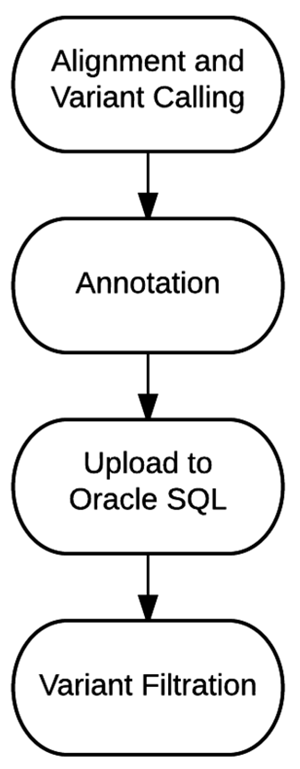 Genomic data is increasingly used to provide better, more focused clinical care. Or course, its associated datasets can be large, and it can take significant processing power to utilize and manage effectively. In this 2016 paper published in Journal of Personalized Medicine, Tsai et al. of Partners Healthcare describe their "bioinformatics strategy to efficiently process and deliver genomic data to geneticists for clinical interpretation." They conclude that with more research comes improved workflows and "filtrations that include larger portions of the non-coding regions as they start to have utility in the clinical setting, ultimately enabling the full utility of complete genome sequencing."
LIMS Support Specialist
Position Code: PWR4522
Position Title: LIMS Support Specialist
Position Length: 1+ Years
Position Status: W2
# of Positions: 1
Position Location: Andover, MA
**To apply to this position email your resume to resumes@breakthroughit.com and answer the following questions. (Alternatively, you can apply directly to this position here: http://www.breakthroughit.com/careerportal/#/jobs/48…
JANUARY 23 – 26, 2017: NELAC – Forum on Environmental Accreditation
With over 250 attendees, the Forum on Environmental Accreditation is the only conference that brings laboratories, regulatory agencies, data users, sampling firms, and many other organizations to discuss cutting-edge changes in environmental laboratory accreditation and future directions in policy that will have a national impact. In addition to the committee meetings and general sessions, attendees will have the opportunity to attend technical training courses, see the latest products and services in the industry and be able to network with peers.
NOVEMBER 27, 2016: Radiological Society of North America – RSNA 2016
RSNA 2016 invites radiologists to think Beyond Imaging and explore new ways to collaborate. From discovering unexpected learning opportunities to broadening participation in the larger medical community, this year’s theme encourages radiologists to envision their profession beyond imaging.
RSNA 2016 convenes radiology professionals from around the globe to gather knowledge through educational courses, explore the latest innovations presented by technical exhibitors, discover groundbreaking research from scientific paper presentations, and participate in networking opportunities. Don’t miss radiology’s premier annual event!
Pathology report data extraction from relational database using R, with extraction from reports on melanoma of skin as an example
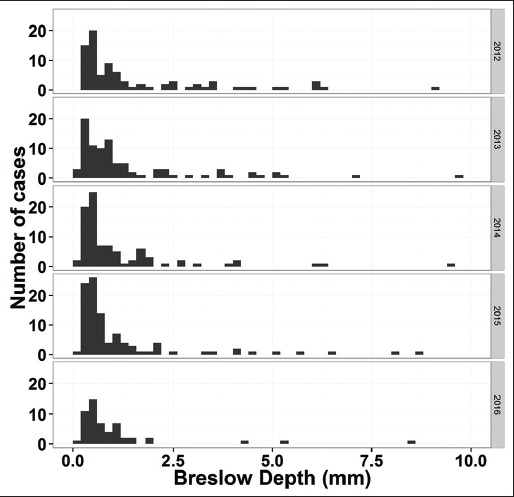 Synoptic reporting is an important part of not only managing patient testing information but also reporting that data for research and data mining purposes. As such, the extraction of particular elements from these types of reports — including those recording major cancer information — has historically been difficult. Recent developments in extracting key information from synoptic reports have made it easier, however, including the use of the R programming language. In this paper by J.J. Ye, the process of extracting melanoma data from pathology datasets is used to describe a broader, wide-ranging application of R and the associated RODBC package for extracting useful data from synoptic reports. Ye concludes: "This approach can be easily modified and adopted for other pathology information systems that use relational database for data management."
NOVEMBER 16, 2016, 2:00 PM EST: Improving the Flexibility and Efficiency of STARLIMS™ Reporting
The reporting needs of a laboratory organization can be very broad, such that the development of reports can take up a considerable amount of time and effort, both during the initial STARLIMS™ implementation and on an on-going basis. This effort can be minimized while optimizing the flexibility of your reporting capabilities in many ways. Join this webinar to learn more.

