

LIMS Master Data Best Practices Part 4 – Quality Control
 So far in our LIMS master data best practices series, we have discussed how to define master data and create a Master Data Plan, how to effectively extrapolate master data from current records to configure your system, and how to configure your master data so it will be easy to maintain and scale as your organization grows and the system matures.
The Master Data Plan, along with other documents we have discussed in previous blogs in this series, are part of an overall quality control process.
[Read More]
Integrating Multiple LIMS into a Single System
In today’s global economy, mergers and acquisitions have become a dominant strategy to improve profitability, maintain competitive edge, and expand services and reach. This practice is common in several industries such as pharmaceutical, biotech, food and beverage, oil and gas, and others. While corporate mergers certainly can provide several benefits for the organizations involved, they can also present significant challenges, not the least of which is harmonization and optimization of the laboratory environment. This often leads to the need to the need for integrating multiple LIMS apps to support a global enterprise.
Scientific organizations that have recently undergone a merger, and oftentimes even those that have not, are frequently in the situation where different labs in different locations are using different LIMS technologies/solutions. This scenario serves to inhibit process efficiency, cross-organization data reporting, regulatory compliance, and can result in high IT demand.
Given the advanced capabilities of modern LIMS, and the competitive advantages gained through establishing digital continuity across the product lifecycle, there is a strong incentive for modern scientific organizations with disparate LIMS to harmonize their laboratory environment by integrating the multiple LIMS into a single system. In this blog, we will discuss best practices for a project of this nature.
[Read More]
What Is the Value of a LIMS?
 People have been asking, “What is a LIMS?,” practically since LIMS was invented. (We’ve asked it ourselves!) In 1998, Dr. Alan McLelland of the Institute of Biochemistry, Royal Infirmary, Glasgow, penned his famous—at least in informatics circles—essay offering four viewpoints on this question; those of the analytical staff, the laboratory manager, the IT group, and the finance team.
[Read More]
ERS Genomics Announces Agreement With New England Biolabs to Commercialize CRISPR Gene Editing Tools and Reagents
ERS Genomics Limited, today announced it has signed an agreement with New England Biolabs (NEB®), a global leader in the discovery and production of enzymes for molecular biology applications, granting NEB rights to sell CRISPR/Cas9 tools and reagents.Lifepoint Informatics Launches App for DrChrono EHR Users to Manage Lab Reports
DrChrono Inc., the company enabling the medical practice of the future, announced today a new partnership with Lifepoint Informatics, a leader in healthcare IT focusing on laboratory outreach connectivity, health information exchange and clinical data interoperability.Ovation Announces the Advent of Automated System Validation to Ease Regulatory Burden of Clinical Laboratory Teams
-Ovation.io, Inc. (Ovation), a next-generation clinical informatics company, today announced a revolutionary new validation tool for clinical laboratories called Automated Systems Validation (ASV). ASV allows laboratories to automate their computer system validation each time a new iteration of the software is released, removing a painful regulatory burden from the lab.Laboratory Informatics Weekly Update – Volume 18, Issue 2
January 14, 2020 Laboratory Informatics Weekly Update Volume 18, Issue 2 In This Issue Upcoming Webinars 01/22/2020 - Computer System Validation – The Big Picture01/28/2020 - Astrix Webinar – Supporting Your Laboratory Informatics Ecosystem with Laboratory Informatics as a Service (LIaaS) Journal Articles Haves and have nots must find a better way: The case for open scientific hardwareOpen-source software has been a topic of discussion for decades, both as a model of software development and distribution and as a potential for what could be done with it. But the concept of open-source hardware, particularly in the field of science,…What is the “source” of open-source hardware?
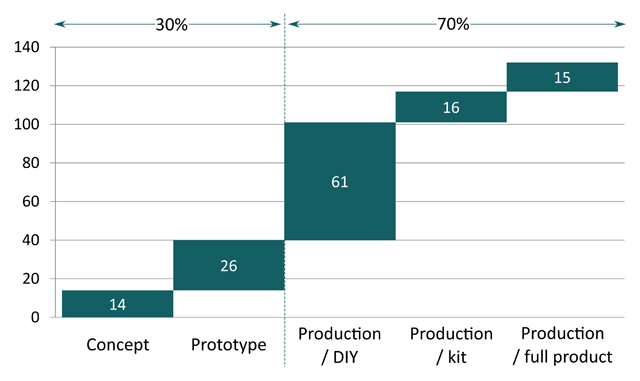 While the definitions surrounding "open-source" software have largely sufficed for such software, the term as applied to tangible hardware products has been insufficient, according to arguments by Bonvoisin et al. in this 2017 paper published in the Journal of Open Hardware. Their work turns to analysis of 132 proclaimed open-source " non-electronic and complex open-source hardware products." After lengthy background information and discussion of their methods and results, the authors conclude: "The empirical results strongly indicate the existence of two main usages of open-source principles in the context of tangible products: publication of product-related documentation as a means to support community-based product development and to disseminate privately developed innovations. It also underlines the high variety of interpretations and even misuses of the concept of open-source hardware."
Aglaia Oncology Funds and Sinzer – Grant Thornton Launch Dedicated Life Sciences Impact Measuring and Reporting Suite
Dutch life sciences investor Aglaia Oncology Funds, today officially launches its ‘Life Sciences Impact Suite’, a groundbreaking tool enabling measurement and reporting of the social impact realized by investments, alongside financial performance. The suite has been developed in collaboration with consultancy firm Sinzer – Grant Thornton, as a means to accelerate the impact movement and to challenge the Fund industry to demonstrate value beyond financial profits.Benefits you should bank on by using a LIMS

For our final blog post of 2019 we thought to give some information for those either investigating whether to buy a LIMS or perhaps who have one, but feel they aren't maximising their return on investment (ROI) some food for thought.
LIMS should generate solid ROI and below are key areas:
With constant advances in technology the needs of a laboratory are frequently changing, but what remains constant is the need for end-to-end traceability of samples, data processing capabilities and report generation. This is where a LIMS comes in, it assists laboratories in monitoring workflows, managing data and inventory, assigning tasks, storing data and automating the reporting process.
Whether clinical, analytical or research, all laboratories operate under a time constraint of having to provide information to a customer, client or management as business decisions are then made based on that information. To make such information available instantly is nearly impossible without a LIMS, traditional methods of record-keeping using excel or paper-based files makes it impossible to source the required data.
[Read More...]
Laboratory Relocation Best Practices
The pace of change in the pharmaceutical and biotech industries means that most companies eventually must face the daunting task of relocating their laboratories. Whether due to mergers, acquisitions, funding changes or simply organic growth, a laboratory relocation is an extraordinarily complex undertaking that will impact your laboratory’s scientists, research and business goals.
A laboratory relocation involves moving high-end analytical instrumentation, hazardous materials, products and samples, and sometimes even live animals. It will require shutting down laboratory equipment, along with safely packing and shipping instruments, samples, materials, devices, computer hardware and potentially data to the new location. Once all necessary items have been moved to the new location, they will need to be unpacked and equipment will need to be requalification and/or validated.
Whether you are moving your lab across the hall, street or country, a laboratory relocation is never a routine exercise. The reality is that no two laboratories are alike – each will have a set of unique challenges that will need to be addressed with care. In this blog, we will discuss critical best practices that should be followed in all cases in order to make sure your laboratory relocation is a smooth, safe and efficient process that minimizes downtime and disruption for your business.
[Read More]
LIMS Master Data Best Practices Part 3: Maintenance and Scalability
Master data design has very important impacts over the lifecycle of a LIMS, as nearly every piece of functionality in the system revolves around the design of the master data. One of the most important aspects to any LIMS implementation is designing the master data so that it is easy to maintain and scale as the organization grows and business needs change. Some of the key benefits of configuring your master data to be maintainable and scalable include:
- Easier to add and/or modify master data down the road
- Increased system efficiency and reliability
- Future system enhancements are less resource intensive
- Better management for large volumes of data
- Increased user acceptance
- Increased ROI
[Read More]
Enhanced QC Functionality for Matrix Gemini LIMS
 The latest version of the Matrix Gemini LIMS software from Autoscribe Informatics provides significant enhancements which keep Matrix Gemini amongst the most innovative LIMS solutions currently available. Key new features are now included in the runsheet, graphical configuration tools and substance management functionality.
Further Improving Efficiency in Laboratory Testing
The Instrument Calibration & Maintenance System (ICMS) for the Matrix Gemini LIMS from Autoscribe Informatics provides busy laboratories with another tool to improve quality and compliance as well as drive efficiency. Proactively scheduling the calibration and maintenance of every piece of equipment in a timely manner ensures maximum instrument availability within the laboratory. Their operational status and audit history can also be tracked automatically to prove compliance. It also avoids entering results against an un-calibrated instrument or one that has not been maintained correctly by providing immediate feedback on availability at the time the results of a particular analysis are entered.
Disaster Recovery Plans for Your LIMS or ELN
Imagine…historic rainfalls flood your production facility and its lab, while knocking out power for miles around. Your analytical equipment is ruined. Your server is under water. Or, wildfires ignite suddenly after a lightning strike or car accident. The fires spread rapidly. Lab personnel have just enough time to escape with what they can carry. Your facility is burned to the ground. These are just two scenarios that have occurred in the last couple of years. And all of us have experienced a network failure or the dreaded blue screen of death at some point. System downtime is going to happen. You may even have a total loss on your hands in the future. How you plan for it is the key.
Do you know how to protect your LIMS or ELN in case of a catastrophic failure? It’s important to have a detailed plan in place in case a disaster happens.
[Read More]
Enhanced Chromatography Data System Software Delivers Improved Efficiency and Compatibility Across the Latest Generation of Analytical Instruments
 Thermo Fisher Scientific and Agilent Technologies renew commitment to third-party instrument control, maximizing usability in modern chromatography software solutions.
CompuGroup Medical Streamlines its Laboratory Software
ompuGroup Medical today announces new features and enhancements to CGM LABDAQ® Laboratory Information System and CGM LABNEXUS® Laboratory Outreach Solution.Laboratory Informatics Weekly Update – Volume 18, Issue 1
January 7, 2020 Laboratory Informatics Weekly Update Volume 18, Issue 1 In This Issue Upcoming Webinars 01/22/2020 - Computer System Validation – The Big Picture01/28/2020 - Astrix Webinar – Supporting Your Laboratory Informatics Ecosystem with Laboratory Informatics as a Service (LIaaS) Journal Articles ChromaWizard: An open-source image analysis software for multicolor fluorescence in situ hybridization analysisIn this brief article published in Cytometry Part A, researchers at the Austrian Centre for Industrial Biotechnology present their open-source multiplex fluorescence in situ hybridization (M‐FISH) software for chromosome painting. The tool—ChromaWizard—acts as a free and open-source option for hybridization analysis, integrating "image processing,…From command-line bioinformatics to bioGUI
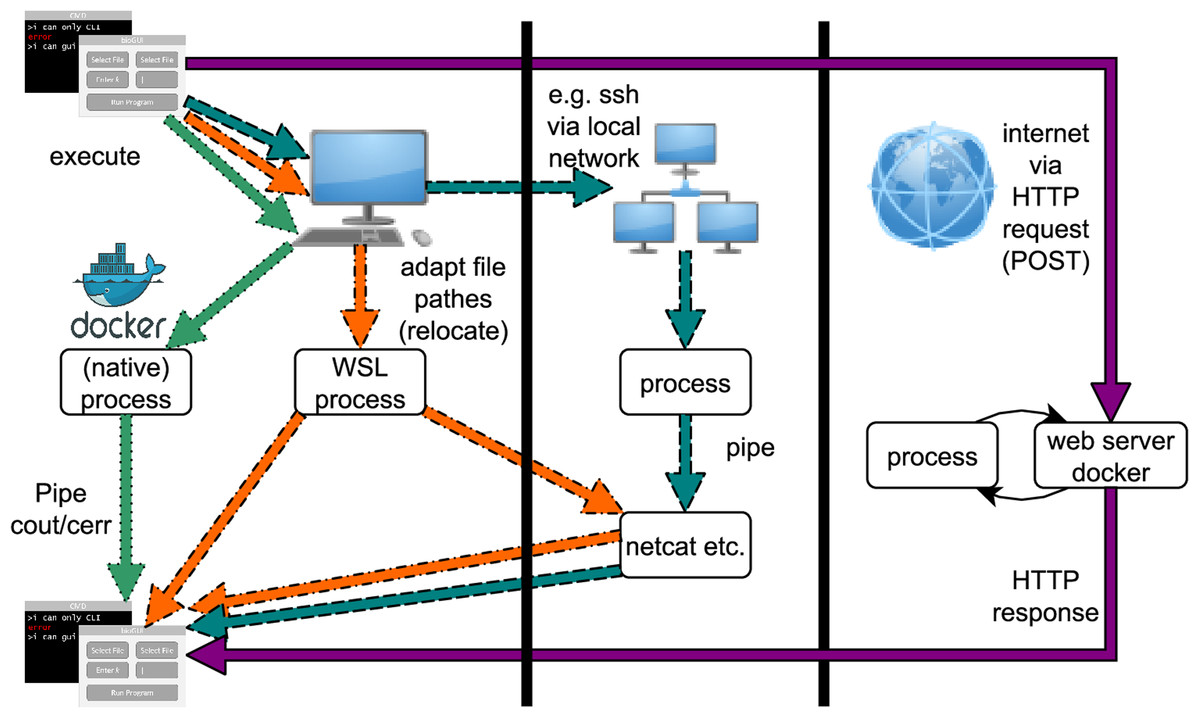 The topic of making bioinformatics applications more approachable to researchers and students has been discussed off and on for years, and some efforts have even been made in that regard. Another step forward for bioinformatics applications is offered by Joppich and Zimmer of Ludwig-Maximilians-Universität München, with their open-source bioGUI. The software attempts to address two problems of bioinformatics applications that rely heavily on the command line: many of them work on Unix-based systems but not Microsoft Windows, and researchers have a tendency to shy away from complex command-line apps despite their utility. The authors present in detail their framework and its use cases, showing how a graphical user interface or GUI can make many such command-line apps more approachable. They conclude that providing a GUI and easy-to-use install modules for bioinformatics apps using the command line makes "execution and usage of these tools more comfortable" while allowing scientists to better analyze their data.

