

ISO 17025 Certification in Food Testing Laboratories using LIMS
The food testing industry has witnessed substantial growth in recent years. The increasing growth trend is expected to continue in the near future. According to reports, the food testing market is poised to grow from USD 17.0 billion in 2018 to USD 24.6 billion by 2023.
To read the complete blog, please visit: https://cloudlims.com/blog/iso-17025-certification-in-food-testing-labs.html
Laboratory Informatics Weekly Update – Volume 17, Issue 24
June 12, 2019 Laboratory Informatics Weekly Update Volume 17, Issue 24 In This Issue Upcoming Webinars 06/18/2019 - A Structured Approach to Implementing a LIMS06/19/2019 - Webinar: Quality Indicators for Laboratory Improvement06/19/2019 - Connecting Lab Instruments to SampleManager LIMS™ Featured Books The Complete Guide to LIMS & Laboratory Informatics Journal Articles Determining the hospital information system (HIS) success rate: Development of a new instrument and case studyHospital information systems (HIS) represent an important information and function management system for hospitals, providing assistance with diagnosis, management, and education functions for improved service and practice. But how effective are they at…Determining the hospital information system (HIS) success rate: Development of a new instrument and case study
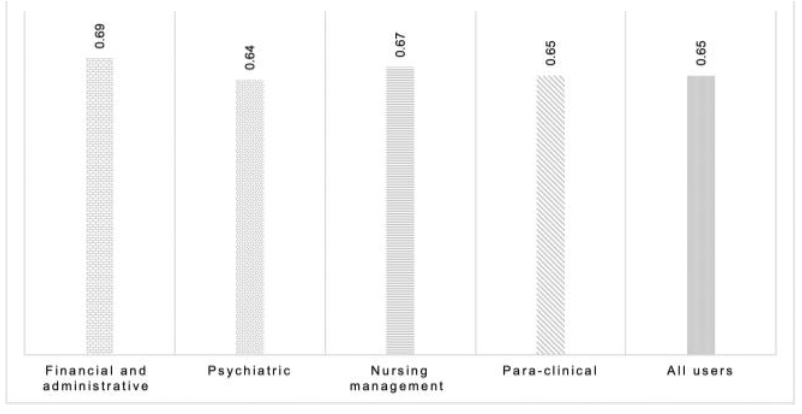 Hospital information systems (HIS) represent an important information and function management system for hospitals, providing assistance with diagnosis, management, and education functions for improved service and practice. But how effective are they at what they're designed to do? This work by Ebnehoseini et al. offers a mechanism for gauging HIS effectiveness through statistics and the information systems success model (ISSM). The authors applied their methodology to the Ibn-e Sina and Dr. Hejazi Psychiatry Hospital in Mashhad, Iran and determined a 65% success rate for the hospital's HIS. They conclude that their methodology "can be adopted for HIS evaluation in future studies" by others and that their results provide a clearer picture into "the viewpoints of HIS users in a developing country."
Laboratory Informatics Weekly Update – Volume 17, Issue 23
June 5, 2019 Laboratory Informatics Weekly Update Volume 17, Issue 23 In This Issue Upcoming Webinars 06/06/2019 - Astrix Webinar – The Importance of Strategic Planning in Laboratory Informatics Projects06/11/2019 - Free LABTrack Webinar – Justifying an ELN06/12/2019 - Ensuring ISO 17025:2017 compliance in your Laboratory Featured Books Laboratory Information Management for Cannabis Quality AssuranceThe Complete Guide to LIMS & Laboratory Informatics Journal Articles Smart information systems in cybersecurity: An ethical analysisWith a growing number of big data and artificial intelligence (AI) implementations (referred to as "smart information systems" or SIS) in enterprises, important ethical questions related to cybersecurity…Smart information systems in cybersecurity: An ethical analysis
With a growing number of big data and artificial intelligence (AI) implementations (referred to as "smart information systems" or SIS) in enterprises, important ethical questions related to cybersecurity must be asked. Has proper informed consent been given? Have discovered vulnerabilities been handled in such a way as to limit potential harm to users? How is trust and transparency handled? These and other questions are asked by Macnish et al. in this 2019 research report published in ORBIT Journal. Noting that technical and ethical issues both underpin the tenants of cybersecurity, the authors discuss the ethical issues of using SIS in cybersecurity and provide their own case study of a major U.K. business using SIS in their cybersecurity practices. After providing their ethical implications of the case study, they conclude "that ethical concerns regarding SIS in cybersecurity go further than mere privacy issues" and "claim that there is a need to improve the ethics of research in SIS."Enhanced Stability Testing with Matrix Gemini LIMS
 Stability studies are used to assess the shelf life of a product by storing samples under controlled environmental conditions for defined lengths of time prior to testing. Stability studies may be accelerated or real time; which of these is appropriate depends on the product under test or applicable regulatory requirements.. Managing multiple studies can be complex and time consuming, however the Matrix Gemini Stability System simplifies the whole study management process. As one of the most complete and mature study management systems on the market, Matrix Gemini Stability continues to gain traction and market share. Its highly flexible graphical configuration tools make it easy to configure the system to each customer’s exact needs, while providing the flexibility for change as the customer’s requirements evolve yet at the same time maintaining the underlying stability functionality. Not only that, a new stability analytics capability has been introduced which includes a fully integrated charting module to provide early indications of shelf-life performance for each product, or batch of product, under test.
[Read More]
Laboratory Informatics Weekly Update – Volume 17, Issue 22
May 29, 2019 Laboratory Informatics Weekly Update Volume 17, Issue 22 In This Issue Upcoming Webinars 06/04/2019 - A Structured Approach to Implementing a LIMS06/06/2019 - Astrix Webinar – The Importance of Strategic Planning in Laboratory Informatics Projects06/12/2019 - Ensuring ISO 17025:2017 compliance in your Laboratory06/19/2019 - Webinar: Case Studies in Lab Acquisitions—The Impact on Clinical and Lab Operations Featured Books Laboratory Information Management for Cannabis Quality AssuranceThe Complete Guide to LIMS & Laboratory Informatics Journal Articles Chemometric analysis of cannabinoids: Chemotaxonomy and domestication syndromeIn this 2018 paper published in Scientific Reports, Mudge et al. of the University of…Chemometric analysis of cannabinoids: Chemotaxonomy and domestication syndrome
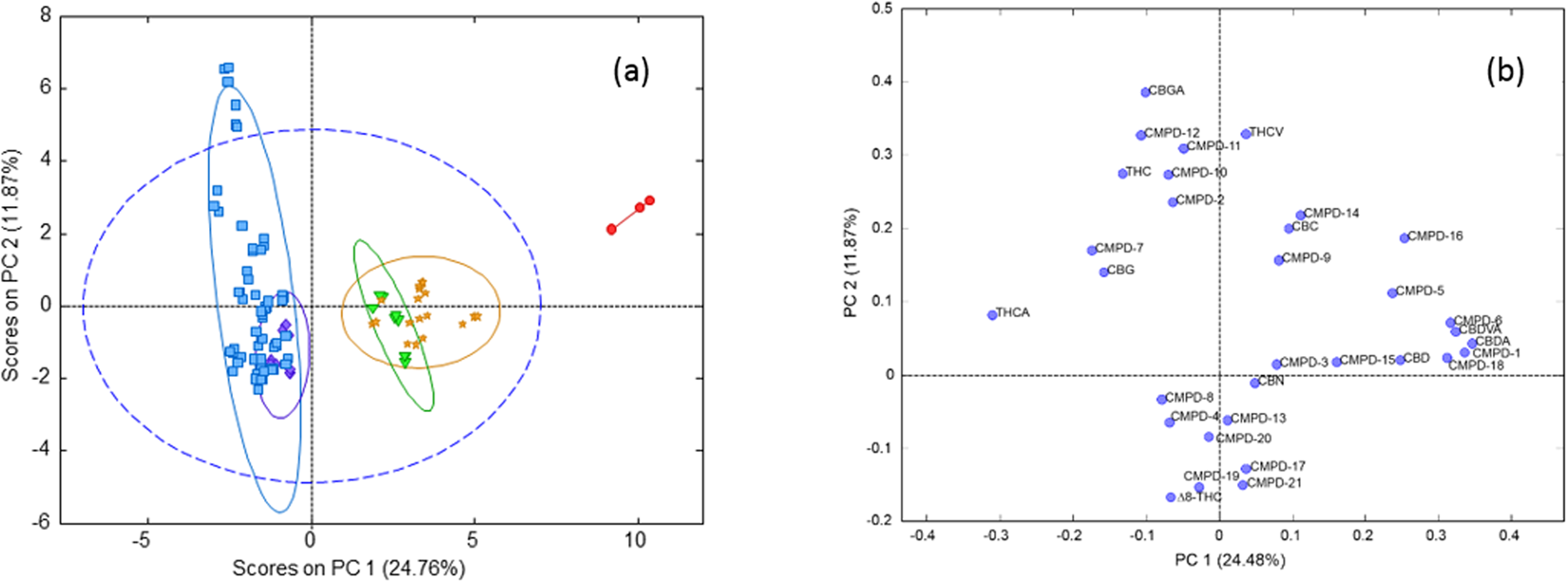 In this 2018 paper published in Scientific Reports, Mudge et al. of the University of British Columbia attempt to demonstrate how a growing loss of biodiversity is occurring across strains of Cannabis due to cultivation practices. The authors introduce current research on the "understanding of metabolite commonality and diversity within plant species" and hypothesize that simply measuring cannabinoid potency (Δ9-tetrahydrocannabinol or THC) and cannabidiol (CBD) content is not sufficient in painting a proper picture of cannabinoid composition and the resulting impact of breeding programs. The authors then get into the results of their analytical research, discuss their findings, and conclude that, at least in Canada, " evaluating single metabolite classes [of available Cannabis strains] does not provide sufficient information to understand the phytochemical diversity available."
5 Things to Document When Justifying a LIMS or ELN
 As clients go through the process of getting approval for laboratory informatics purchases, CSols experts often field questions like, “How much does a LIMS cost?” or “Is an ELN worth the investment?” or “What is the ROI for LIMS?”
[READ MORE]
CloudLIMS Version 1.83 Released!
CloudLIMS, an advanced cloud-based SaaS LIMS, accelerates biobanking, clinical research, and testing laboratory operations by efficiently managing laboratory data, automating laboratory workflows, and following regulatory compliance such as ISO/IEC 17025:2017. The new version of CloudLIMS, version 1.83, is equipped with several new features and enhancements to better meet the data management and reporting requirements of testing laboratories, such as clinical, cannabis, agriculture and food & beverage. The highlights of this version are the ability to configure dependent analyte attributes for auto-calculation of complex test results and improvements in the test report template.
To read the complete blog, please visit: https://cloudlims.com/blog/releases/cloudlims-version-183.html





