Laboratory Informatics Weekly Update – Volume 17, Issue 27
July 3, 2019 Laboratory Informatics Weekly Update Volume 17, Issue 27 In This Issue Upcoming Webinars 07/08/2019 - A Structured Approach to Implementing a LIMS07/24/2019 - Webinar: Managing Change in the Lab – The People Side of Data Management Innovation07/24/2019 - Webinar: Project Leadership: The Key to Excellence in Laboratory Informatics Featured Books LIMSjournal - Summer 2019 Journal Articles Leaner and greener analysis of cannabinoidsThis 2017 paper by Mudge et al. proposes a means for analyzing the Cannabis plant and its flowers in such a way so as to reduce the use of chlorinated solvents and provide a safer…Leaner and greener analysis of cannabinoids
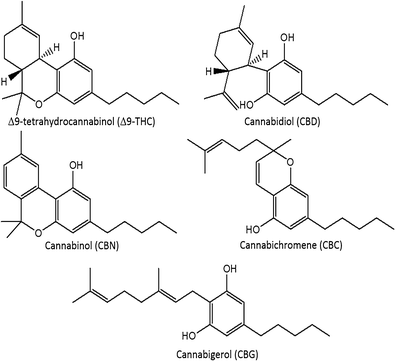 This 2017 paper by Mudge et al. proposes a means for analyzing the Cannabis plant and its flowers in such a way so as to reduce the use of chlorinated solvents and provide a safer work environment for laboratorians. The authors test methanol as a greener alternative and present the results of their tests, concluding the method as "a significant improvement over previous methods that can be used in a variety of settings and has the potential to be expanded for inclusion of new cannabinoids as required." Along with being greener and improving lab safety, the authors also suggest a reduction in material cost as a benefit of the method.
Unlocking the Power of Deep Learning in Drug Discovery
 Drug discovery is a challenging endeavor. The first step – finding compounds with the desired medicinal effect on the target pathogens – has traditionally involved the automated high-throughput screening of large compound libraries to identify “hits” with biological activity. Once identified, promising compounds are put through a process called lead generation to evaluate criteria such as their dose-response curve, cellular efficacy, affinity towards the target, reactivity with other compounds, cytotoxicity, etc.
[Read More]
Simplifying Results Collection and Approval in Laboratories
 Of all the functionality offered by modern LIMS, accurate acquisition and reporting of test results is a central requirement. There are essentially two ways to enter results data into the LIMS – manually or directly from the testing instruments. Entering results manually is clearly quite common, but offers the possibility for transcription errors, especially if the results are first written down in a notebook and then later typed into the LIMS. Direct integration of instrumentation into the LIMS eliminates this possibility and helps meet data integrity and validity requirements. This is particularly important in the pharmaceutical manufacturing industry, where data integrity is critical throughout the cGMP (Good Manufacturing Practice) data life cycle. Data integrity refers to the completeness, consistency, and accuracy of data. Complete, consistent, and accurate data should be attributable, legible, contemporaneously recorded, original or a true copy, and accurate (ALCOA).
Achieving & Maintaining ISO 17025 Accreditation LIMS Suport

In today’s fast-changing and fast-paced business environment, having an accreditation is critical to your business – but it can also be time consuming and onerous, and failing on something like accreditations can be unfavorable to your business.
Discover how STARLIMS Laboratory Information Management System (LIMS) can support your efforts around ISO 17025, both in achieving and in maintaining your compliance and in helping to relieving the accreditation burden.
DOWNLOAD THE INFOGRAPHIC TO LEARN:
- What ISO 17025 is and why this accreditation important
- What’s new on ISO 17025:2017?
- Advantages of achieving this certification
- How STARLIMS can support your efforts around ISO 17025:2017 accreditation
Laboratory Informatics Weekly Update – Volume 17, Issue 26
June 26, 2019 Laboratory Informatics Weekly Update Volume 17, Issue 26 In This Issue Upcoming Webinars 07/02/2019 - Free LABTrack Webinar – Justifying an ELN07/24/2019 - Webinar: Managing Change in the Lab – The People Side of Data Management Innovation07/24/2019 - Webinar: Project Leadership: The Key to Excellence in Laboratory Informatics Featured Books The Comprehensive Guide to Physician Office Laboratory Setup and Operation Journal Articles Laboratory information management software for engineered mini-protein therapeutic workflowMany laboratorians and researchers who have investigated open-source laboratory information management systems (LIMS) have run across LabKey Server. LabKey has been especially useful to those working…Laboratory information management software for engineered mini-protein therapeutic workflow
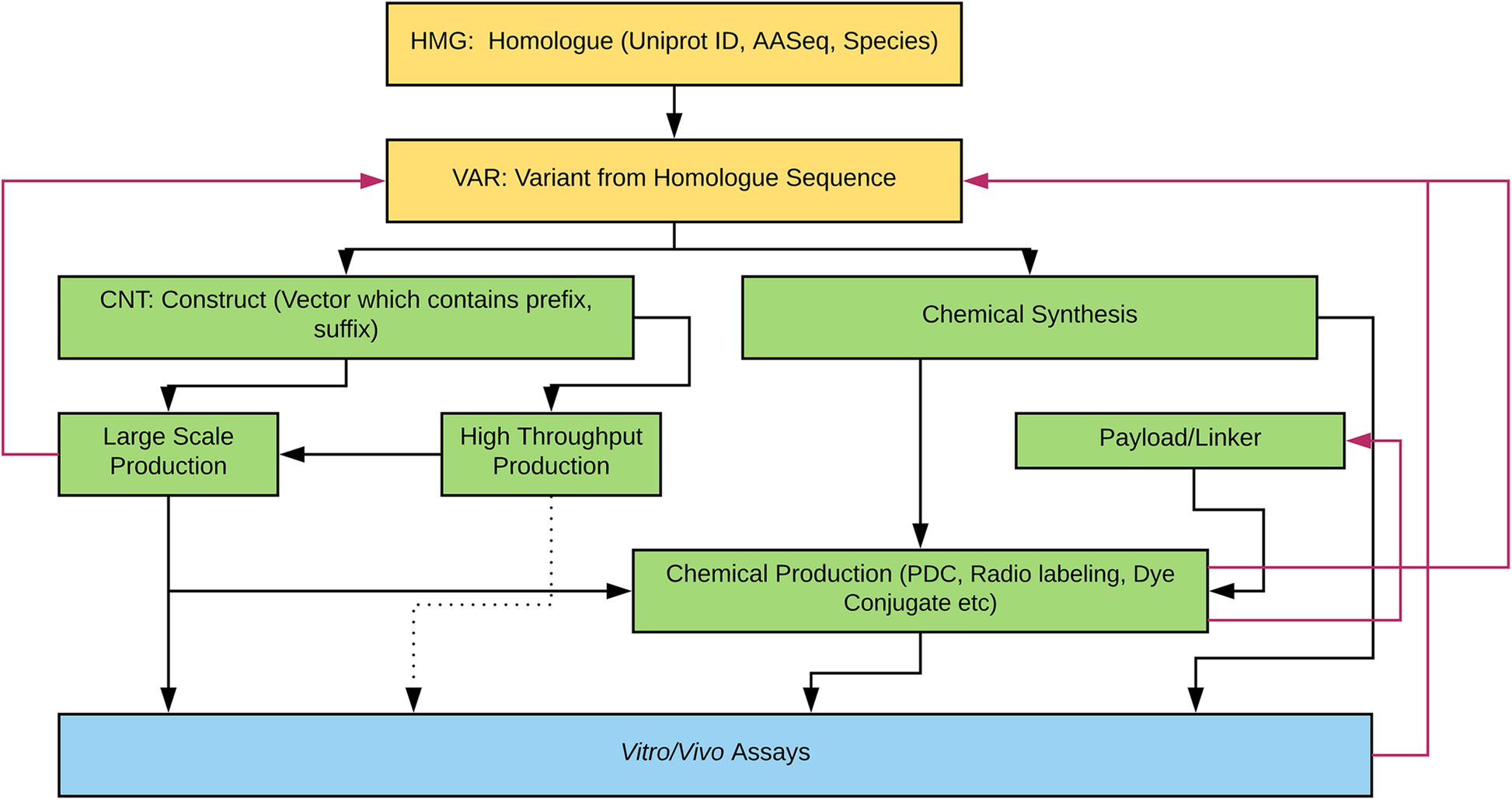 Many laboratorians and researchers who have investigated open-source laboratory information management systems (LIMS) have run across LabKey Server. LabKey has been especially useful to those working with high-throughput assays, flow cytometry, genotyping/sequencing, proteomics, specimen tracking, and observational study data management. It's also an extensible LIMS, and as can be seen in this 2019 journal article by Brusniak et al., where they describe the process of updating LabKey to handle "generalized engineered protein compounds workflow that tracks entities and assays from creation to preclinical experiments." Noting rapid advances in protein therapeutics, the authors developed LabKey into Optide-Hunter to handle optimized peptides (thus, optides) and their production. After discussing its inner workings, the authors conclude that their open-source Optide-Hunter solution fits the bill for a "cost-effective and flexible LIMS for early-stage experimental pipeline development for engineered protein therapeutics development."
CloudLIMS Version 1.84 Released!
CloudLIMS, an advanced cloud-based SaaS LIMS, accelerates biobanking, clinical, research, and testing laboratory operations by efficiently managing laboratory data, automating laboratory workflows, and following regulatory compliance such as ISO/IEC 17025.
To read the complete blog, please visit: https://cloudlims.com/blog/releases/cloudlims-version-184.html
Laboratory Informatics Weekly Update – Volume 17, Issue 25
June 19, 2019 Laboratory Informatics Weekly Update Volume 17, Issue 25 In This Issue Upcoming Webinars 06/25/2019 - KEY PERFORMANCE INDICATORS (KPI'S) FOR LABORATORIES06/25/2019 - Webinar: Cyberthreat Research for the Healthcare Industry Featured Books The Complete Guide to LIMS & Laboratory Informatics Journal Articles Determining the hospital information system (HIS) success rate: Development of a new instrument and case studyHospital information systems (HIS) represent an important information and function management system for hospitals, providing assistance with diagnosis, management, and education functions for improved service and practice. But how effective are they at what they're designed to do? This work…Defending our public biological databases as a global critical infrastructure
In this brief perspective article by Caswell et al,, of various U.S. Department of Energy Laboratories, the topic of mitigating the risks—expected and unexpected—associated with public biological databases is briefly presented, pointing out "several existing research areas that can be leveraged to protect against accidental and intentional modifications and misuse." The authors provide background on the data integrity and vulnerability concerns of these databases, including sources of errors and exploitation of weaknesses in the systems inadvertently or by bad-faith actors. Then they suggest a wide variety of tools, methodologies, and other approaches that are available to gatekeepers of this type of data. They close by comparing these databases to the creation of the internet and its "wide penetration of open functionality" but initial lack of having "integrity and security in mind," stating that now is the time to focus on mitigating risks to the integrity of public biological databases.Creating an Effective Validation Master Plan
 The Food and Drug Administration (FDA) is tasked with protecting the public health by ensuring the safety, efficacy, and security of the nation’s food supply, human and veterinary drugs, biological products, medical devices, vaccines, and other products. In order to fulfill its mission, the FDA requires that all products under its domain meet guidelines outlined in current Good Manufacturing Practice (GMP) regulations. …
Moving Your LIMS to the Cloud: What You Need to Know
Modern laboratories in all industries are under intense pressure to reduce costs and improve operational efficiency, while at the same time enhancing quality and maintaining regulatory compliance. Additionally, the rise of R&D externalization strategies and contract research organizations (CROs) in the pharmaceutical industry has resulted in labs collecting large amounts of data from multiple partners, leading to a significant increase in laboratory workflow complexity.